Jerónimos Monastery
Lisbon, Portugal
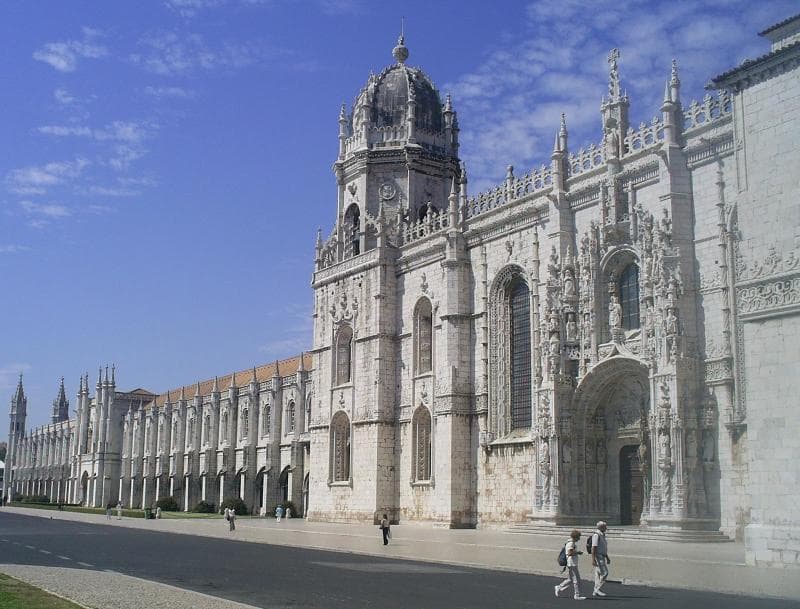
Explore Jerónimos Monastery in Lisbon, Portugal, a UNESCO World Heritage site and a masterpiece of Manueline architecture. Discover its rich history, cultural significance, and stunning details from the Age of Discovery.
Overview
Perched gracefully along the Tagus River in Lisbon's charming Belém district, the Jerónimos Monastery (Mosteiro dos Jerónimos) stands as a monumental testament to Portugal's Age of Discovery. This magnificent complex, a UNESCO World Heritage site since 1983, is not merely a building but a profound expression of national identity and cultural richness. Designated a National Monument in 1907, it draws millions of visitors annually, making it one of the most celebrated heritage sites in Portugal. The monastery is an exceptional example of Manueline architecture, a distinctly Portuguese Gothic style that masterfully blends maritime elements, intricate stonework, and religious symbolism.
Originally founded for the monks of the Order of Saint Jerome, the monastery served a pivotal role in the nation's maritime endeavors, offering spiritual guidance and prayers for the seafarers who embarked on epic voyages. Today, it continues to safeguard the legacies of some of Portugal's most revered figures, including the intrepid explorer Vasco da Gama and the esteemed poet Luís de Camões, whose tombs lie within its sacred walls.
History & Cultural Background
The story of the Jerónimos Monastery begins with a vow. King Manuel I, whose reign spanned from 1495 to 1521, commissioned its construction in 1501 to commemorate Vasco da Gama's successful return from India and to give thanks to the Virgin Mary for Portugal's global triumphs. The chosen site was not arbitrary; it replaced an earlier hermitage dedicated to Santa Maria de Belém, where Vasco da Gama and his crew spent their final night in prayer before departing on their historic journey in 1497.
Construction, a grand undertaking that lasted over a century, was largely financed by the 'Vintena da Pimenta' – a 5% tax levied on the lucrative spice trade and other commerce flowing from Portugal's overseas territories. The initial plans were drawn by Diogo de Boitaca, the pioneering architect who largely shaped the Manueline style seen throughout the monastery. Later, João de Castilho took over the project, contributing significantly to features like the ornate south portal, while Nicolau Chanterene crafted the western portal. The monastery was home to the Hieronymite monks until 1833 when religious orders were dissolved, and the property was transferred to a charitable institution. Remarkably, the Jerónimos Monastery largely survived the devastating Lisbon earthquake of 1755, incurring only minor damage. In a poignant historical gesture, the remains of Vasco da Gama and Luís de Camões were reinterred here in 1880, solidifying the monastery's role as a national pantheon.
What Makes It Special
The Jerónimos Monastery is an architectural marvel, primarily celebrated for its exquisite Manueline style. This late Portuguese Gothic form is a visual narrative of the Age of Discovery, intricately weaving together Gothic, Renaissance, and Moorish influences. Every stone tells a story through lavish ornamentation: twisted ropes, nautical instruments like armillary spheres, coral motifs, and exotic flora and fauna adorn its facades and interiors. The cloister, a two-story masterpiece, is particularly breathtaking with its delicately carved arches, slender columns, and intricate balustrades that create a captivating play of light and shadow. The church's interior boasts soaring vaulted ceilings supported by elegant, tree-like columns, creating an awe-inspiring sense of grandeur and openness.
Beyond its aesthetic brilliance, its historical significance is profound. It stands as a powerful symbol of Portugal's maritime dominance and the global impact of its explorations. The presence of the tombs of national heroes like Vasco da Gama and Luís de Camões reinforces its status as a cornerstone of Portuguese heritage and memory.
Stories, Fun Facts & Local Details
Imagine the scene: on the eve of his epic journey to India, Vasco da Gama knelt in prayer at the hermitage that once stood on this very spot, seeking divine blessing for a voyage that would change the world. The Jerónimos Monastery rose from the prosperity brought by such expeditions. It's also affectionately considered one of Portugal's 'Seven Wonders,' a testament to its enduring beauty and significance. A delightful local detail is its connection to the beloved Portuguese pastry, the Pastel de Nata. Legend has it that the monks of the Jerónimos Monastery were the original creators of this creamy custard tart, using egg yolks left over from the process of starching clothes. Today, the famous Pastéis de Belém bakery, located just a short walk away, continues this centuries-old tradition using an ancient recipe attributed to the monastery.
The monastery's resilience is also part of its legend; it largely withstood the cataclysmic 1755 Lisbon earthquake, a disaster that leveled much of the city, leaving it as a beacon of survival. The detailed stonework on its south portal, attributed to João de Castilho, includes figures of Infante D. Henrique (Henry the Navigator), the Virgin of Bethlehem, and Archangel Saint Gabriel, each holding a symbolic place in Portuguese history and faith.
Visitor Perspective
As one of Lisbon's most popular attractions, the Jerónimos Monastery welcomes a multitude of visitors daily. To ensure a smooth experience, particularly during peak seasons, it is highly recommended to book your tickets in advance to avoid long queues. The church itself is free to enter, but accessing the impressive cloisters requires a paid ticket. Many visitors find that an hour to an hour and a half allows ample time to explore the main highlights, though enthusiasts may spend longer. For a more serene visit and to avoid the largest crowds, aim for early mornings right after opening or late afternoons. The monastery is easily accessible from central Lisbon via public transport, with Tram 15E, various bus lines, and the Cascais train line all having stops within walking distance in the riverside Belém district. Large bags and backpacks are generally not permitted inside, so it's best to travel light. Visitors often combine a trip to the Jerónimos Monastery with other nearby attractions such as the Belém Tower, the Monument to the Discoveries, and, of course, a stop for a Pastel de Nata at Pastéis de Belém.
Coordinates: -9.20611, 38.69778
View on Google Maps💬 How Travelers Describe This Place
Based on community votes
Beautiful
853Interesting
639Photogenic
569Must See
190Unique
93
Traveler Stories
Discover memorable experiences shared by travelers who have visited this place.
No traveler stories yet.
Be the first traveler to share what made this place memorable.
Things to see at Jerónimos Monastery



Tour
By
Spot
Discover amazing places around the world. Your journey starts here.
Explore
© 2026 TourBySpot. All rights reserved.