Tomb Of Vasco Da Gama
Lisbon, Portugal
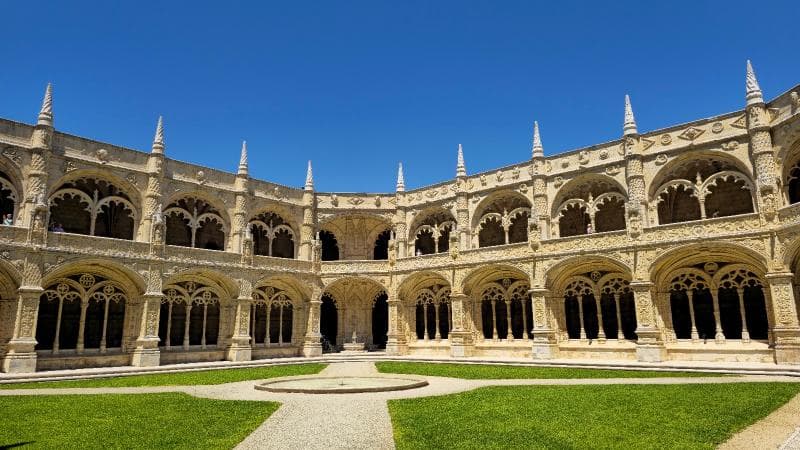
Explore the Tomb of Vasco da Gama inside Jerónimos Monastery in Lisbon, Portugal. Discover the history and legacy of the legendary explorer.
Overview
Deep within the magnificent Jerónimos Monastery, a UNESCO World Heritage site in Lisbon, Portugal, lies the solemn resting place of one of history's most renowned explorers: Vasco da Gama. This tomb is not merely a grave; it is a profound symbol of Portugal's Age of Discoveries, commemorating the audacious spirit that propelled a small nation to reshape global trade and geography. Situated in the Church of Santa Maria de Belém, the tomb invites visitors to connect with a pivotal moment in human exploration, surrounded by the breathtaking Manueline architecture that embodies the era's wealth and ambition.
The monastery itself, a masterpiece of Portuguese Gothic style, was commissioned by King Manuel I in the early 16th century, primarily to celebrate Vasco da Gama's successful sea voyage to India. His sarcophagus, intricately carved, stands as a testament to his enduring legacy, positioned in a place of honor alongside other significant figures from Portuguese history.
History & Cultural Background
The story of the Tomb of Vasco da Gama begins with the explorer himself. Born in Sines, Portugal, around 1460, Vasco da Gama rose to prominence when he became the first European to successfully navigate a direct sea route from Europe to India between 1497 and 1499. This monumental journey circumnavigated Africa's Cape of Good Hope, forever altering trade routes and establishing Portugal as a dominant maritime power.
King Manuel I, recognizing the immense significance of this achievement, ordered the construction of the Jerónimos Monastery in 1502. It was built on the very spot in Belém where Vasco da Gama and his crew reportedly prayed before embarking on their perilous voyage. The monastery's construction was lavishly funded by the 'Vintena da Pimenta,' a tax on the lucrative spice trade profits generated by these new routes, symbolizing the direct link between da Gama's discoveries and Portugal's prosperity.
Initially, Vasco da Gama was buried in Cochin, India, where he died in 1524. His remains were later transferred to the Monastery of Nossa Senhora das Relíquias near Vidigueira, Portugal. It wasn't until 1880, centuries after his death, that his remains, along with those of the revered Portuguese poet Luís de Camões (author of 'The Lusiads,' an epic poem celebrating da Gama's voyage), were brought to their current prominent location within the Jerónimos Monastery.
What Makes It Special
The Tomb of Vasco da Gama is more than just a historical monument; it's a profound narrative etched in stone. Its location within the Jerónimos Monastery, a stunning example of the Manueline architectural style, makes it particularly special. This style, unique to Portugal, is characterized by rich, ornate detailing that often incorporates maritime elements, reflecting the nation's seafaring prowess during the Age of Discoveries.
The tomb itself, sculpted by the 19th-century artist Costa Mota, is a neo-Manueline masterpiece designed to harmonize with its grand surroundings. Its sides feature intricate carvings that depict symbols related to da Gama's voyages, such as a sailing vessel, the cross of the Order of Christ, and the armillary sphere – a celestial globe representing exploration and discovery. This thoughtful detailing ensures that the tomb not only honors the man but also encapsulates the entire epoch he represents. Being placed in the lower choir of the church, near the entrance, it immediately confronts visitors with the legacy of exploration.
Stories, Fun Facts & Local Details
Imagine the scene in 1497: Vasco da Gama and his sailors, kneeling in prayer at the humble hermitage that once stood where the monastery now proudly rises, seeking divine protection before venturing into the unknown. This act of faith underscores the profound spiritual dimension intertwined with Portugal's Age of Discoveries.
A poignant detail is that Vasco da Gama's tomb shares this sacred space with Luís de Camões, a literary giant whose epic poem 'Os Lusíadas' immortalized da Gama's incredible journey. Placing these two figures side-by-side creates a powerful dialogue between action and artistic interpretation, celebrating both the physical act of discovery and its lasting cultural impact. It transforms the church into a national pantheon.
The sheer scale and intricate craftsmanship of the Jerónimos Monastery, taking over a century to complete, highlight the national pride and investment in these explorations. The 'pepper tax' that financed much of its construction offers a tangible link to the exotic riches that fueled Portugal's Golden Age.
Visitor Perspective
Visiting Vasco da Gama's tomb offers a deeply immersive historical experience. As you step into the cool, cavernous interior of the Church of Santa Maria de Belém, you're immediately struck by the grandeur and the weight of history. The tomb is prominently located in the lower choir, a central point for contemplation.
Access to the tomb is conveniently included with any Jerónimos Monastery ticket, and no separate ticket is required. While the church itself generally offers free entry, purchasing a monastery ticket grants access to the breathtaking cloisters, which perfectly complement the experience of visiting the tomb. To fully appreciate the intricate details and absorb the atmosphere without the busiest crowds, it's often recommended to visit either early in the morning or later in the afternoon. Allow ample time to explore not just the tomb, but the entire monastery, to fully grasp the scale of the legacy it preserves. Modest attire is recommended as a sign of respect within this sacred space.
Coordinates: -9.206111, 38.697777
View on Google Maps💬 How Travelers Describe This Place
Based on community votes
Interesting
894Photogenic
862Must See
748Unique
304Beautiful
35
Traveler Stories
Discover memorable experiences shared by travelers who have visited this place.
No traveler stories yet.
Be the first traveler to share what made this place memorable.

Tour
By
Spot
Discover amazing places around the world. Your journey starts here.
Explore
© 2026 TourBySpot. All rights reserved.