Façade Details
Lisbon, Portugal
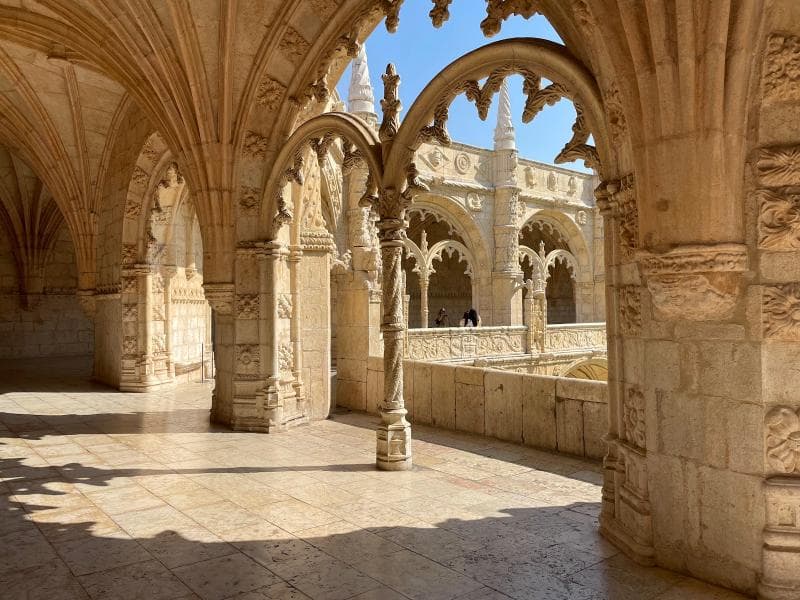
Explore the intricate Manueline Façade Details of Jerónimos Monastery in Lisbon, Portugal, a stunning blend of Gothic, maritime, and royal symbols.
Overview
The Jerónimos Monastery, a UNESCO World Heritage site in Lisbon, Portugal, stands as a magnificent testament to the nation's Age of Discoveries. While the entire complex is breathtaking, the 'Façade Details' are particularly captivating, offering an unparalleled display of the Manueline architectural style. This unique Portuguese Late Gothic style blends religious iconography with symbols of maritime exploration, creating a rich tapestry of stone carvings that tells a story of faith, ambition, and global reach.
Visitors are immediately struck by the intricate ornamentation, which adorns both the South and West Portals, each presenting a distinct narrative and artistic approach. The sheer scale and detail of these façades make them central to understanding the monastery's historical and cultural significance, inviting a closer look at every carved element.
History & Cultural Background
Commissioned by King Manuel I in 1501, the Jerónimos Monastery was conceived to commemorate Vasco da Gama's successful return from India and to offer prayers for the seafaring explorers who set out from Lisbon's shores. Its construction was largely financed by the immense wealth generated from the spice trade, symbolizing Portugal's golden age of maritime expansion. The monastery was entrusted to the Hieronymite monks, whose role included spiritual guidance for sailors and perpetual prayers for the monarch's soul.
The façade's design evolved over roughly a century, with several prominent architects leaving their mark. Diogo de Boitaca initiated the work, laying the foundations and establishing the Manueline aesthetic, which was then significantly advanced by João de Castilho from 1517 onwards. Nicolau Chanterene contributed significantly to the sculptural elements, particularly evident in the West Portal, showcasing a transition from Gothic to Renaissance styles.
What Makes It Special
The Jerónimos Monastery's façades are a prime example of the Manueline style's decorative exuberance. This architectural language is characterized by its virtuoso ornamentation, incorporating elements inspired by the sea, botanical motifs, and symbols of the Portuguese monarchy.
- South Portal: While not the main entrance, this 32-meter high, 12-meter wide portal is undoubtedly the most spectacular, extending two stories. Designed by Juan de Castillo, it features an abundance of gables, pinnacles, and numerous carved figures, including Our Lady of Bethlehem with the Christ Child at its apex. Statues of prophets, church notables, and saints flank both sides, with a prominent figure of Henry the Navigator standing between the doors. The intricate filigree detail woven into the carving is extraordinary, depicting scenes from Saint Jerome's life and various Manueline elements.
- West Portal: This portal serves as the main entrance to the church and is considered more stylistically significant, showcasing a clear transition from Gothic to Renaissance art. Sculpted by Nicolau Chanterene in 1517, it features figures of King Manuel I and Queen Maria, accompanied by Saint Jerome and Saint John the Baptist. These figures are regarded as among the first realistic sculptures in Portuguese art, presenting a harmonious blend of religious and royal imagery.
Throughout the façades, one can observe recurring Manueline motifs such as twisted ropes, armillary spheres (a symbol of King Manuel I), coral-like columns, and exotic designs reflecting the discoveries made during naval expeditions.
Stories, Fun Facts & Local Details
Imagine the awe of returning sailors, their eyes scanning the elaborately carved stone, a visual testament to the glory of Portugal and the power of its king. The choice of lioz stone, a typical Lisbon limestone, allows the intricate details to shimmer under the Atlantic sun, giving the monastery a luminous quality. The façades are not merely decorative; they are monumental pages of history, inscribed in stone, reflecting the intertwining of spiritual devotion, royal ambition, and maritime adventure.
A fascinating detail is how the South Portal, despite its grandiosity, functions as a side entrance, while the slightly less ornate West Portal holds the ceremonial significance as the main entry to the church's nave. This highlights a subtle interplay between visual impact and functional purpose in its design. The monastery's location near the Tagus River, the departure point for numerous expeditions, further reinforces the profound connection between the building and Portugal's seafaring legacy.
Visitor Perspective
Approaching the Jerónimos Monastery, the façades immediately command attention. Visitors often find themselves drawn into a detailed exploration of the carvings, tracing the ropes, deciphering the symbols, and marveling at the artistry. It's an experience that encourages slowing down, absorbing the craftsmanship, and appreciating the stories embedded within the stone. From the delicate filigree to the imposing statues, every element contributes to an overwhelming sense of wonder and historical depth. The façades offer a visual journey back to a pivotal era in Portuguese history, making the Jerónimos Monastery an unforgettable stop for any curious traveler in Lisbon.
Coordinates: -9.206111, 38.700556
View on Google Maps💬 How Travelers Describe This Place
Based on community votes
Must See
972Beautiful
787Photogenic
748Unique
85Interesting
73
Traveler Stories
Discover memorable experiences shared by travelers who have visited this place.
No traveler stories yet.
Be the first traveler to share what made this place memorable.

Tour
By
Spot
Discover amazing places around the world. Your journey starts here.
Explore
© 2026 TourBySpot. All rights reserved.