Church Nave
Lisbon, Portugal
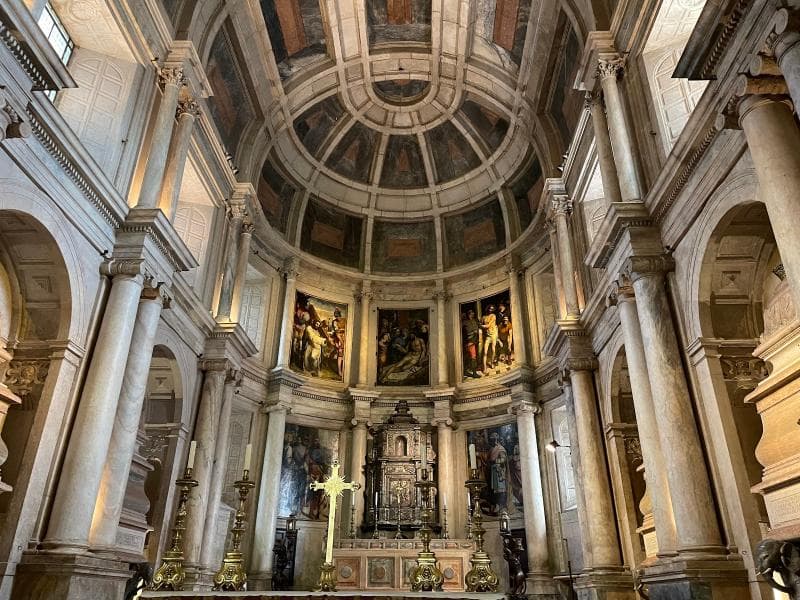
Explore the Church Nave of Jerónimos Monastery in Lisbon, Portugal. Discover its Manueline architecture, historical tombs, and unique design.
Overview
Stepping into the Church Nave of the Jerónimos Monastery in Lisbon, Portugal, is like walking into a grand narrative carved in stone. This magnificent space, often referred to as the Church of Santa Maria, forms the spiritual heart of the larger monastery complex located in the historic Belém district. Recognized as a UNESCO World Heritage Site since 1983, alongside the nearby Belém Tower, the monastery stands as a crowning achievement of Manueline architecture, Portugal's distinctive late Gothic style.
Commissioned by King Manuel I in the early 16th century, the monastery was intended to commemorate Vasco da Gama's successful voyage to India and to offer thanks to the Virgin Mary for his safe return. The Church Nave itself is a breathtaking example of architectural ambition, where soaring, slender columns create an illusion of lightness, supporting a vast, single-span vaulted ceiling that seems to defy gravity. More than just a place of worship, it serves as the revered resting place for some of Portugal's most celebrated figures, including the intrepid explorer Vasco da Gama and the epic poet Luís de Camões, whose tombs lie prominently within the nave.
History & Cultural Background
The story of the Church Nave is deeply intertwined with Portugal's Age of Discoveries. Construction of the Jerónimos Monastery began in 1501, on the site of the former Ermida do Restelo, a small chapel where Vasco da Gama and his crew famously prayed before embarking on their groundbreaking journey to India in 1497. The immense cost of this ambitious project was largely financed by the 'Vintena da Pimenta,' a 5% tax levied on the lucrative spice trade returning from the East, symbolizing the wealth and power Portugal accrued during this golden era.
Several master architects shaped the Church Nave and the broader monastery over approximately a century. Diogo de Boitaca initiated the work, laying the foundations and introducing the innovative Manueline style. João de Castilho later took charge, responsible for the remarkable vaulting of the nave, a true engineering marvel of its time. Later contributions by Diogo de Torralva and Jérôme de Ruão incorporated Renaissance and classical elements, adding layers of architectural sophistication.
The Manueline style, prevalent throughout the monastery and especially evident in the church, is a unique blend of late Gothic and early Renaissance elements, characterized by rich, intricate ornamentation that often incorporates maritime motifs like ropes, anchors, and armillary spheres, alongside exotic flora and fauna. This artistic language eloquently reflects Portugal's seafaring prowess and its global reach.
What Makes It Special
The Jerónimos Church Nave stands out primarily for its pioneering architectural design. It is celebrated as a 'hall church,' where the three naves are of equal height, creating an expansive, unified space. The most striking feature is its colossal single-span ribbed vault, stretching an impressive 30 meters wide, seemingly supported by surprisingly slender, octagonal columns that branch out like palm trees towards the ceiling. This innovative design, attributed largely to João de Castilho, was an extraordinary feat of late medieval engineering, making the stone appear weightless and giving the interior a sense of buoyant grandeur.
The interplay of light is another magical aspect. Light filters through large stained-glass windows, particularly on the south side, illuminating the honey-colored Lioz limestone and highlighting the exquisite details of the carvings. This orchestration of light enhances the spiritual atmosphere and the dramatic scale of the interior.
Beyond its architectural brilliance, the nave holds immense cultural significance as the pantheon for some of Portugal's most revered figures. The elaborate tombs of Vasco da Gama and Luís de Camões, sculpted in a neo-Manueline style, are prominent features, drawing visitors to reflect on the nation's Age of Discoveries and its literary heritage.
Stories, Fun Facts & Local Details
Imagine the scene in the original chapel on this site: Vasco da Gama and his crew, kneeling in prayer, seeking divine blessing for their perilous journey around Africa to India. The very ground you walk on once bore witness to this pivotal moment in history, a precursor to the monastery's existence.
The extraordinary wealth generated by the spice trade directly fueled the monastery's construction, making it a tangible monument to Portugal's economic might during the 16th century. It's said that the 'Vintena da Pimenta' could bring in the equivalent of 150 pounds of gold annually, ensuring no expense was spared in creating this architectural masterpiece.
A remarkable detail within the nave is the 'forest' of columns, with their intricate, organic carvings, often featuring marine motifs like seaweed, shells, and twisted ropes, alongside exotic creatures. These aren't merely decorative; they serve as a constant reminder of the voyages that shaped Portugal and funded this very sanctuary. The vaulted ceiling, often described as 'stellar vaulting,' represents one of the most accomplished attempts to cover a vast span with minimal support, a testament to the ingenuity of its builders.
Interestingly, the Jerónimos Monastery was one of the few significant structures in Lisbon to largely withstand the devastating earthquake of 1755, which leveled much of the city. This remarkable resilience has added to its legendary status.
Visitor Perspective
Visiting the Church Nave offers a profound historical and spiritual experience. While the larger Jerónimos Monastery complex, including its famous cloisters, typically requires a ticket, access to the Church of Santa Maria (the nave) is often free, though it may involve a separate entrance line. This allows curious travelers to step inside and immediately be enveloped by its grandeur, regardless of whether they choose to explore the entire monastery.
The sheer scale and intricate detail of the Manueline architecture leave many visitors in awe. The soaring columns and the feeling of the ceiling 'hovering' overhead create a sense of both majesty and tranquility, a quiet contrast to the bustling Belém district outside. Standing before the tombs of Vasco da Gama and Luís de Camões, one can almost feel the weight of history and the spirit of discovery that defined an era. It's a moment for reflection on Portugal's past glories and its enduring cultural legacy. Due to its popularity, arriving early in the morning or later in the afternoon is often recommended to experience the nave with fewer crowds.
Coordinates: -9.20611, 38.69778
View on Google Maps💬 How Travelers Describe This Place
Based on community votes
Must See
972Beautiful
787Photogenic
748Unique
85Interesting
73
Traveler Stories
Discover memorable experiences shared by travelers who have visited this place.
No traveler stories yet.
Be the first traveler to share what made this place memorable.

Tour
By
Spot
Discover amazing places around the world. Your journey starts here.
Explore
© 2026 TourBySpot. All rights reserved.