Cloisters
Lisbon, Portugal
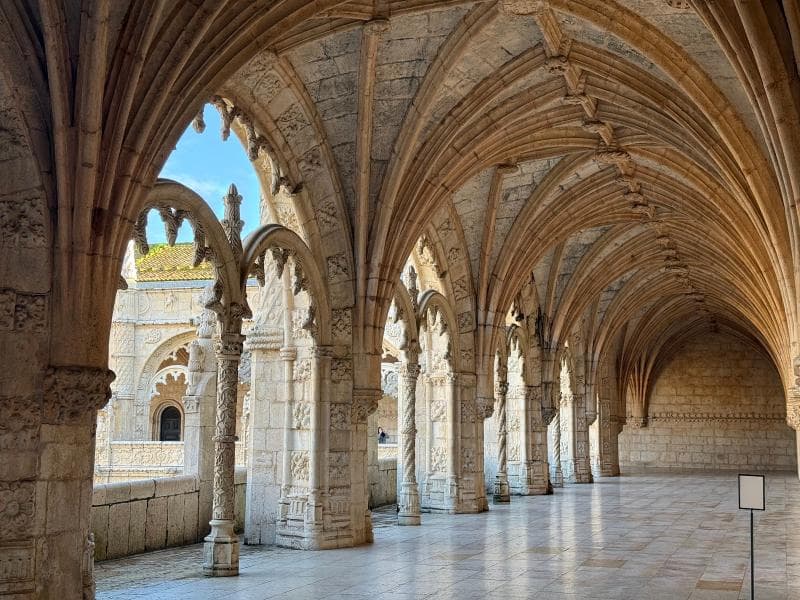
Explore the magnificent Cloisters of Jerónimos Monastery in Lisbon, Portugal, a UNESCO World Heritage site showcasing stunning Manueline architecture.
Overview
Nestled within the grand Jerónimos Monastery in Lisbon, Portugal, the Cloisters offer a breathtaking journey into a pivotal era of Portuguese history and architectural splendor. Recognized as a UNESCO World Heritage Site alongside the monastery itself, these cloisters are widely considered a masterpiece of Manueline architecture, a uniquely Portuguese style of late Gothic. They stand as a testament to Portugal's maritime prowess and wealth during the Age of Discoveries, funded by the lucrative spice trade. The two-story cloister, with its intricate stonework and serene atmosphere, is often the main draw for visitors to the monastery, providing a deeply immersive cultural experience.
History & Cultural Background
The construction of the Jerónimos Monastery, and by extension its magnificent cloisters, began in 1501 under the patronage of King Manuel I. This ambitious project was commissioned to commemorate Vasco da Gama's successful return from his pioneering voyage to India and to give thanks to the Virgin Mary for the triumph of Portuguese navigators. The monastery was initially home to the Hieronymite monks, whose spiritual duty included offering guidance to sailors departing from Belém and praying for the king's soul. The funding for this elaborate construction came from taxes on the exotic goods brought back from these voyages, such as spices, allowing for an extraordinary scale and intricate detail in its design. The cloisters served as a vital part of the monks' daily life, offering a tranquil space for prayer, meditation, and leisure. Over the centuries, the monastery also became a royal pantheon and the final resting place for several prominent Portuguese figures.
What Makes It Special
The Jerónimos Cloisters are distinguished by their exuberant Manueline architectural style, a fusion of late Gothic, Renaissance, and Moorish influences. The two-story structure features delicately scalloped arches and ornate columns, all carved from golden Lioz limestone. What truly sets these cloisters apart is the intricate sculptural detail that adorns nearly every surface. Visitors can marvel at a rich tapestry of maritime motifs, including ropes, anchors, shells, and armillary spheres, symbolizing Portugal's global reach. These are interwoven with religious symbols, botanical elements like leaves and vines, and royal emblems, creating a narrative in stone that reflects the era's imperial confidence. The careful balance of monumental scale and delicate ornamentation creates a visual feast, making it one of the finest cloisters in Europe.
Stories, Fun Facts & Local Details
The Jerónimos Cloisters hold many fascinating stories. For instance, despite the devastating Lisbon earthquake of 1755, the monastery, including its cloisters, largely withstood the catastrophe with minimal damage, a testament to its robust construction. The refectory, where monks once gathered for meals, features beautiful 16th-century 'azulejo' panels. Additionally, within one of the cloister's galleries, there is a symbolic monument to Fernando Pessoa, one of Portugal's most significant literary figures, whose remains were transferred here in 1985, decades after his death. The monastery’s historical significance is so profound that in 1985, the formal ceremonies for Portugal's accession to the European Economic Community were held in its cloister. This space, designed by master architects like Diogo de Boitaca and João de Castilho, tells a story of artistry and ambition that spanned over a century to complete.
Visitor Perspective
Visiting the Cloisters of Jerónimos Monastery is an experience that invites slow exploration and keen observation. Most visitors find themselves drawn to the open courtyard, but the real magic lies in the details carved into the arches, columns, and walls. Allow yourself ample time—30 to 60 minutes is recommended—to fully appreciate the intricate carvings and the interplay of light and shadow within the two-level arcade. The upper level offers unique vantage points and views into the Church of Santa Maria de Belém. While the church offers free entry, access to the cloisters requires a paid ticket, and booking online or arriving early is advisable, especially during peak seasons, to avoid long queues. The cloisters are a popular attraction, often bustling with people, but finding quiet moments to reflect amidst the historical grandeur is still possible, especially earlier in the day.
Coordinates: -9.2067, 38.6978
View on Google Maps💬 How Travelers Describe This Place
Based on community votes
Must See
569Unique
476Interesting
465Photogenic
276Beautiful
128
Traveler Stories
Discover memorable experiences shared by travelers who have visited this place.
No traveler stories yet.
Be the first traveler to share what made this place memorable.

Tour
By
Spot
Discover amazing places around the world. Your journey starts here.
Explore
© 2026 TourBySpot. All rights reserved.