Gardens
Lisbon, Portugal
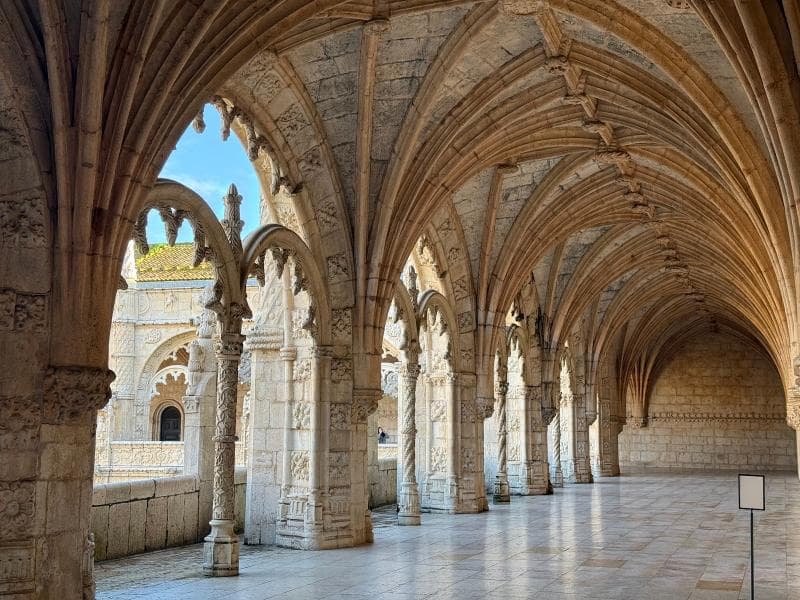
Explore the stunning cloister gardens of Jerónimos Monastery in Lisbon, Portugal, a masterpiece of Manueline architecture echoing the Age of Discovery.
Overview
Nestled within the magnificent Jerónimos Monastery in Lisbon, Portugal, lie its serene and historically rich cloisters, often referred to as the 'Gardens'. This architectural marvel is not merely an open courtyard but an integral part of the monastery's spiritual and artistic heritage, offering a breathtaking example of Manueline style. As a UNESCO World Heritage site, these cloisters provide a tranquil sanctuary, inviting visitors to step back in time and experience the peace that once enveloped the Hieronymite monks who resided here. They are a testament to Portugal's golden age, combining religious devotion with the adventurous spirit of maritime exploration, all carved meticulously in stone.
History & Cultural Background
The construction of the Jerónimos Monastery, including its remarkable cloisters, began in 1501 under the patronage of King Manuel I. This ambitious project was largely financed by the immense wealth flowing into Portugal from the thriving spice trade following Vasco da Gama's successful voyage to India. The monastery was established for the Order of Saint Jerome (Hieronymites), whose spiritual duty included offering guidance to seafarers and praying for the king's soul. The cloister served as a vital space for the monks' daily lives, providing a setting for prayer, meditation, reading, and moments of quiet leisure. The architectural style, known as Manueline, is uniquely Portuguese, blending Late Gothic with Renaissance influences and a wealth of maritime and exotic motifs. It stands as a glorious symbol of Portugal's Age of Discovery, reflecting the nation's power and contact with distant lands.
What Makes It Special
What truly sets the Jerónimos Monastery's cloister apart is its astonishingly ornate yet profoundly peaceful atmosphere. It is a two-story masterpiece, where every arch, column, and spandrel tells a story through intricate carvings. Visitors are captivated by the abundance of Manueline symbolism, featuring twisted ropes, armillary spheres (King Manuel I's emblem), coral forms, sea monsters, exotic plants, and the cross of the Order of Christ. These detailed sculptural programs transformed the stone into a narrative of Portugal's global ambitions. The design achieves a remarkable balance, with vaulted ceilings and sophisticated decorative elements creating a sense of both grandeur and ethereal lightness. Historical accounts suggest that the cloister garden was once even more richly ornamented, with tiled banks and islands, hinting at an even more vibrant past. Today, the cloister remains a prime example of architectural choreography, combining geometry, light, and a sense of harmonious space.
Stories, Fun Facts & Local Details
Life within these walls for the Hieronymite monks was centered on spiritual devotion and contemplation. The cloister provided the essential open-air space where monks could find a connection to nature and sunlight, crucial for their monastic routine. While the architecture itself was lavish, designed to glorify the Age of Discovery and the king's piety, the monks' personal lives were guided by vows of simplicity. It's an intriguing contrast to observe the opulent carvings that surround a space dedicated to a humble existence. A notable feature often associated with the cloister area is the Lion Fountain, where monks would perform ritual hand-washing before entering the Refectory for their communal meals. These meals were typically silent, accompanied by spiritual readings, providing nourishment for both body and soul. The sheer scale and detail of the cloister reflect not just artistic prowess, but the very economic engine—the pepper tax and spice trade—that funded its century-long construction.
Visitor Perspective
Walking through the Jerónimos Monastery's cloisters is an immersive experience, a journey through time and artistry. Unlike the church, which offers free entry, the cloisters are typically a ticketed area, and for good reason, as they represent the architectural heart of the monastery. The double-story arcades, with their endless array of carvings, encourage a slow pace, inviting visitors to admire the play of light and shadow throughout the day. You can imagine the monks moving along these corridors, their footsteps echoing through the centuries. It's a place to pause, reflect, and appreciate the intricate craftsmanship that transformed hard lioz limestone into fluid, narrative art. Many visitors find it to be the highlight of their monastery visit, offering unparalleled photographic opportunities and a profound connection to Portugal's rich cultural and historical tapestry.
Coordinates: -9.20611, 38.69778
View on Google Maps💬 How Travelers Describe This Place
Based on community votes
Must See
965Interesting
743Photogenic
719Beautiful
629Unique
176
Traveler Stories
Discover memorable experiences shared by travelers who have visited this place.
No traveler stories yet.
Be the first traveler to share what made this place memorable.

Tour
By
Spot
Discover amazing places around the world. Your journey starts here.
Explore
© 2026 TourBySpot. All rights reserved.