Jade Emperor Pagoda
Ho Chi Minh City, Vietnam
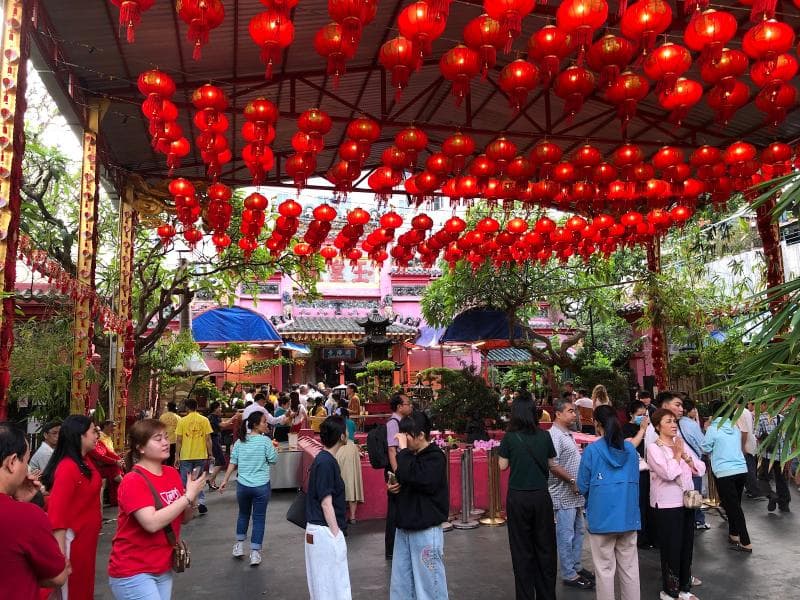
Explore the Jade Emperor Pagoda in Ho Chi Minh City, Vietnam. Discover its rich history, unique architecture, and spiritual significance as a Taoist-Buddhist temple.
Overview
The Jade Emperor Pagoda, known locally as Chùa Ngọc Hoàng or Phuoc Hai Tu, stands as a profoundly spiritual and architecturally significant landmark in Ho Chi Minh City, Vietnam. Nestled amidst the bustling urban landscape of District 1, this temple offers a serene escape and a glimpse into the rich spiritual life of the local Chinese-Vietnamese community. Its ancient Chinese architectural style, adorned with vibrant tiles and intricate carvings, creates an atmospheric setting that transports visitors to another realm. Revered for its unique blend of Taoist and Buddhist elements, the pagoda is a living shrine, constantly filled with the scent of incense and the quiet devotion of worshippers. The pagoda gained international attention following a visit by then-U.S. President Barack Obama in 2016, further cementing its status as a must-visit cultural site.
History & Cultural Background
The Jade Emperor Pagoda was constructed around 1909 by a Chinese man named Luu Minh (also known as Liu Daoyuan), a Cantonese migrant who sought to establish a place of worship for the Chinese community in Saigon. Originally built as a Taoist temple dedicated to the Jade Emperor, Ngoc Hoang Thuong De—the supreme deity in Taoism who governs heaven and earth—it later incorporated elements of Mahayana Buddhism, reflecting Vietnam's multicultural religious landscape. In 1982, the pagoda came under the management of Buddhist monk Thich Vinh Khuong, officially integrating it into the Vietnam Buddhist Association. While it was formally renamed Phuoc Hai Tu ('Luck Sea Temple') in 1984, it remains popularly known as the Jade Emperor Pagoda, honoring its original dedication. Its cultural and architectural significance was officially recognized in 1994 when it was designated a National Historic Site.
What Makes It Special
The pagoda's allure lies in its distinctive Chinese religious architectural style, which captivates with its colorful yin-yang tiled roofs, ceramic figures, and elaborate wood carvings depicting scenes from Chinese mythology and culture. Inside, visitors are met with a remarkable collection of approximately 300 statues, many of which are intricately crafted from papier-mâché, depicting various Taoist gods, deities, and mythical creatures. The spiritual heart of the temple is the Main Hall, housing a grand and imposing statue of the Jade Emperor himself. One of the most intriguing and visually dramatic areas is the 'Ten Courts of Hell' exhibit, which graphically illustrates the punishments for sins committed in life, serving as a vivid reminder of moral consequences. Another deeply significant chamber is the shrine dedicated to Kim Hoa Thanh Mau, the Mother Goddess of childbirth, and her twelve midwives. This sacred space is frequently visited by couples hoping to receive blessings for fertility and healthy children. Beyond the main structure, tranquil gardens, a lotus-filled fish pond, and a turtle pond contribute to the pagoda's peaceful and reflective atmosphere.
Stories, Fun Facts & Local Details
The Jade Emperor Pagoda holds a special place in the hearts of locals, who frequently visit to pray for various blessings, including fertility, good health, prosperity, and protection. A touching local tradition involves couples seeking children who visit the shrine of Kim Hoa Thanh Mau. They engage in rituals such as lighting incense, offering fruit, tying red threads to statues (left for a daughter, right for a son), and gently rubbing their stomachs and then the statues, whispering their hopes for divine blessings. The perpetual haze of incense smoke throughout the pagoda creates a mystical and profound atmosphere, enveloping visitors in its spiritual embrace. The presence of large, ancient oak trees in the pagoda's courtyard provides a welcome canopy of shade, offering a cool respite from the Ho Chi Minh City heat. While entry to the pagoda is free, visitors are encouraged to make small donations to help with its maintenance and preservation, contributing to the upkeep of this cultural gem. The pagoda's fame soared globally after former U.S. President Barack Obama made an unannounced visit in May 2016, drawing international attention to its spiritual and historical significance.
Visitor Perspective
For those planning a visit, the Jade Emperor Pagoda is conveniently located at 73 Mai Thi Luu Street, District 1, Ho Chi Minh City, making it easily accessible by taxi, ride-hailing services like Grab, or motorbike. The pagoda is open daily, typically from 7:00 AM to 6:00 PM. To best experience its tranquil ambiance and avoid larger crowds and the midday heat, an early morning or late afternoon visit is highly recommended. As a sacred religious site, visitors are asked to dress modestly, ensuring shoulders and knees are covered as a sign of respect. Due to the abundant burning of incense, those sensitive to smoke might find it helpful to bring a mask or scarf. Photography is generally permitted, though it's advised to avoid using flash in sensitive or sacred areas. Most visitors find that 30 minutes to an hour is sufficient time to explore the main halls and absorb the spiritual atmosphere. A visit to the Jade Emperor Pagoda offers a truly meaningful experience, providing a unique window into Vietnam's profound spiritual heritage and the enduring traditions of its people.
Coordinates: 106.6978889, 10.7917111
View on Google Maps💬 How Travelers Describe This Place
Based on community votes
Photogenic
996Must See
953Beautiful
658Interesting
585Unique
69
Traveler Stories
Discover memorable experiences shared by travelers who have visited this place.
No traveler stories yet.
Be the first traveler to share what made this place memorable.
Things to see at Jade Emperor Pagoda



Tour
By
Spot
Discover amazing places around the world. Your journey starts here.
Explore
© 2026 TourBySpot. All rights reserved.