Rooftop Decorations
Ho Chi Minh City, Vietnam
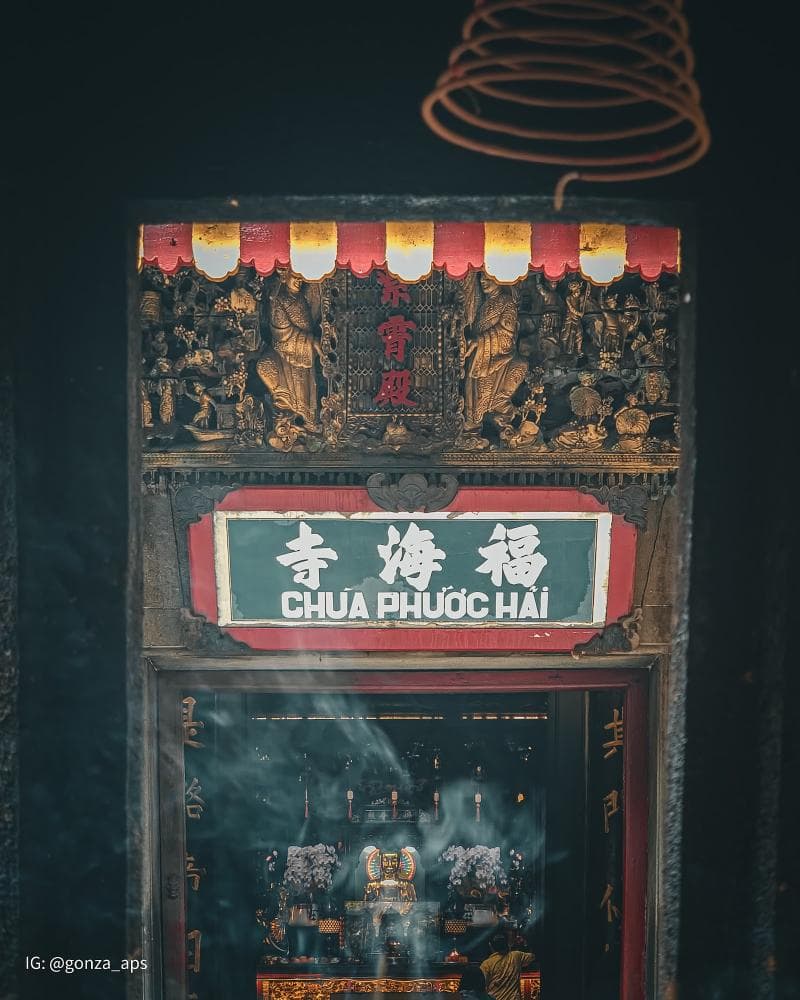
Explore the vibrant rooftop decorations of Jade Emperor Pagoda in Ho Chi Minh City, Vietnam. Discover its rich history and cultural significance.
Overview
Nestled amidst the dynamic urban landscape of Ho Chi Minh City, Vietnam, the Jade Emperor Pagoda, also known as Chùa Ngọc Hoàng or Phước Hải Tự, stands as a captivating spiritual sanctuary. This ancient temple, built in the distinctive Chinese architectural style, is a vibrant hub of Taoist, Buddhist, and Confucian beliefs. It is renowned for its elaborate interior and exterior designs, including a fascinating array of statues and intricate wood carvings. The pagoda offers a tranquil escape, filled with the pervasive scent of incense, providing a deeply atmospheric experience for all who visit.
A highlight of the pagoda's artistry lies in its rooftop decorations, which feature brightly colored yin-yang tiles and an assortment of ceramic statues. These embellishments are not merely ornamental but deeply symbolic, contributing to the pagoda's unique charm and spiritual narrative. The Jade Emperor Pagoda has gained significant international recognition, particularly after a visit by former U.S. President Barack Obama in 2016, solidifying its status as a must-see cultural landmark in Ho Chi Minh City.
History & Cultural Background
The Jade Emperor Pagoda was originally constructed in 1909 by a Cantonese Chinese migrant named Luu Minh, also known as Liu Daoyuan. His intention was to create a place of worship dedicated to both Buddha and the supreme Taoist deity, the Jade Emperor. This foundational act reflects the pagoda's syncretic nature, blending Taoist principles with Mahayana Buddhist elements and local Vietnamese folk beliefs.
Initially a Taoist temple, the pagoda underwent a significant shift in 1982 when it came under the management of the Vietnam Buddhist Association. It was officially renamed Phước Hải Tự in 1984, meaning 'Luck Sea Temple,' though it remains widely known by its original designation, Jade Emperor Pagoda, due to the central role of the Jade Emperor in its worship. In 1994, the pagoda was formally recognized as a National Historic Site, a testament to its enduring cultural and architectural significance. This rich history underpins every aspect of the pagoda, including the symbolic rooftop decorations, which narrate tales from Chinese culture and mythology.
What Makes It Special
The rooftop decorations of the Jade Emperor Pagoda are a spectacle of vibrant color and meticulous craftsmanship, embodying a distinct Chinese architectural style. Visitors are immediately struck by the colorful yin-yang tiled roofs, adorned with numerous ceramic statues. These include mythical creatures such as dragons and phoenixes, which are highly symbolic, representing power, harmony, and auspiciousness within Asian cultures.
Beyond the vibrant tiles, the gables and roofline are populated with an array of figures, often depicting characters from both Buddhist and Taoist lore. Many of these intricate statues are crafted from reinforced papier-mâché, showcasing a traditional artistry that has been preserved for over a century. The overall effect is a roofline that is not just aesthetically pleasing but also serves as a visual narrative, inviting contemplation on the spiritual journey and the stories of deities and celestial beings. This elaborate tile work and the dense arrangement of ceramic figures distinguish the pagoda's roof as a unique artistic and cultural feature.
Stories, Fun Facts & Local Details
The Jade Emperor, or Ngọc Hoàng Thượng Đế, is revered as the supreme deity in Taoist belief, holding sway over heaven, earth, and human destiny. The rooftop figures, particularly the dragons and phoenixes, are potent symbols reflecting the Jade Emperor's dominion and the cosmic order he maintains. These decorations are more than static art; they are imbued with spiritual meaning, believed to imbue the temple with positive energy and blessings.
The colors used in the pagoda's exterior, including the rooftop, also carry deep symbolism. Red, for instance, signifies vitality, energy, and good fortune, while yellow represents prosperity and royalty. The tiered nature of some pagoda roofs, though a broader feature in Vietnamese pagodas, metaphorically represents the stages of spiritual enlightenment, with each layer signifying a step towards ultimate realization. The delicate ceramic patterns and figures on the roof are visual representations of myths and legends, silently conveying ancient wisdom to those who observe them.
Visitor Perspective
For a curious traveler, observing the rooftop decorations of the Jade Emperor Pagoda is an invitation to delve deeper into its cultural tapestry. The intricate details require a moment of pause, encouraging visitors to appreciate the skilled artistry and the spiritual narratives embedded in each figure and tile. It is recommended to visit in the early morning to experience the pagoda's serene atmosphere before it becomes bustling with worshippers and other visitors.
As you explore, you will notice that the pagoda, despite its central location in a busy city, maintains a profound sense of tranquility. While there is no entrance fee, visitors are welcome to make donations to support the upkeep of this historic site. When visiting, modest dress is advised, covering shoulders and knees, to show respect for the sacred space. The air inside is often thick with the aromatic smoke of incense, an integral part of the spiritual ambiance that enhances the overall experience, connecting you to centuries of devotion.
Coordinates: 106.6978889, 10.7917111
View on Google Maps💬 How Travelers Describe This Place
Based on community votes
Unique
445Interesting
416Must See
289Beautiful
141Photogenic
33
Traveler Stories
Discover memorable experiences shared by travelers who have visited this place.
No traveler stories yet.
Be the first traveler to share what made this place memorable.

Tour
By
Spot
Discover amazing places around the world. Your journey starts here.
Explore
© 2026 TourBySpot. All rights reserved.