Main Prayer Hall
Ho Chi Minh City, Vietnam
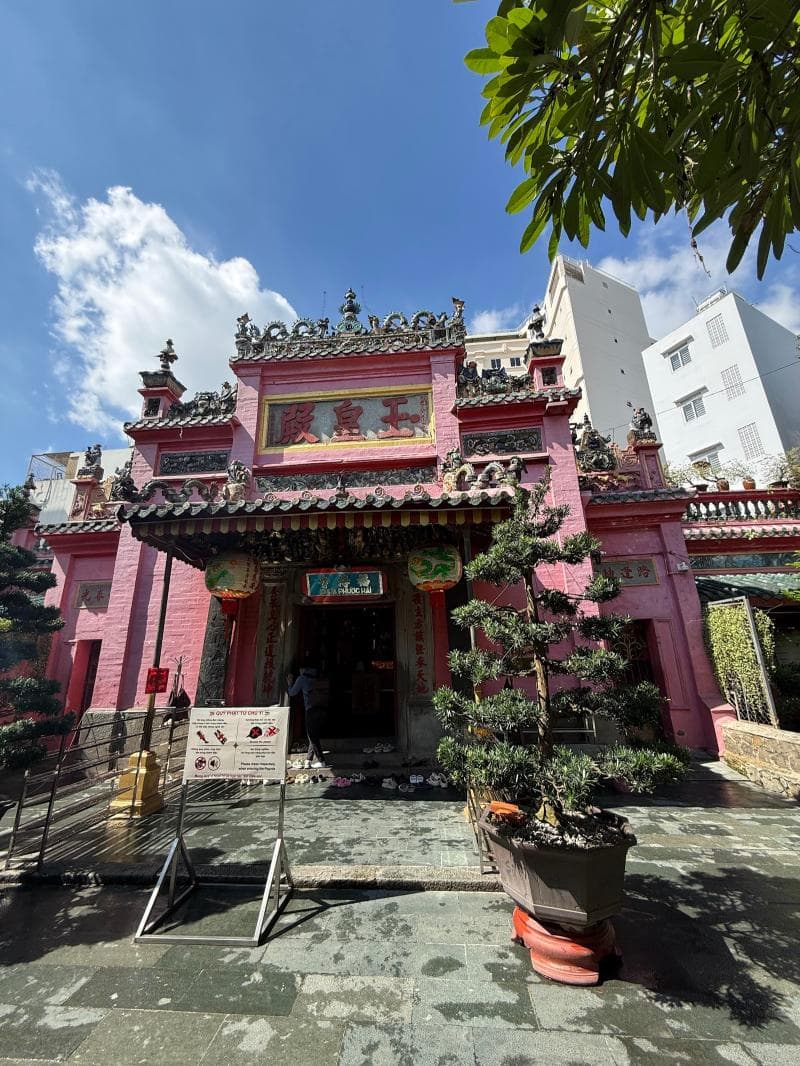
Explore the spiritual Main Prayer Hall at Jade Emperor Pagoda in Ho Chi Minh City, Vietnam. Discover Taoist deities & rich history.
Overview
Stepping into the Main Prayer Hall of the Jade Emperor Pagoda, known locally as Ngọc Hoàng Pagoda or Phước Hải Tự, offers a profound spiritual experience in the heart of bustling Ho Chi Minh City, Vietnam. This revered Taoist, Buddhist, and Confucian temple is a captivating sanctuary renowned for its intricate architecture, vibrant statues, and the pervasive, calming scent of incense. It stands as a significant cultural landmark, drawing both devout locals and curious travelers seeking moments of peace and spiritual connection amidst the city's dynamic energy.
The pagoda, with its distinctly Chinese architectural style, is a feast for the senses, featuring colorful decorations, elaborate carvings, and an array of deities that tell stories from Chinese and Vietnamese spiritual traditions. The Main Prayer Hall itself is the spiritual nucleus, dedicated primarily to the Jade Emperor.
History & Cultural Background
The Jade Emperor Pagoda was established in the early 20th century, around 1909, by Liu Daoyuan (also known as Liu Minh or Lưu Minh), a Chinese merchant from Guangdong, China, who had settled in Saigon (now Ho Chi Minh City). Its original purpose was to honor the Jade Emperor (Ngọc Hoàng Thượng Đế), the supreme deity within the Taoist pantheon. Over time, the pagoda evolved into a central place of worship for the Chinese-Vietnamese community, integrating elements of Buddhism and Confucianism alongside its Taoist roots.
A significant transition occurred in 1982 when the pagoda came under the stewardship of Buddhist monk Thích Vĩnh Khương. By 1984, it was officially renamed Phước Hải Tự, signifying its inclusion within the Buddhist Sangha of Vietnam, though it continues to be widely known by its original name. In 1994, the pagoda was recognized as a national artistic and architectural monument, cementing its historical and cultural importance. Its fame reached international heights in 2016 when it received a visit from then-U.S. President Barack Obama.
What Makes It Special
The Main Prayer Hall, often referred to as Chánh Điện, is unequivocally the spiritual heart of the Jade Emperor Pagoda. As you enter, you are immediately enveloped in an atmosphere of solemnity, heightened by the pervasive aroma of burning incense. The hall's focal point is a grand, often gilded, statue of the Jade Emperor, seated majestically on an elaborate throne, symbolizing wisdom and power. This supreme deity oversees heaven and earth and, according to belief, decides the fate of souls after death.
Flanking the Jade Emperor are celestial generals, fearsome guardian statues, and intricate wooden figures depicting general gods taming tigers and dragons – all meticulously carved and powerfully expressive. These figures serve to protect the sacred space and those who seek solace within it. Devotees and visitors alike approach this central altar to offer prayers for health, good fortune, and spiritual guidance, finding a profound sense of serenity and connection. The hall's elaborate decor, featuring detailed carvings of mythical creatures, underscores its deep spiritual significance.
Stories, Fun Facts & Local Details
Beyond its central devotion, the Jade Emperor Pagoda is rich with local stories and beliefs that imbue it with a unique emotional resonance. One of the most frequented areas within the pagoda is the altar dedicated to Kim Hoa Thánh Mẫu, the Goddess of Fertility, and her twelve midwives. This space is a beacon of hope for countless couples who come to pray for offspring and healthy children, making it particularly lively during lunar holidays.
Another striking feature, though not in the Main Prayer Hall itself but within the pagoda complex, is the 'Hall of Ten Hells.' This section vividly depicts the punishments awaiting transgressors in the afterlife, serving as a powerful visual reminder of karma and the importance of virtuous living according to Taoist and Buddhist teachings. Outside, the pagoda is famously known as the 'Pagoda of the Turtles' due to its large pond filled with turtles, which symbolize longevity and good luck in Asian culture. Visitors often enjoy observing these creatures. The burning of paper offerings in the courtyard's incinerator, with the belief that the smoke carries wishes to ancestors, offers a poignant glimpse into local spiritual practices.
Visitor Perspective
For those planning to visit the Main Prayer Hall and the Jade Emperor Pagoda, a few considerations will enhance the experience. The pagoda is an active place of worship, so visitors are kindly asked to dress modestly, ensuring shoulders and knees are covered, and to remove their shoes before entering the main areas. Bringing small change for incense sticks is a customary way to participate in offerings.
To truly appreciate the tranquil beauty and spiritual ambiance, visiting early in the morning is highly recommended. This allows for a more peaceful experience before the arrival of larger crowds, offering a genuine window into Vietnamese spiritual life as local worshippers perform their daily rituals. The mystical environment created by the incense-filled air and the quiet devotion of pilgrims makes for a deeply reflective and memorable visit.
Coordinates: 106.697778, 10.791667
View on Google Maps💬 How Travelers Describe This Place
Based on community votes
Unique
989Beautiful
613Photogenic
603Interesting
581Must See
207
Traveler Stories
Discover memorable experiences shared by travelers who have visited this place.
No traveler stories yet.
Be the first traveler to share what made this place memorable.

Tour
By
Spot
Discover amazing places around the world. Your journey starts here.
Explore
© 2026 TourBySpot. All rights reserved.