Guardian Deity Statues
Ho Chi Minh City, Vietnam
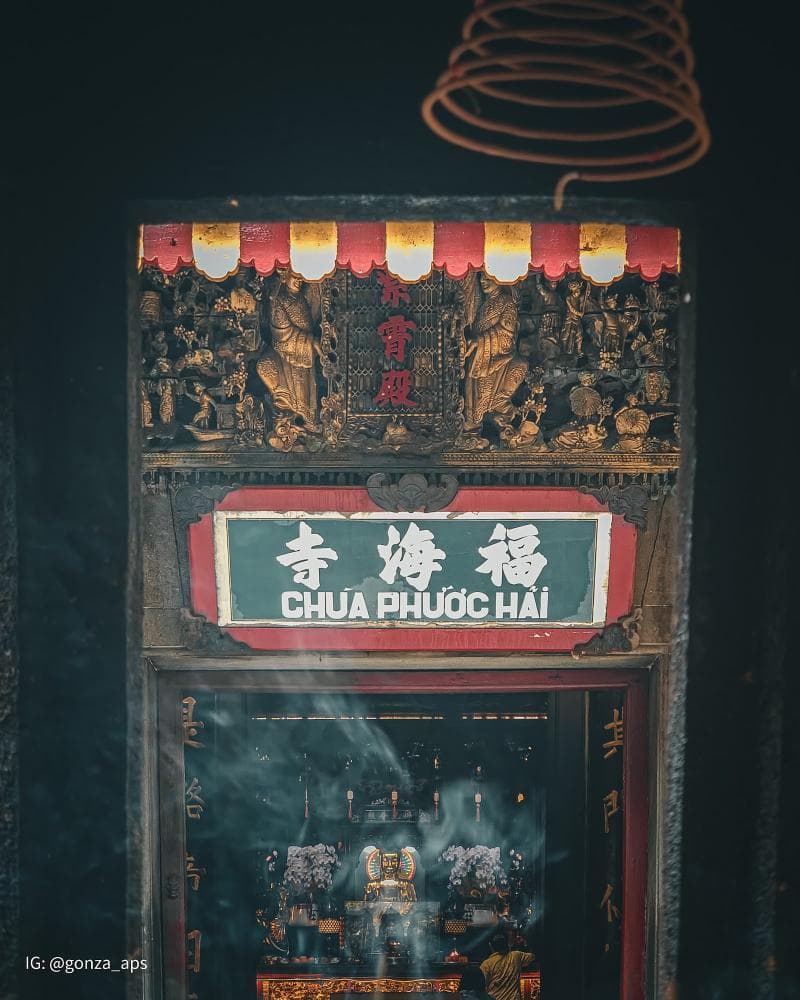
Discover the awe-inspiring Guardian Deity Statues at Jade Emperor Pagoda, Ho Chi Minh City, Vietnam. Explore their history, cultural significance, and unique artistry.
Overview
Nestled amidst the bustling streets of Ho Chi Minh City, Vietnam, the Jade Emperor Pagoda, locally known as Chùa Ngọc Hoàng or Phước Hải Tự, offers a serene escape into a world rich with spiritual symbolism and ancient artistry. Among its many captivating features, the Guardian Deity Statues stand as powerful sentinels, embodying protection, justice, and the intricate blend of Taoist and Buddhist beliefs that define this sacred space. These imposing figures, crafted from wood, ceramic, and even papier-mâché, are far more than mere decorations; they are active participants in the pagoda's spiritual life, attracting devotees and curious travelers alike to witness their awe-inspiring presence.
History & Cultural Background
The Jade Emperor Pagoda itself boasts a storied past, having been established in the early 20th century, specifically around 1909, by a Chinese immigrant named Luu Minh (or Liu Ming/Liu Daoyuan). His vision was to create a place of worship dedicated primarily to the Jade Emperor, the supreme Taoist deity who governs heaven and earth. Over the decades, the pagoda has absorbed elements of Mahayana Buddhism and Confucianism, creating a unique syncretic religious environment that reflects the multicultural spiritual landscape of Vietnam. In 1982, the pagoda came under the management of the Vietnam Buddhist Association and was later recognized as a National Artistic and Architectural Site in 1994. The guardian statues within the pagoda are deeply rooted in this rich heritage, representing deities from both Taoist and Buddhist pantheons, tasked with safeguarding the sacred precincts and its worshippers. Their presence underscores the continuous reverence for cosmic order and protection in traditional Vietnamese and Chinese folk religions.
What Makes It Special
What truly sets the Guardian Deity Statues apart is their formidable presence and the detailed craftsmanship that brings them to life. In the main hall, visitors are immediately struck by the towering figures flanking the altar of the Jade Emperor. These are often identified as the Four Big Diamonds (Tứ Đại Kim Cương), powerful guardians said to be as hard as diamonds. One such general is depicted triumphing over a Green Dragon, while another subdues a White Tiger, symbolizing their immense power and protective duties. Many of these statues, some reaching up to four meters in height, are crafted from reinforced papier-mâché, wood, or ceramic, showcasing an artistic tradition that has endured for over a century. Their expressions are fierce, their armor intricate, and their stance resolute, creating an overwhelming sense of sacred authority that commands respect from all who enter.
Stories, Fun Facts & Local Details
- The Hall of Hell Guardians: Beyond the main hall, visitors can explore the Hall of Hell Guardians (Phu Ong Ho or Dien Diem Vuong), a solemn space presided over by Thanh Hoang, the Chief of Hell, often accompanied by his red horse. This section features vivid depictions of the Ten Courts of Hell, illustrating the karmic retributions awaiting those who commit evil deeds. These scenes serve as powerful visual narratives, emphasizing moral responsibility and the consequences of one's actions, a key aspect of Taoist and Buddhist teachings.
- Fertility Wishes: In another chamber, the altar dedicated to Kim Hoa Thanh Mau, the Goddess of Fertility, and her twelve midwives attracts countless local women hoping for children. It's a poignant sight, showcasing the deeply personal connection devotees have with the deities.
- Papier-mâché Masterpieces: A remarkable detail is that some of the pagoda's approximately 300 statues, including about 100 figures presenting genies meeting the Jade Emperor, are made from cartridge paper and bamboo laths. Despite their age, these ancient works still appear wonderfully preserved, a testament to the skill of the artisans.
- Presidential Visit: The pagoda gained international renown in 2016 when then-U.S. President Barack Obama paid a visit, drawing global attention to its cultural and spiritual significance.
Visitor Perspective
Stepping into the Jade Emperor Pagoda, particularly among its Guardian Deity Statues, is an immersive experience. The air is thick with the scent of incense, creating a mystical and contemplative atmosphere that contrasts sharply with the city's urban pulse outside. The dim lighting and narrow passageways amplify the ancient aura of the place, making the statues seem even more imposing and alive. Observing locals reverently making offerings of flowers and lighting joss sticks before these guardians offers a profound glimpse into deeply held spiritual practices. It's a place not only for spiritual reflection but also for appreciating centuries of intricate artistic and cultural heritage, leaving visitors with a lasting impression of the protective power and rich narratives embodied by these extraordinary statues in the heart of Ho Chi Minh City.
Coordinates: 106.6978889, 10.7917111
View on Google Maps💬 How Travelers Describe This Place
Based on community votes
Unique
989Beautiful
613Photogenic
603Interesting
581Must See
207
Traveler Stories
Discover memorable experiences shared by travelers who have visited this place.
No traveler stories yet.
Be the first traveler to share what made this place memorable.

Tour
By
Spot
Discover amazing places around the world. Your journey starts here.
Explore
© 2026 TourBySpot. All rights reserved.