Hutongs
Beijing, China
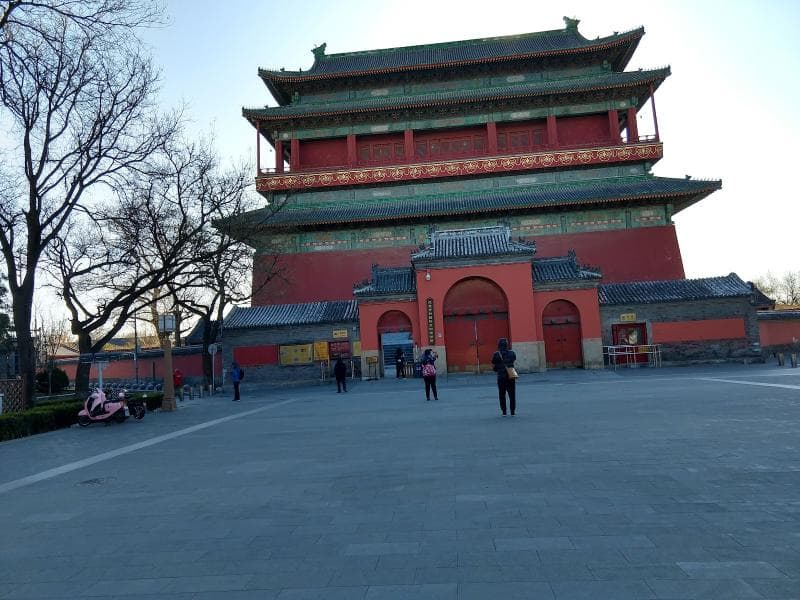
Explore Beijing's ancient Hutongs, narrow alleys and traditional courtyard homes. Discover rich history, unique culture, and local life in China's capital.
Overview
Hutongs are ancient alleyways that form the historical and cultural heart of Beijing, China. These narrow lanes, often lined with traditional courtyard residences known as siheyuan, offer a unique glimpse into the city's rich past and the daily life of its local residents. They stand in stark contrast to Beijing's modern skyline, serving as living museums where centuries-old traditions endure. The term 'hutong' itself is believed to originate from the Mongolian word 'hottog' or 'quddug', meaning 'water well', indicating that these communities often formed around essential water sources.
History & Cultural Background
The origins of Beijing's hutongs trace back to the Yuan Dynasty (1271-1368), when Kublai Khan redesigned Beijing as his imperial capital. The city's layout during this period, and subsequently through the Ming (1368-1644) and Qing (1644-1911) dynasties, saw residential areas arranged according to social classes. Aristocrats and high-ranking officials lived in wider, more spacious hutongs closer to the imperial palace, while commoners, merchants, and artisans resided in narrower lanes farther out.
The fundamental architectural unit within a hutong is the siheyuan, a traditional courtyard house where dwellings are arranged around a central courtyard. These homes were designed for extended families, emphasizing harmony and privacy, with main buildings and gates typically facing south for optimal lighting. Many neighborhoods were formed by joining one siheyuan to another, which in turn created a hutong, connecting these residences into an intricate urban fabric.
Historically, hutongs were the epicenter of Beijing's social, cultural, and economic life, teeming with markets, workshops, and communal courtyards. However, since the mid-20th century, many hutongs have been demolished due to rapid urbanization, making way for new roads and modern buildings. In recent years, there has been a significant effort to preserve the remaining hutongs, recognizing their immense cultural and historical value as the 'soul of old Beijing'.
What Makes It Special
What sets Beijing's hutongs apart is their ability to encapsulate the authentic spirit of traditional Beijing life amidst a rapidly modernizing metropolis. They are not just architectural remnants but vibrant communities where daily life unfolds much as it has for generations. The grey brick walls, intricately carved wooden doors, and traditional tiled roofs of the siheyuan offer a distinctive aesthetic.
The labyrinthine quality of the hutongs, with their winding and sometimes surprisingly narrow alleyways, fosters a strong sense of community. Neighbors interact readily, sharing meals, playing games, and going about their routines in a way that is often lost in larger, more anonymous urban environments. This blend of historical architecture and living culture creates an 'outdoor museum of courtyard living'. Some hutongs have also adapted, with older structures now housing trendy cafes, boutiques, and restaurants, creating a unique fusion of old and new.
Stories, Fun Facts & Local Details
Hutongs are rich with anecdotes and unique characteristics. There's an old Beijing saying that highlights their abundance: 'There are over 3,600 hutongs with names, but if we count all the hutongs, there are more than the hairs on an ox'. Some hutongs have names reflecting their location, local landmarks, or even past trades, such as Yangshi Hutong (sheep market) or Mao'er Hutong (hat-making workshops).
Among the notable hutongs are those with extreme features: Dongxijiaomin Xiang is known as the longest, stretching 6.5 kilometers. Conversely, Yichidajie, or 'One-Foot Street', is considered one of the shortest at only 20 meters, while Qianshi Hutong holds the title for the narrowest, being just 40 centimeters wide at its tightest point, barely allowing one person to pass. Lingjing Hutong, however, boasts the widest section at 32 meters. Some hutongs, like Jiudaowan Hutong, are famous for their numerous turns, bending nineteen times. These unique features add to the charm and individuality of each alleyway.
Visitor Perspective
For curious travelers, exploring Beijing's hutongs offers an immersive cultural experience that goes beyond typical sightseeing. Many visitors choose to navigate these historic lanes by rickshaw, allowing for a relaxed and insightful tour led by local guides who often share captivating stories of the area's history and residents. Walking tours are also popular, providing an opportunity to leisurely observe the rhythm of local life, from residents playing mahjong or Chinese chess to vendors calling out their wares.
Visitors can delve deeper into hutong culture by participating in hands-on activities. These might include learning to make traditional dumplings, engaging in calligraphy or paper-cutting workshops, or even experiencing a traditional Peking opera performance. Some hutong families welcome guests for home visits, offering a chance to share a home-cooked meal and hear personal stories, providing an authentic connection to local life. The best times to visit are generally spring and autumn, when the weather is most pleasant for outdoor exploration. To experience a quieter side of local life, weekdays mornings are recommended, while evenings can offer a livelier atmosphere with dining and drinking options.
Coordinates: 116.39723, 39.9075
View on Google Maps💬 How Travelers Describe This Place
Based on community votes
Unique
989Beautiful
613Photogenic
603Interesting
581Must See
207
Traveler Stories
Discover memorable experiences shared by travelers who have visited this place.
No traveler stories yet.
Be the first traveler to share what made this place memorable.
Things to see at Hutongs



Tour
By
Spot
Discover amazing places around the world. Your journey starts here.
Explore
© 2026 TourBySpot. All rights reserved.