Drum Tower
Beijing, China
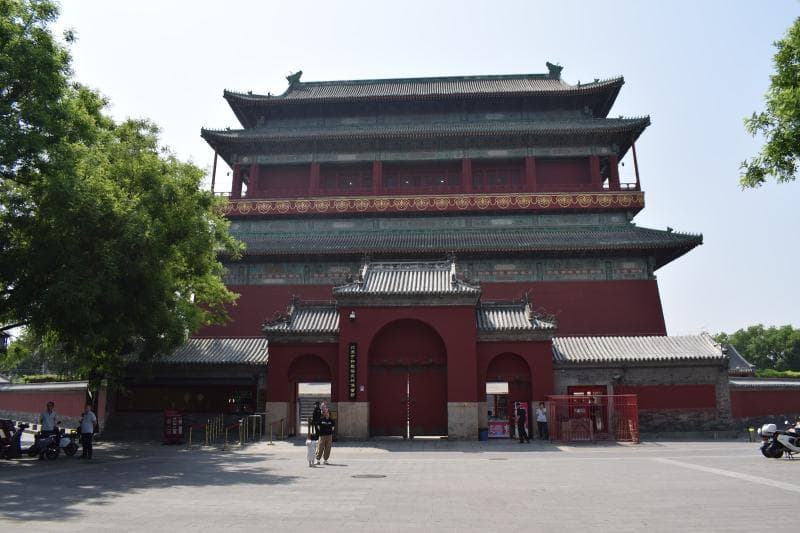
Explore Beijing's historic Drum Tower (Gulou) in the heart of the Hutongs, a former imperial timekeeping center with drum performances and panoramic views.
Overview
Nestled amidst the labyrinthine alleyways of Beijing's historic Hutongs, the Drum Tower, or Gulou, stands as a venerable sentinel of time and tradition. This magnificent two-story wooden structure, soaring 46.7 meters into the sky, is more than just an architectural marvel; it is a living testament to Beijing's rich past and its enduring cultural rhythms. Situated at the northern end of the city's central axis, the Drum Tower once served as the primary timekeeping hub for the ancient capital, its resonant beats dictating the daily lives of emperors and commoners alike. Today, it invites curious travelers to step back in time, offering panoramic views of the surrounding traditional neighborhoods and showcasing fascinating insights into China's ingenious timekeeping methods. Its prominent red exterior and distinct architecture make it a cherished landmark in the Dongcheng District, a perfect starting point for exploring the charming adjacent hutongs.
History & Cultural Background
The story of the Beijing Drum Tower begins in 1272 during the Yuan Dynasty, under the reign of Kublai Khan. It was originally known as the 'Tower of Orderly Administration' (Qizhenglou), a name that symbolized harmony with the universe. After being destroyed by fire, it was rebuilt in 1420 during the Ming Dynasty, and further significant renovations occurred in 1800 during the Qing Dynasty, shaping much of the structure we see today. For centuries, from the Yuan through the Ming and Qing dynasties, the Drum Tower played a crucial role as Beijing's official timepiece, its rhythmic drumming marking the hours of the night. This ancient timekeeping system, which saw the 'morning bell' and 'dusk drum' synchronize the city, dates back as early as the Han Dynasty. The drums would beat at dusk, signaling the closing of city gates, and then throughout the night, while the Bell Tower would announce the dawn. This essential function continued until 1924, when Western-style clocks were adopted.
What Makes It Special
The Drum Tower's special allure lies in its historical significance and its current role as a cultural preserver. It's a key component of Beijing's central axis, a UNESCO World Heritage site recognized in July 2024. Beyond its imposing scale and traditional Chinese architecture, featuring a red facade, gray tiled roof, and green glazed edges, the tower holds remarkable relics. Inside, you'll find an exhibition detailing the evolution of ancient Chinese timekeeping, including water clocks (clepsydras) and other intriguing devices that once regulated the city's rhythm. Most notably, one original large drum remains from an initial set of 25, bearing a sword mark—a poignant scar from the Eight-Power Allied Forces' invasion in 1900. The highlight for many visitors is the captivating drum performance, where skilled drummers reenact the ancient time-announcing rituals, their powerful beats echoing through the grand hall.
Stories, Fun Facts & Local Details
Imagine the ancient city of Beijing, its sprawling hutongs hushed under the night sky, awaiting the deep, resonating beats from the Drum Tower to signal the passing hours. This was the city's heartbeat for over 600 years. A fascinating detail about the drum performances is the specific sequence: drummers beat quickly 18 times, then slowly 18 times, repeating this for three rounds, totaling 108 tollings. This number, 108, was symbolic, representing a full year in ancient Chinese reckoning. Beyond its timekeeping duties, the area surrounding the Drum Tower, affectionately known as Gulou, has always been a vibrant hub. It's where the traditional hutong life thrives, offering a glimpse into old Beijing's charm. The square between the Drum and Bell Towers remains a gathering place for locals, a spot where community life unfolds, making it a perfect place to soak in the authentic atmosphere.
Visitor Perspective
A visit to the Drum Tower offers a unique blend of historical immersion and breathtaking scenery. Be prepared for a climb; ascending to the top involves navigating a series of steep steps, but the reward is immense. From the upper levels, you'll be treated to unparalleled panoramic views. On a clear day, the expanse of the traditional hutongs with their distinctive gray-tiled roofs stretches out, providing a striking contrast to the distant modern skyscrapers of Beijing. Timing your visit to coincide with one of the hourly drum performances is highly recommended, as it's a powerful and memorable experience that brings the tower's history to life. After exploring the tower's interior, which includes historical exhibits on ancient timekeeping, take time to wander through the adjacent hutongs. These narrow alleyways, brimming with local life and hidden gems, offer the perfect complement to your historical journey through the Drum Tower, creating a holistic experience of traditional Beijing.
Coordinates: 116.38975, 39.93935
View on Google Maps💬 How Travelers Describe This Place
Based on community votes
Must See
996Unique
673Photogenic
186Beautiful
143Interesting
80
Traveler Stories
Discover memorable experiences shared by travelers who have visited this place.
No traveler stories yet.
Be the first traveler to share what made this place memorable.

Tour
By
Spot
Discover amazing places around the world. Your journey starts here.
Explore
© 2026 TourBySpot. All rights reserved.