Bell Tower
Beijing, China
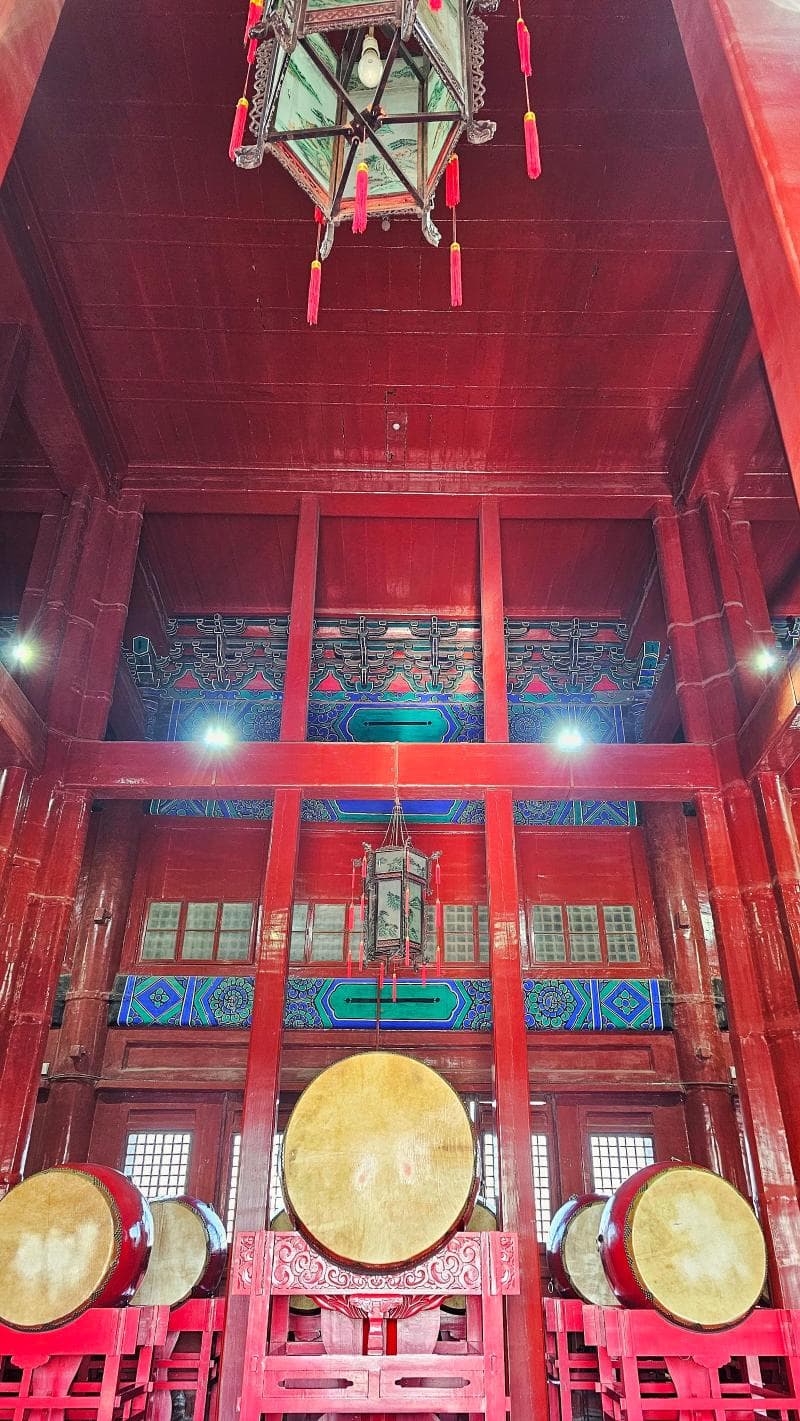
Explore Beijing's historic Bell Tower in the Hutongs, a former timekeeping center. Discover its massive bell, rich history, and panoramic views.
Overview
The Bell Tower, or Zhonglou, stands as a venerable landmark in Beijing, China, majestically positioned at the northern end of the city's central axis. Located intimately within the traditional Hutongs district, it is often seen alongside its counterpart, the Drum Tower, together forming a historical timekeeping duo. These towers once dictated the daily rhythms of ancient Beijing, their resonant sounds reaching across the sprawling imperial capital. The Bell Tower, with its distinctive grey walls and green glazed roof, offers more than just a glimpse into the past; it provides a tangible connection to the city's rich cultural tapestry, standing tall amidst the charming, labyrinthine alleys of the Hutongs.
History & Cultural Background
The origins of Beijing's Bell Tower trace back to 1272 during the Yuan Dynasty, when it first served as a crucial timekeeping center for the then-capital, Dadu. Originally built to function alongside the Drum Tower, which was initially named the 'Tower of Orderly Administration,' these structures played a vital role in imperial administration. Throughout the Ming and Qing dynasties, the Bell and Drum Towers were central to official timekeeping, signaling the dawn and dusk across the city. While the Drum Tower largely maintained its wooden structure, the Bell Tower endured several reconstructions after being destroyed by fires. The present brick and stone structure of the Bell Tower dates primarily from 1747, a rebuild during the Qing Dynasty. This enduring landmark continued its timekeeping duties until 1924 when, with the end of the imperial era, Western-style clocks were adopted for official timekeeping.
What Makes It Special
What truly sets the Bell Tower apart is the monumental bronze bell housed within its upper stories. Cast during the Yongle reign (1403-1424) of the Ming Dynasty, this colossal bell weighs an astounding 63 tons, making it one of the largest and heaviest bells in China, and indeed, in the world. Its deep, resonant sound was said to travel several kilometers, coordinating the lives of residents across the ancient city. Architecturally, the Bell Tower stands at approximately 47.9 meters (or 108 feet), featuring robust grey brick walls and an elegant green-glazed roof, which distinguishes it from the red-painted Drum Tower. The tower's design includes arched doors on all four sides of its two floors, and inside, the massive bell hangs from an eight-square wooden frame. From its elevated position, the Bell Tower offers unparalleled panoramic views, allowing visitors to gaze upon the intricate tiled rooftops of the surrounding Hutongs and, on a clear day, even the distant modern skyscrapers of Beijing.
Stories, Fun Facts & Local Details
The Bell Tower is steeped in intriguing stories and local lore. One of the most famous legends associated with its colossal bell recounts the tale of a bell-maker's daughter. After several unsuccessful attempts to cast a perfect bell, the master bell-maker faced severe imperial displeasure. Fearing for her father's life, his daughter tragically sacrificed herself by leaping into the molten metal during the final casting. Miraculously, a perfect bell was then forged, and it is said that in its reverberations, one can still hear her mournful cry. Beyond this poignant legend, the Bell Tower has had an eclectic past; after its official timekeeping function ceased, it temporarily served as a cinema during the early 20th century and, in more recent decades, even a space for locals to play pool before its restoration as a cultural site. Historically, the 'morning bell and evening drum' system was central to life, with the bell ringing at dawn to signify the start of the day and the drum beating at dusk. On New Year's Eve, the tradition of striking the bell 108 times is believed to send blessings to the people, reflecting ancient Chinese philosophy.
Visitor Perspective
Visiting the Bell Tower today offers a unique opportunity to step back in time and connect with Beijing's enduring heritage. The climb to the top involves navigating a series of steep steps, but the effort is richly rewarded with breathtaking views over the traditional Hutong rooftops. From this vantage point, one can observe the daily life of the local residents, largely preserved within these ancient alleys, contrasting sharply with the city's modern developments. The Bell Tower's location in the vibrant Hutong area means visitors can easily explore the surrounding neighborhoods, which are brimming with teahouses, local markets, and traditional courtyard homes. Walking through these alleys after visiting the tower provides an immersive experience into the authentic atmosphere of Old Beijing. While the bell is no longer struck daily, exhibits inside the tower detail the intricate methods of ancient timekeeping, including water and sun clocks, offering an educational complement to the historical site. It's a journey that allows travelers to feel the historical pulse of the ancient capital, making it a compelling destination for anyone exploring Beijing's cultural landmarks.
Coordinates: 116.38964, 39.94102
View on Google Maps💬 How Travelers Describe This Place
Based on community votes
Photogenic
547Interesting
336Unique
219Beautiful
186Must See
80
Traveler Stories
Discover memorable experiences shared by travelers who have visited this place.
No traveler stories yet.
Be the first traveler to share what made this place memorable.

Tour
By
Spot
Discover amazing places around the world. Your journey starts here.
Explore
© 2026 TourBySpot. All rights reserved.