Holy Trinity Cathedral
Tbilisi, Georgia
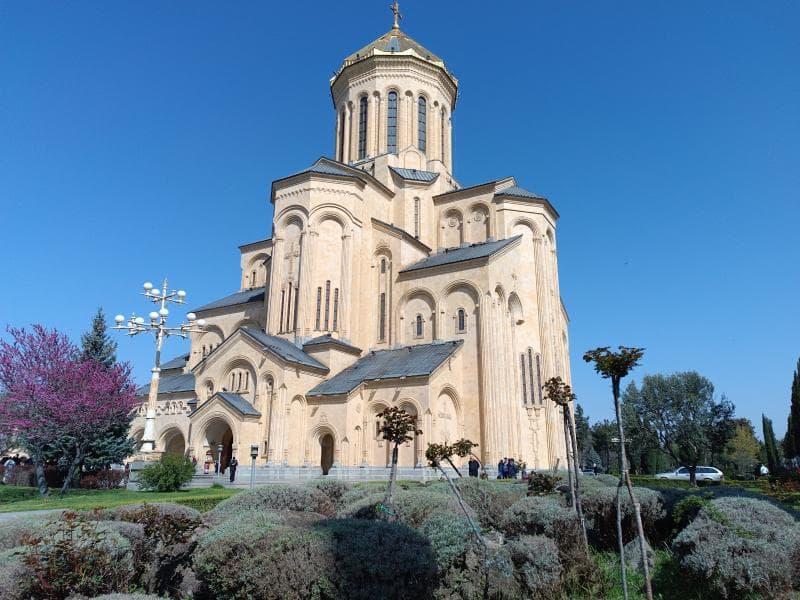
Explore Tbilisi's Holy Trinity Cathedral (Sameba), Georgia's grandest church, a symbol of national and spiritual revival. Discover its history, unique architecture, and cultural significance.
Overview
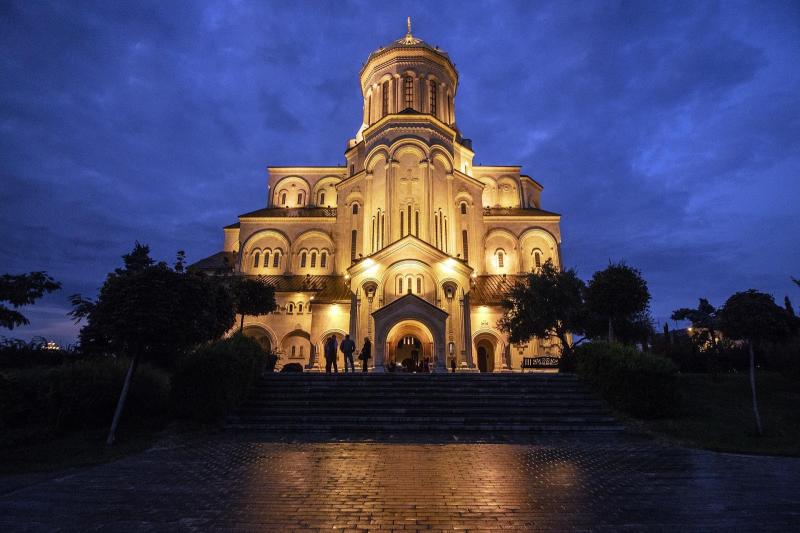
Dominating the Tbilisi skyline with its shimmering golden dome and towering cross, the Holy Trinity Cathedral, locally known as Sameba (meaning 'Trinity'), stands as a profound symbol of modern Georgia. This majestic edifice serves as the main cathedral of the Georgian Orthodox Church and is a relatively recent addition to the city's ancient landscape, completed in 2004. Perched atop Elia Hill in the historic Avlabari district, Sameba is not merely a place of worship but a sprawling religious complex visible from nearly every corner of the capital. It proudly holds the distinction of being the tallest church in Georgia and ranks among the third-tallest Eastern Orthodox cathedrals globally.
The grandeur of Sameba extends beyond its impressive stature; it embodies Georgia's spiritual revival and national identity in the post-Soviet era. The complex encompasses the principal cathedral, a separate bell tower, the residence of the Georgian Patriarch, a monastery, a theological seminary, and various workshops, alongside nine chapels—five of which are uniquely situated underground.
History & Cultural Background
The genesis of the Holy Trinity Cathedral dates back to a pivotal moment in Georgian history, emerging from the national awakening of 1989 as the Soviet Union began to disintegrate. The ambitious project was conceived to commemorate two significant anniversaries: 1,500 years of autocephaly (ecclesiastical independence) for the Georgian Orthodox Church and 2,000 years since the birth of Jesus Christ. A nationwide design competition was launched, with Georgian architect Archil Mindiashvili ultimately winning the commission.
Despite the initial vision, turbulent years of civil unrest in Georgia delayed construction, which finally commenced on November 23, 1995. Almost a decade later, the cathedral was completed and consecrated on November 23, 2004, coinciding with Giorgoba, Georgia's revered St. George's Day. The construction was a monumental undertaking during a period of economic instability, funded primarily by private contributions from citizens and benefactors, including then-President Eduard Shevardnadze.
However, the project was not without controversy. The chosen site on Elia Hill was previously home to a historic Armenian Apostolic church and graveyard (Khojivank), much of which had been razed by Soviet authorities in the 1930s. The subsequent relocation of remaining graves during the cathedral's construction stirred significant distress and controversy within the Armenian community, highlighting complex historical layers beneath this modern symbol.
What Makes It Special
What truly sets the Holy Trinity Cathedral apart is its awe-inspiring scale and architectural fusion. It stands as Georgia's largest church and is the third-tallest Eastern Orthodox cathedral in the world, with its golden dome soaring over 80 meters from its base and its gilded cross reaching up to 7.5 meters. The architectural design is a masterful synthesis, blending traditional Georgian cross-dome church styles from the 10th and 11th centuries with subtle Byzantine influences, presenting a modern reinterpretation of ancient designs.
The interior is equally breathtaking, featuring vast spaces, high ceilings, and intricate frescoes painted under the supervision of Amiran Goglidze. The floor is crafted from marble tiles, and a prominent gilded iconostasis separates the nave from the sanctuary. Within its walls, visitors can explore nine chapels, five of which are located in the underground section of the complex. Furthermore, the cathedral houses a significant collection of icons, including the highly opulent 'Hope of Georgia' icon, reportedly adorned with over 30 kilograms of gold and valuable jewels.
Stories, Fun Facts & Local Details
The very name 'Sameba' is Georgian for 'Trinity', reflecting its dedication to the Holy Trinity. A fascinating detail lies in its foundations: during construction, pieces from holy sites were ceremoniously placed in its basement, including rocks from Sion Mountain, water from the Jordan River, soil from Jerusalem, and earth from the tomb of St. George. This act symbolically links Sameba to millennia of Christian history. The bells for the cathedral, nine in total, were cast in Germany, with the largest weighing an impressive 8,000 kilograms.
The sheer volume of the main sanctuary is often noted, with anecdotal observations suggesting that birds can sometimes fly freely within its massive space. The 'Hope of Georgia' icon inside is a marvel of Georgian minankari (cloisonne enamel) iconography, depicting over 400 saints. It's also noteworthy that the construction of Sameba was the only large-scale building project undertaken in Georgia during the economically challenging 1990s, underscoring its profound symbolic importance for national identity and resilience during a turbulent period.
Visitor Perspective
The Holy Trinity Cathedral is open daily and offers free admission, welcoming all who wish to explore its sacred grounds. Visitors are encouraged to observe a modest dress code: women should cover their heads and shoulders, and men should avoid wearing shorts, respecting the sanctity of the worship space. While photography is generally permitted, discretion is advised, especially during services, and flash photography should be avoided to maintain a respectful atmosphere for worshippers.
Located in the Avlabari district, the cathedral is easily accessible by metro (Avlabari station is a short walk away), taxi, or bus. Though there are steep steps leading up to the main entrance, a road also provides vehicle access. For the most serene experience and optimal lighting for photographs, consider visiting in the early morning or late afternoon. Attending a morning or evening service offers a unique opportunity to witness the spiritual practices and hear the polyphonic chants of the Trinity Cathedral Choir, providing a deeper connection to Georgian culture. The elevated position of the cathedral also affords stunning panoramic views of Tbilisi, particularly beautiful at sunset when the city lights begin to twinkle.
Coordinates: 44.8167, 41.6918
View on Google Maps💬 How Travelers Describe This Place
Based on community votes
Must See
963Beautiful
723Interesting
482Photogenic
396Unique
274
Traveler Stories
Discover memorable experiences shared by travelers who have visited this place.
No traveler stories yet.
Be the first traveler to share what made this place memorable.
Things to see at Holy Trinity Cathedral





Tour
By
Spot
Discover amazing places around the world. Your journey starts here.
Explore
© 2026 TourBySpot. All rights reserved.