Underground Chapel
Tbilisi, Georgia
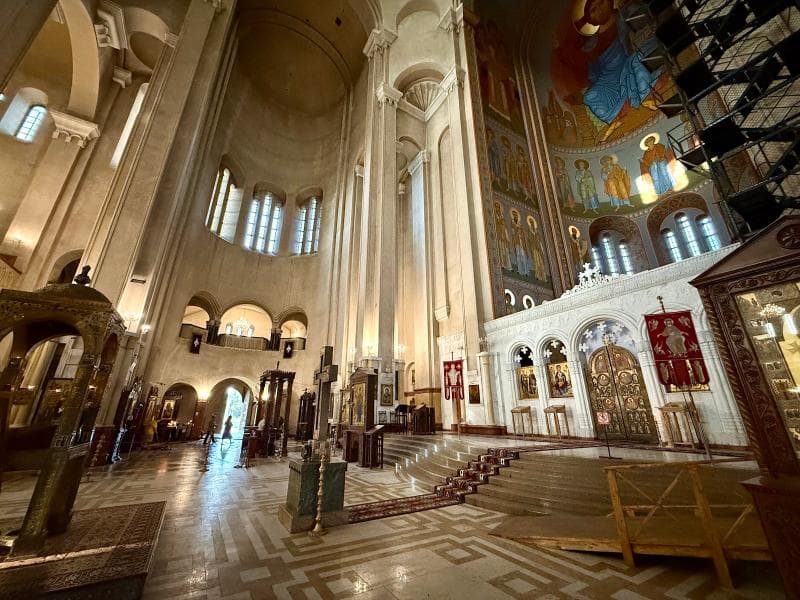
Explore the serene Underground Chapel within Tbilisi's Holy Trinity Cathedral, a profound spiritual sanctuary in Georgia's capital.
Overview
Deep beneath the majestic Holy Trinity Cathedral, known locally as Sameba, in Tbilisi, Georgia, lies a serene and spiritually significant sub-spot: the Underground Chapel. While the cathedral's golden dome majestically crowns the city's skyline, beckoning visitors with its grandeur, the subterranean chapels offer a profoundly different, intimate experience. The entire Sameba complex is a sprawling testament to Georgian Orthodox faith, encompassing not only the main cathedral but also a bell tower, the residence of the Patriarch, a monastery, a theological academy, and a total of nine chapels, five of which are located underground. These hidden sanctuaries provide a quiet contrast to the vast main hall above, inviting contemplation and a deeper connection to Georgia's rich spiritual heritage.
History & Cultural Background
The construction of the Holy Trinity Cathedral complex, including its underground chapels, was a monumental undertaking that spanned nearly a decade, from 1995 to 2004. Conceived in 1989, the project held immense national and spiritual significance, marking 1,500 years of the Georgian Orthodox Church's autocephaly and 2,000 years of Christianity. It emerged as a powerful symbol of Georgia's spiritual and national revival following decades of Soviet rule, asserting the country's enduring faith and quest to restore its cultural and religious traditions. Designed by architect Archil Mindiashvili, the cathedral and its chapels were primarily funded through countless donations from private citizens, companies, and benefactors, underscoring the collective desire of the Georgian people to build this beacon of faith.
What Makes It Special
The Underground Chapel—or rather, the collection of five underground chapels—within the Sameba complex is particularly unique, setting it apart from many other grand cathedrals worldwide. The cathedral's foundation extends deep into Elia Hill, with the underground section reaching a depth of approximately 14 meters. This impressive subterranean architecture houses chapels dedicated to various saints, including the Archangels, John the Baptist, Saint Nino, Saint George, Saint Nicholas, the Twelve Apostles, and All Saints. The architectural style throughout the complex blends traditional Georgian ecclesiastical elements with Byzantine influences, creating a harmonious yet distinct environment. While the main cathedral dazzles with its immense vertical space and light, the underground chapels offer a sense of ancient pilgrimage, providing a cooler, more intimate atmosphere where faith is observed in hushed reverence. The use of natural materials, including marble for the floors, adds to the authentic and timeless feel of these sacred spaces.
Stories, Fun Facts & Local Details
The construction of Sameba is imbued with profound symbolic acts. In a truly moving gesture of devotion and national identity, sacred artifacts from holy lands and sites across Georgia were incorporated into the cathedral's foundation. This included stones from Mount Sinai, where the Ten Commandments were given; from the Jordan River, where Jesus was baptized; from Nazareth, a significant place in Christian history; and sand from Jerusalem. This tradition signifies the deep roots of Christianity in Georgia and connects the modern structure to millennia of spiritual history. Furthermore, it's said that during the initial stages of construction, people wrote their names and wishes on stones which were then used in the cathedral's base, personally embedding their hopes and prayers into the very fabric of this sacred place. These details underscore the cathedral's role not just as a building, but as a living monument shaped by the faith and contributions of its people.
Visitor Perspective
Stepping into the underground chapels is like entering a sanctuary removed from the bustling world above. The transition from the expansive, brightly lit main cathedral to the more subdued, intimate environment below ground creates a powerful sense of introspection. Here, visitors can witness the profound devotion of local worshippers in a quieter setting, often encountering smaller services or individuals engaged in private prayer. The cool, quiet air and the subtle glow of icon lamps contribute to an atmosphere of deep reverence and peace. As with all sacred sites within the Sameba complex, visitors are encouraged to observe a modest dress code, covering shoulders and knees, with women often asked to cover their heads as a sign of respect. This experience offers a unique opportunity to connect with the spiritual heart of Tbilisi, away from the grand spectacles, and to appreciate the enduring faith that these hidden chapels represent.
Coordinates: 44.8167, 41.6918
View on Google Maps💬 How Travelers Describe This Place
Based on community votes
Beautiful
958Must See
794Interesting
565Unique
157Photogenic
28
Traveler Stories
Discover memorable experiences shared by travelers who have visited this place.
No traveler stories yet.
Be the first traveler to share what made this place memorable.

Tour
By
Spot
Discover amazing places around the world. Your journey starts here.
Explore
© 2026 TourBySpot. All rights reserved.