Main Cathedral Hall
Tbilisi, Georgia
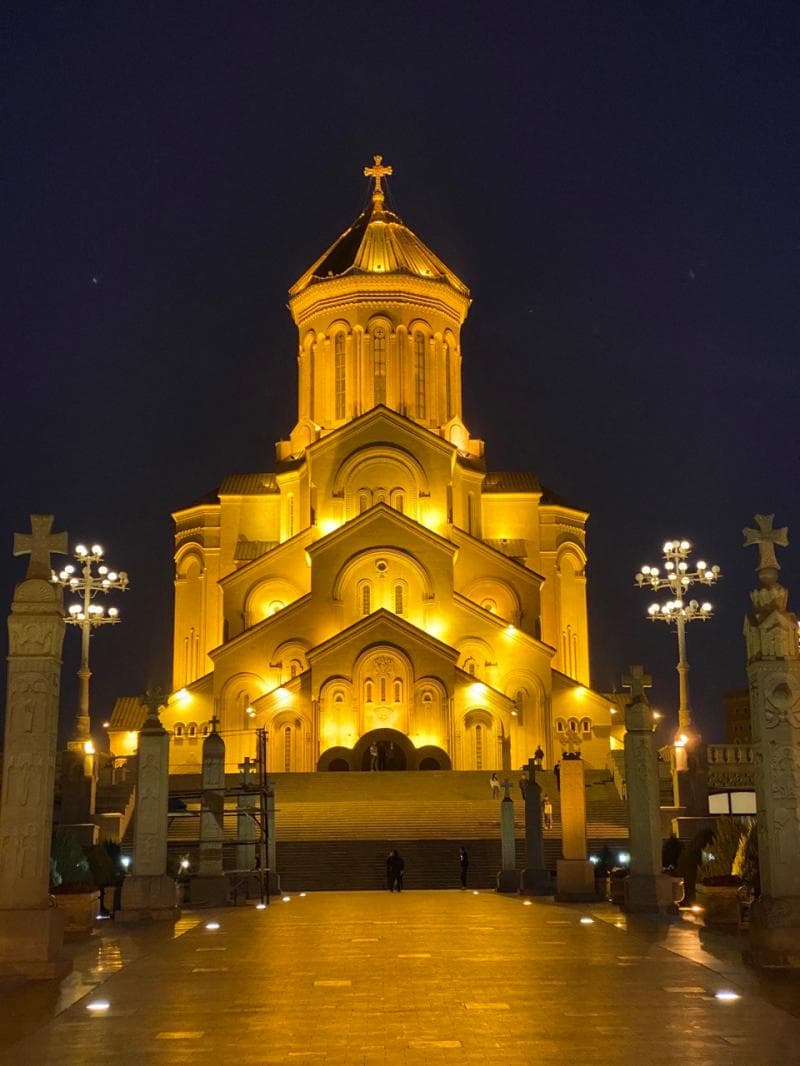
Explore the Main Cathedral Hall of Holy Trinity Cathedral (Sameba) in Tbilisi, Georgia – a symbol of national and spiritual revival. Discover its grand architecture, rich history, and vibrant art.
Overview
Stepping into the Main Cathedral Hall of the Holy Trinity Cathedral, known locally as Sameba, in Tbilisi, Georgia, is an experience of profound scale and spiritual grandeur. This relatively modern architectural marvel, consecrated in 2004, stands as a powerful symbol of Georgia's post-Soviet religious and national revival. The main hall, often referred to simply as the cathedral's interior, is characterized by its immense space, soaring ceilings, and a deliberate design that combines traditional Georgian ecclesiastical styles with monumental proportions. It serves as the primary place of worship for the Georgian Orthodox Church, hosting major religious services and drawing pilgrims and visitors from across the globe.
The interior's design ensures a sense of awe and reverence, with natural light filtering through to illuminate its vast expanses. The hall is not merely a static display but a living, breathing space where the spiritual heart of Georgia beats, particularly during important Orthodox holidays when it fills with worshippers and echoes with polyphonic singing. The careful blend of traditional aesthetics and modern construction techniques creates an environment that feels both ancient and contemporary, embodying the enduring faith of the Georgian people.
History & Cultural Background
The vision for the Holy Trinity Cathedral, and consequently its main hall, emerged in 1989, a pivotal moment marking Georgia's reassertion of independence from the Soviet Union. Its construction was conceived as a dual commemoration: 2,000 years of Christianity and 1,500 years of the Georgian Orthodox Church's autocephaly. This timing imbued the project with immense national and spiritual significance, positioning the cathedral as a beacon of unity and rebirth after decades of Soviet repression.
Construction commenced in 1995, a challenging period for Georgia marked by civil unrest and economic hardship, yet the project was largely funded by private donations, reflecting the deep commitment of the Georgian people. Architect Archil Mindiashvili designed the cathedral, drawing inspiration from medieval Georgian church architecture while incorporating a more monumental scale. The cathedral's consecration on November 23, 2004, on St. George's Day, solidified its role as the principal cathedral of the Georgian Orthodox Church and a landmark representing the nation's spiritual resilience and cultural identity.
What Makes It Special
The Main Cathedral Hall's uniqueness lies in its sheer scale and the harmonious blend of artistic and architectural elements it presents. Measuring approximately 56 by 44 meters, the interior offers an unparalleled feeling of spaciousness, allowing the faithful to gather in their thousands. The dome, resting on eight columns, is engineered to appear independent of the surrounding apses, enhancing the monumental impression of the entire structure.
The interior is adorned with exquisite frescoes and rich iconography, carefully crafted under the supervision of icon painter Amiran Goglidze. These vibrant depictions narrate stories of Christian saints and Georgian historical figures, creating a visual tapestry that guides visitors through centuries of faith. The use of natural light, high ceilings, and intricate details such as the iconostasis wall—a traditional feature separating the nave from the sanctuary—all contribute to an atmosphere of profound spirituality and artistic excellence. The main hall also houses important icons, including the 'Hope of Georgia' icon, notable for its opulence and detailed cloisonne enamel work.
Stories, Fun Facts & Local Details
Local lore and traditions enrich the experience of the Main Cathedral Hall. The construction of Sameba was not without its controversies, particularly regarding its location on what was once an old Armenian cemetery, Khojavank, parts of which were disturbed during the building process. Despite this, the site was chosen for its prominent position on Elia Hill, making the cathedral visible from almost every point in Tbilisi, a deliberate choice to symbolize Georgia's enduring faith.
Interestingly, the Catholicos-Patriarch of All Georgia, Ilia II, played a personal role in the artistic adornment of the cathedral, even painting several icons and a significant image of the Holy Virgin visible near the entrance. The bells for the cathedral were cast in Germany, a detail that highlights the international collaboration involved in its creation. Pieces from holy sites like Mount Sion, the Jordan River, and Jerusalem were traditionally laid in the cathedral's foundation, symbolically grounding it in sacred history.
Visitor Perspective
For visitors, entering the Main Cathedral Hall offers a rare opportunity to connect with Georgian Orthodox culture. The vastness of the space often elicits a sense of quiet contemplation, even when it's bustling with activity. The interplay of light and shadow, the scent of incense, and the occasional sound of the renowned Trinity Cathedral Choir practicing polyphonic chants create an immersive sensory experience.
Guests are encouraged to observe services, particularly the early morning liturgy or evening vespers, to witness the vibrant spiritual life of the cathedral. While photography is generally permitted, discretion and respect for ongoing religious ceremonies are paramount. Modest dress is required, serving as a gentle reminder of the sacred nature of the space. The Main Cathedral Hall provides not just a visual spectacle but a window into the soul of Georgian faith and tradition.
Coordinates: 44.8167, 41.69755
View on Google Maps💬 How Travelers Describe This Place
Based on community votes
Photogenic
934Unique
879Interesting
741Must See
482Beautiful
396
Traveler Stories
Discover memorable experiences shared by travelers who have visited this place.
No traveler stories yet.
Be the first traveler to share what made this place memorable.

Tour
By
Spot
Discover amazing places around the world. Your journey starts here.
Explore
© 2026 TourBySpot. All rights reserved.