Gwangjang Market
Seoul, South Korea
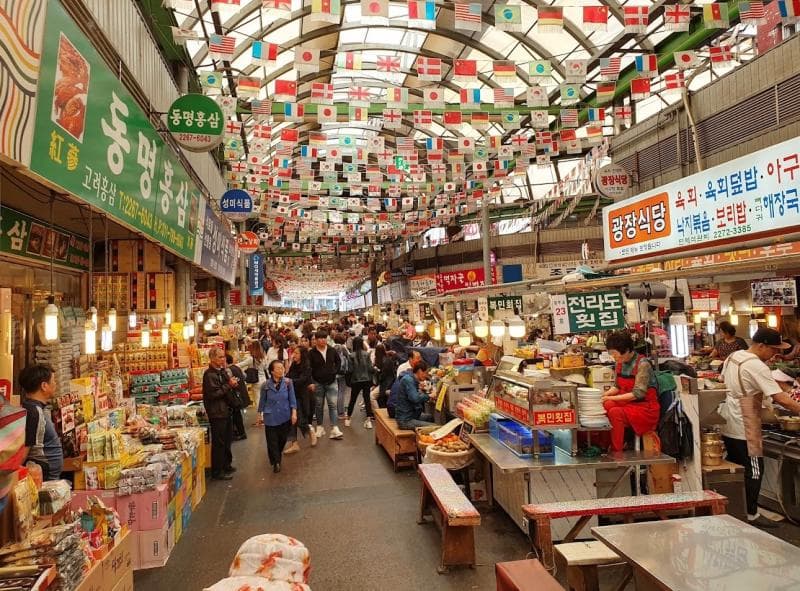
Explore Seoul's Gwangjang Market, South Korea's oldest and largest traditional market. Discover its rich history, vibrant food stalls, and unique cultural experiences.
Overview
Gwangjang Market, nestled in the heart of Seoul, South Korea, stands as one of the nation's oldest and largest traditional markets. Established in 1905, this bustling hub is a sensory delight, renowned for its vibrant food stalls and a wide array of traditional goods. Attracting an estimated 65,000 visitors daily, it's a testament to enduring Korean culture and commerce. While historically a center for textiles, Gwangjang Market has evolved into a celebrated culinary destination, gaining international recognition after its feature on Netflix's 'Street Food: Asia'. It offers an authentic glimpse into local life, appealing to both curious travelers and devoted food enthusiasts.
History & Cultural Background
The story of Gwangjang Market begins in 1905, a period marked by Korea's efforts to assert economic independence. Its establishment was a significant act of economic resilience and national pride, aimed at regaining control of local trade from foreign merchants. Initially named Dongdaemun Market, it distinguished itself as the first permanent market in Korea, operating daily unlike the temporary markets common at the time. The market officially became Gwangjang Market in 1960.
From its inception, Gwangjang Market served as a crucial textile market, supplying fabrics for hanboks, suits, curtains, and bedding. Local textile merchants played a vital role in revitalizing the domestic clothing industry after the Korean War. Over the decades, its focus gradually expanded. Street food stalls emerged and flourished, fostering a communal and affordable dining culture for Seoulites. Many of these culinary traditions have been preserved, with family-run vendors passing down cherished recipes through generations, cementing the market's status as a living historical landmark.
What Makes It Special
What truly sets Gwangjang Market apart is its exceptional blend of history, authenticity, and, perhaps most famously, its unparalleled food scene. It is widely hailed as a street food paradise, a reputation significantly amplified by its appearance on Netflix's 'Street Food: Asia'. Visitors can immerse themselves in an overwhelming array of gastronomic delights, from savory pancakes to spicy rice cakes.
Beyond its culinary prowess, Gwangjang Market holds the distinction of being one of Korea's oldest continuously operating traditional markets. Its vast expanse houses thousands of shops and stalls, making it one of the largest traditional markets in the country. While food dominates much of the market's current allure, it continues to offer a diverse range of traditional goods. Shoppers can explore sections dedicated to textiles, hanbok stores, unique vintage clothing (particularly on the second floor), handicrafts, agricultural products, and dried fish. This enduring variety, combined with its ability to maintain authentic Korean cultural heritage and charm, allows it to attract a vibrant mix of both locals and international visitors.
Stories, Fun Facts & Local Details
The very name 'Gwangjang' carries meaning; it can be interpreted as 'to gather from afar and keep altogether', reflecting its role as a central trading hub. Another charming interpretation suggests 'light market', symbolizing the bright future it embraced from its beginnings.
Among the market's legendary offerings is 'Mayak Gimbap', affectionately known as 'narcotic rice rolls'. The name, while intriguing, refers solely to their irresistibly addictive taste, not any actual illicit substances. These mini rice rolls, brushed with fragrant sesame oil and seeds, are a must-try. Another signature dish is Bindaetteok, savory mung bean pancakes. Made from ground mung beans, vegetables, and sometimes meat, these golden-crisp pancakes are often enjoyed with a side of makgeolli, traditional Korean rice wine, creating a classic market pairing. Other popular local delicacies include Sundae (blood sausage), Yukhoe (beef tartare), Kalguksu (hand-cut noodles), Tteok-bokki (spicy rice cakes), Eomuk (fish cakes), Mandu (dumplings), and Kkwabaegi (twisted doughnuts).
Gwangjang Market's photogenic charm hasn't gone unnoticed by the entertainment industry. Its bustling aisles and atmospheric food alley have served as backdrops for various Korean dramas and variety shows, including popular series like 'My Love from the Star' and 'Signal'. Even its vintage clothing section provides an authentic retro aesthetic for filming.
Visitor Perspective
Stepping into Gwangjang Market is an experience for all the senses – a delightful 'controlled chaos' that is both overwhelming and incredibly inviting. The market pulsates with a lively, energetic atmosphere, filled with the sounds of vendors, the sizzle of cooking food, and the chatter of countless visitors. It's a place where one can easily find themselves sharing a bench and striking up conversations with strangers, fostering a genuine sense of community.
The market is easily accessible via Seoul's efficient subway system, with Jongno 5-ga Station (Exits 7, 8, or 9) and Euljiro 4-ga Station (Exit 4) being convenient entry points. While the general market operates from around 8:30 or 9:00 AM to 6:00 PM, the famed food street often extends its hours, sometimes staying open until 11:00 PM or later, allowing for evening culinary adventures. Though some parts of the market may close on Sundays, the vibrant food street remains open year-round.
A visit to Gwangjang Market offers a rich and authentic foodie experience, providing a true taste of Korean culture and cuisine. It is a wonderfully unpretentious, lively, and delicious destination, best savored by exploring its many stalls. However, be prepared for crowds, especially during peak lunch hours (12:00 PM to 2:00 PM) and on weekends, when the market truly comes alive. Mondays tend to be a bit quieter for those seeking a less bustling visit.
Coordinates: 126.999, 37.57
View on Google Maps💬 How Travelers Describe This Place
Based on community votes
Unique
683Interesting
642Photogenic
300Must See
251Beautiful
88
Traveler Stories
Discover memorable experiences shared by travelers who have visited this place.
No traveler stories yet.
Be the first traveler to share what made this place memorable.
Things to see at Gwangjang Market



Tour
By
Spot
Discover amazing places around the world. Your journey starts here.
Explore
© 2026 TourBySpot. All rights reserved.