Bindaetteok Stalls
Seoul, South Korea
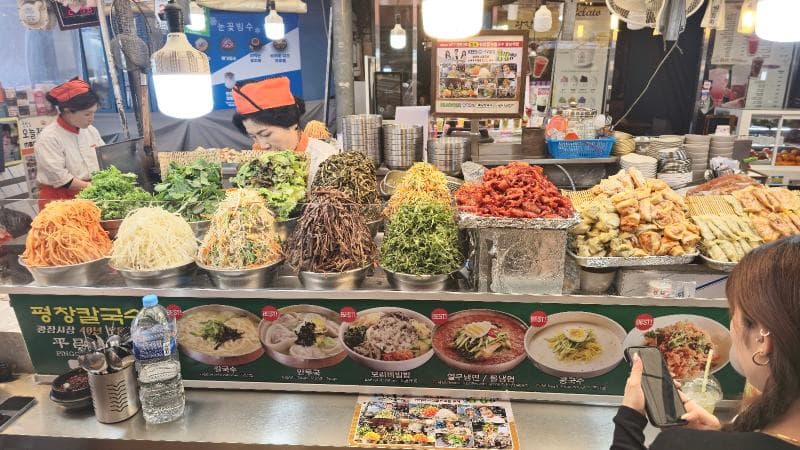
Discover the rich history & savory taste of Bindaetteok stalls in Seoul's Gwangjang Market, South Korea. Explore this iconic mung bean pancake and local culinary traditions.
Overview
Stepping into Gwangjang Market in Seoul, South Korea, is an immersion into a vibrant tapestry of sights, sounds, and, most notably, flavors. Among its bustling alleys, the Bindaetteok stalls stand out as a culinary cornerstone, drawing visitors with the irresistible aroma of freshly fried mung bean pancakes. Gwangjang Market itself is one of the oldest and largest traditional markets in South Korea, established in 1905, and serves as a living museum of Korean culture and cuisine. The Bindaetteok stalls are not just food vendors; they represent a significant part of the market's heritage and a beloved street food experience.
Bindaetteok, a savory Korean pancake, is made primarily from ground mung beans, creating a distinct texture and flavor profile. Unlike other Korean pancakes like pajeon which use wheat flour, bindaetteok relies solely on mung beans as its base, offering a unique nutty taste and a satisfying chewiness. These golden-brown discs are typically mixed with ingredients like bean sprouts, scallions, and often kimchi or pork, then pan-fried until crispy on the outside and tender within.
History & Cultural Background
The history of bindaetteok stretches back centuries in Korean food culture. Originally known as nokdu-jeon, it was once considered a special occasion dish during the Joseon Dynasty, prepared for festivals and ancestral rites. Mung beans were traditionally ground by hand using stone mills and fried over wood fires. During the Joseon era, wealthier households would even distribute bindaetteok to those less fortunate outside Seoul's South Great Gate during times of hardship, solidifying its role as a symbol of generosity and community.
The dish's association with Gwangjang Market began in the early 1900s. As Gwangjang Market evolved into Seoul's first permanent traditional market, families seeking livelihood amidst poverty started selling bindaetteok from makeshift stalls. The affordability of mung beans made bindaetteok a practical and nourishing meal for the common people, quickly establishing it as a beloved comfort food at traditional markets. The first permanent bindaetteok stands appeared in the 1950s, feeding laborers rebuilding post-war Seoul, turning a luxury item into accessible, hearty street food.
What Makes It Special
What sets Gwangjang Market's bindaetteok apart is not just the recipe, but the entire sensory experience. The core ingredient, mung beans, are meticulously stone-ground on-site by many vendors, ensuring a fresh and authentic batter. This grinding process is crucial, as it provides the unique texture that cannot be replicated by modern machines. The batter is then generously ladled onto large, sizzling cast-iron griddles, creating that signature golden-brown, crispy exterior and a moist, flavorful interior.
The typical additions of bean sprouts, scallions, and kimchi contribute to its complex flavor profile and satisfying crunch. Often, a savory meat patty (gogi wanja) is also fried alongside, complementing the bindaetteok perfectly. The traditional pairing with makgeolli, a milky Korean rice wine, is essential. The crisp, slightly acidic notes of the bindaetteok balance beautifully with the smooth, slightly sweet makgeolli, creating a harmonious culinary experience deeply embedded in Korean culture.
Stories, Fun Facts & Local Details
The bindaetteok stalls at Gwangjang Market have earned widespread fame, particularly after being featured in the Netflix documentary series 'Street Food: Asia'. This international recognition has only amplified the market's allure, making it a must-visit destination for food enthusiasts. One of the most renowned stalls, often referred to as Wonjosunhui or Suni's Bindaetteok (순희네 빈대떡), is famous for its long queues, a testament to its consistent quality and delicious offerings.
The rhythmic scraping of spatulas, the sizzle of batter hitting hot oil, and the vibrant chatter of vendors and diners create an unforgettable atmosphere. It is said that the sound of bindaetteok frying has become part of Korea's intangible food heritage. A popular 1940s Korean folk song even used the image of frying bindaetteok as a symbol of modest but dignified living, highlighting its deep cultural resonance. This corner of Gwangjang Market is a testament to the resilience of Korean traditions and the enduring appeal of simple, hearty food.
Visitor Perspective
For any traveler to Gwangjang Market, experiencing the bindaetteok stalls is an absolute must. The market is easily accessible via Seoul's efficient subway system, with Jongno 5-ga Station (Line 1) or Euljiro 4-ga Station (Lines 2 and 5) providing convenient access. Upon arrival, the bindaetteok alley is hard to miss, identifiable by the bustling activity and the tantalizing scent of frying.
Finding a seat at one of the popular stalls, often communal, is part of the authentic experience. Many stalls, like Suni's, pre-fry their pancakes and then re-fry them upon order to ensure maximum crispiness and warmth. It is highly recommended to order a plate of bindaetteok, perhaps alongside a gogi wanja, and a bowl of makgeolli for the full traditional experience. The pancakes are typically served with a dipping sauce of soy sauce, vinegar, and pickled onions, which perfectly complements their rich flavor. Weekday visits are often less crowded than weekends, allowing for a more relaxed experience in this lively and historic culinary hub.
Coordinates: 126.999, 37.57
View on Google Maps💬 How Travelers Describe This Place
Based on community votes
Unique
972Interesting
787Must See
726Beautiful
720Photogenic
85
Traveler Stories
Discover memorable experiences shared by travelers who have visited this place.
No traveler stories yet.
Be the first traveler to share what made this place memorable.

Tour
By
Spot
Discover amazing places around the world. Your journey starts here.
Explore
© 2026 TourBySpot. All rights reserved.