Food Alley
Seoul, South Korea
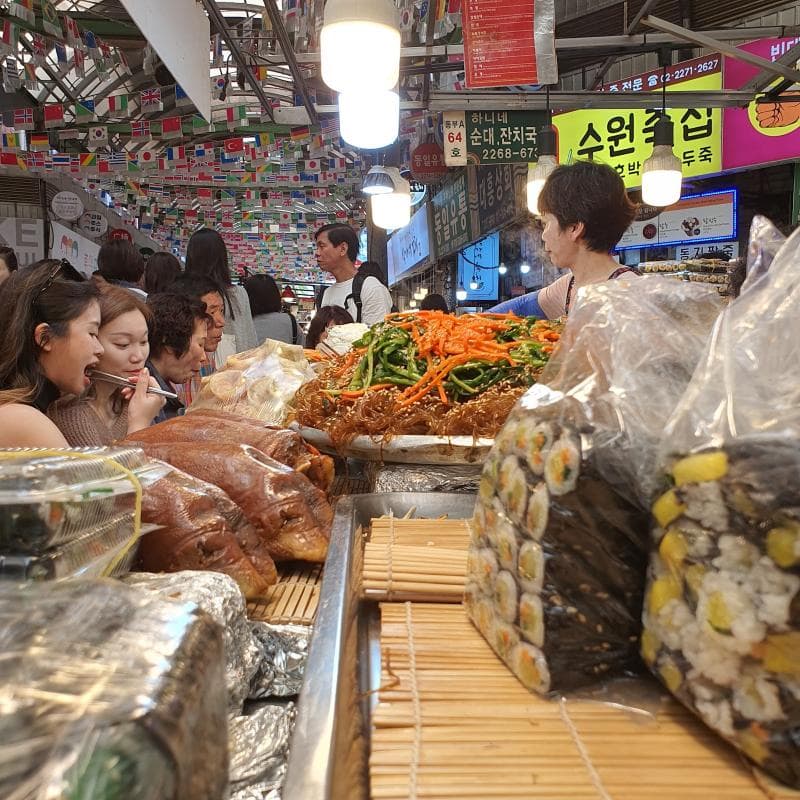
Explore Food Alley in Gwangjang Market, Seoul, South Korea. Discover historic street food like bindaetteok & mayak gimbap in a vibrant cultural hub.
Overview
Step into the vibrant heart of Seoul's culinary scene, and you'll find yourself amidst the bustling alleys of Gwangjang Market's famed Food Alley. This iconic sub-spot within the larger Gwangjang Market isn't just a place to eat; it's a sensory journey through generations of Korean street food culture. As one of the oldest and largest traditional markets in South Korea, Gwangjang Market attracts an estimated 65,000 visitors daily, a significant portion drawn to the irresistible aromas and lively atmosphere of its food section.
Food Alley is a labyrinth of stalls and eateries, where vendors skillfully prepare traditional dishes right before your eyes. It offers a unique window into local life and provides an authentic, immersive dining experience that feels both historic and incredibly alive. Here, the sizzle of oil and the chatter of delighted diners create a symphony that defines the very essence of Korean street food.
History & Cultural Background
Gwangjang Market boasts a rich history dating back to 1905, making it Korea's first permanent public market. Its establishment was a significant moment for Korean merchants, who came together to create a market funded entirely by Korean capital, resisting Japanese colonial influence that had taken control of other major markets like Namdaemun. Originally known as Dongdaemun Market, it later acquired its current name, Gwangjang, meaning 'to gather from afar and keep altogether,' reflecting its role as a central trading hub.
While the market initially gained renown for textiles, fabrics, and traditional Korean clothing like hanbok, its culinary identity has blossomed over the decades. The presence of numerous workers and vendors meant a constant need for sustenance, leading to the organic growth of food stalls that eventually transformed into the legendary Food Alley we know today. This enduring spirit of community and entrepreneurship is deeply ingrained in the market's cultural fabric, making every meal a taste of history.
What Makes It Special
Food Alley's allure lies in its vibrant, unpretentious authenticity. It's a place where tradition meets accessibility, offering a profound cultural immersion that few other spots can match. The communal dining experience is central to its charm, with visitors sitting shoulder-to-shoulder on benches, sharing tables with locals and fellow travelers alike. The sheer variety of traditional Korean street food is astounding, and the spectacle of vendors meticulously preparing dishes from scratch – grinding mung beans for pancakes or hand-cutting noodles – adds to the dynamic atmosphere.
Its fame has even reached global audiences, notably being featured on Netflix's 'Street Food: Asia', which propelled certain stalls and dishes to international recognition, drawing even more curious food enthusiasts. Despite its growing popularity, Food Alley has largely maintained its genuine character, offering a tangible link to old Seoul amidst the city's rapid modernization.
Stories, Fun Facts & Local Details
One of Food Alley's most iconic dishes is *Bindaetteok*, crispy mung bean pancakes. Historically considered a food for the poor, these savory pancakes are now a beloved staple, often paired with *makgeolli* (Korean rice wine) – a combination locals swear by, especially on a rainy day. Another must-try is *Mayak Gimbap*, literally translated as 'narcotic gimbap'. These small, addictive seaweed rice rolls get their intriguing name not from any illicit ingredients, but from their incredibly habit-forming taste, often enhanced by a unique mustard-soy dipping sauce.
You'll also find an abundance of *Kalguksu* (knife-cut noodles), a comforting noodle soup, and the ever-popular *Tteokbokki* (spicy rice cakes) and *Eomuk* (fish cakes). For the more adventurous palates, there's *Yukhoe* (Korean beef tartare) or *Sundae* (blood sausage), offering a taste of deeply traditional Korean fare. A charming local detail many visitors notice is the use of toilet paper rolls on tables, serving as communal napkins – a practical and quirky element of the market's no-frills dining experience.
Visitor Perspective
Navigating Food Alley is an adventure in itself. The narrow corridors pulse with energy, and the sheer volume of stalls, each vying for attention with their distinct offerings, can be delightfully overwhelming. The best approach is to embrace the chaos, allow your senses to guide you, and be open to spontaneous discoveries. While many stalls may offer similar dishes, each often has its own unique recipe or preparation style, passed down through families.
It's advisable to visit with an open mind and an empty stomach, ready to sample a variety of dishes in smaller portions. Weekday afternoons (around 4:00 PM – 6:00 PM) can offer a good balance of vibrancy without the intense overcrowding of peak hours or weekends, though the lively atmosphere is part of the experience any time. Most vendors now accept card payments, but carrying some cash (Korean Won) is always a good idea for smaller purchases or for stalls that prefer it. A visit to Food Alley is more than just a meal; it's an unforgettable dive into the soul of Korean street food culture, promising both delicious flavors and cherished memories.
Coordinates: 126.999, 37.57
View on Google Maps💬 How Travelers Describe This Place
Based on community votes
Interesting
726Photogenic
720Beautiful
597Must See
300Unique
300
Traveler Stories
Discover memorable experiences shared by travelers who have visited this place.
No traveler stories yet.
Be the first traveler to share what made this place memorable.

Tour
By
Spot
Discover amazing places around the world. Your journey starts here.
Explore
© 2026 TourBySpot. All rights reserved.