Noodle Vendors
Seoul, South Korea
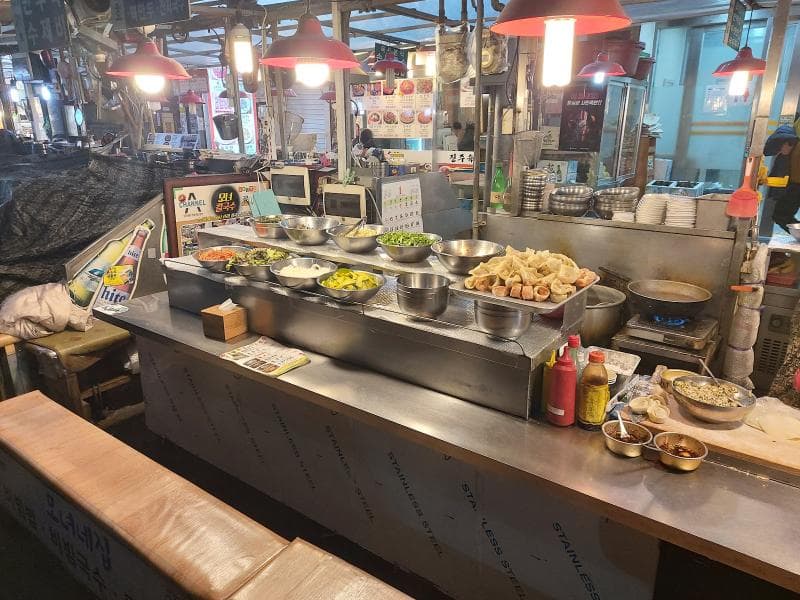
Discover the famous Noodle Vendors at Seoul's Gwangjang Market. Savor traditional hand-cut kalguksu, witness fresh preparations, and immerse in vibrant Korean street food culture.
Overview
Deep within the vibrant heart of Gwangjang Market in Seoul, South Korea, lies a culinary epicenter dedicated to the art of noodles. Gwangjang Market itself stands as one of Korea's oldest and largest traditional markets, established in 1905, drawing in thousands daily. While the market offers a diverse array of goods, its food street has earned legendary status, remaining a continuous hub of activity even on Sundays when other sections might pause. Among the myriad of gastronomic delights, the noodle vendors here command particular attention, offering dishes that are both a comfort and a spectacle. From steaming bowls of hand-cut noodles to savory dumplings, this corner of Gwangjang Market provides a deeply authentic taste of Korean street food culture.
History & Cultural Background
Gwangjang Market's genesis in 1905 was more than just a commercial venture; it was a significant act of national pride. During a period of foreign economic dominance, the market was founded to foster local trade and reclaim commercial sovereignty for Korean merchants. Over the decades, it evolved into a vital social and cultural meeting point. Family-run stalls became the backbone of its community, with culinary traditions and secret recipes, especially for beloved dishes like noodles, passed down through generations. This created an affordable and communal dining experience that became integral to the daily lives of working Seoulites. The preparation of hand-cut noodles, or kalguksu, is a testament to this enduring heritage, representing a culinary craft meticulously preserved and passionately shared by these dedicated vendors.
What Makes It Special
The noodle vendors of Gwangjang Market specialize in traditional Korean noodles, with kalguksu taking center stage. Kalguksu, meaning 'knife-cut noodles,' is a dish characterized by its unique, rough-cut texture, created by hand-rolling and slicing wheat flour dough on the spot. This fresh preparation is often a mesmerizing performance for visitors, as skilled vendors knead, stretch, and cut the dough with practiced ease right before their eyes. The noodles are typically served in a hot, flavorful broth, sometimes accompanied by a spicy sauce, and are often elevated with the addition of handmade mandu, or Korean dumplings, filled with meat or kimchi.
Beyond the delicious food, what truly distinguishes this area is its vibrant atmosphere. It's a place of sensory immersion, where the rhythmic sounds of knives hitting cutting boards, the sizzle of cooking, and the aromatic steam rising from colossal pots create an unforgettable ambiance. Dining here means sitting shoulder-to-shoulder at communal tables, often engaging with locals and fellow travelers, all united by the shared joy of good food. This authentic, unpretentious setting provides an unparalleled dive into the heart of genuine Korean market culture.
Stories, Fun Facts & Local Details
Among the many talented noodle vendors, one figure has risen to international prominence: Cho Yonsoon, affectionately known as 'The Netflix Lady.' Her stall, Gohyang Kalguksu, gained global fame after being featured in the Netflix series 'Street Food: Asia.' Cho Yonsoon's story is one of resilience; she learned the art of knife-cut noodles from her mother and, for nearly three decades, has dedicated herself to her craft, even working to support her family through financial hardships. Visitors often seek out her stall, easily identifiable by the queues and promotional posters showcasing her warm smile alongside the Netflix logo. She's celebrated not only for her delicious, soul-warming kalguksu and dumplings but also for her infectious smile and genuine interaction with customers, making each meal a memorable experience.
While Gohyang Kalguksu is a must-visit, the surrounding area is rich with other culinary treasures. Many vendors offer their unique takes on kalguksu, mandu, and other market staples. The name 'Gwangjang' itself carries cultural significance, meaning 'to gather from afar and keep altogether,' perfectly encapsulating the market's role as a bustling meeting place for commerce and community. The market's covered structure also makes it a comfortable destination regardless of the weather, inviting continuous exploration.
Visitor Perspective
For any traveler visiting Gwangjang Market, the noodle vendors offer an immersive and delicious experience. Be prepared for a lively, often crowded environment, especially at popular stalls during peak hours. Waiting in line, however, is part of the adventure and provides a chance to observe the fascinating process of noodle preparation firsthand. The communal seating arrangements foster a friendly atmosphere, encouraging interaction and a deeper connection to the local culture. It's an opportunity to truly eat like a local, savoring traditional dishes prepared with generations of expertise. While some vendors may accept card payments, it's always advisable to carry cash for convenience and to truly embrace the traditional market experience. Conveniently located near Jongno 5-ga and Euljiro 4-ga subway stations, accessing this culinary hotspot is straightforward, making it an essential stop on any Seoul itinerary for those seeking authentic flavors and cultural immersion.
Coordinates: 126.99951, 37.57022
View on Google Maps💬 How Travelers Describe This Place
Based on community votes
Interesting
972Photogenic
787Beautiful
726Unique
720Must See
300
Traveler Stories
Discover memorable experiences shared by travelers who have visited this place.
No traveler stories yet.
Be the first traveler to share what made this place memorable.

Tour
By
Spot
Discover amazing places around the world. Your journey starts here.
Explore
© 2026 TourBySpot. All rights reserved.