Great Wall Of China
Beijing, China
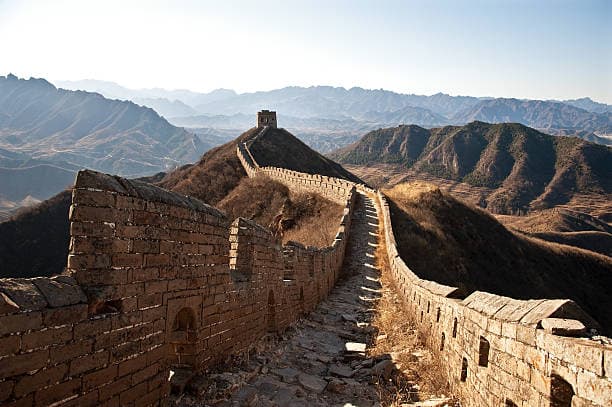
Explore the majestic Great Wall of China in Beijing, a UNESCO World Heritage site and an enduring symbol of Chinese history and culture.
Overview
The Great Wall of China, a monumental feat of ancient engineering, stretches across northern China, an iconic symbol of resilience and history. While it’s not a single continuous wall, it is a vast network of fortifications built and rebuilt over centuries, often traversing rugged mountains and challenging terrain. The sections closest to Beijing, such as Badaling and Mutianyu, are among the most visited and well-preserved, offering visitors a tangible connection to China's imperial past. This UNESCO World Heritage Site, recognized in December 1987, is the longest man-made structure globally, with an official length recorded at 21,196.18 kilometers (13,170.7 miles). It's a testament to the colossal human effort and strategic brilliance that aimed to protect the Chinese empire from northern nomadic invasions.
History & Cultural Background
The origins of the Great Wall date back over 2,300 years, with construction spanning multiple Chinese dynasties. The earliest fortifications began around 300 B.C.E. during the Warring States period, built by various states for defense against neighboring tribes. However, it was Emperor Qin Shi Huang of the Qin Dynasty (221–206 B.C.E.) who unified these fragmented walls into a more cohesive defensive system, marking the beginning of the 'Great Wall' as a single entity. Subsequent dynasties, most notably the Ming Dynasty (1368–1644), significantly expanded and reinforced the wall, often using bricks and cut stone blocks for greater durability, giving it much of the appearance we see today. The wall's primary purpose was military defense, featuring watchtowers, fortresses, and beacon towers for communication. Beyond its military function, the Great Wall also played a crucial role in securing trade routes, including parts of the ancient Silk Road, protecting merchants from attacks and facilitating cultural and economic exchange. It stands as a profound symbol of Chinese unification, illustrating the nation's capacity for collective effort and unwavering determination.
What Makes It Special
The sheer scale and architectural ingenuity of the Great Wall are unparalleled. It is not merely a wall but an intricate defensive system incorporating barracks, garrisons, and communication points designed to repel invasions effectively. The construction materials varied by region, from rammed earth and timber in earlier sections to robust brick and stone masonry in later, Ming Dynasty constructions, sometimes even utilizing glutinous rice mortar for superior strength and water resistance. The wall's winding path through diverse landscapes, from deserts to mountains and plateaus, showcases an incredible adaptation to natural topography. Furthermore, its inclusion as a UNESCO World Heritage Site underscores its universal historical and cultural value. Unlike a common myth, the Great Wall cannot be seen from space with the naked eye; specialized lenses are required. This incredible structure is also special for its 'living skin' – biocrusts of cyanobacteria, mosses, and lichens that actually help protect and stabilize parts of the wall, challenging traditional views on plant life's impact on ancient structures.
Stories, Fun Facts & Local Details
Legends woven around the Great Wall enrich its historical narrative. One of the most poignant is the story of Meng Jiangnu, whose husband was forced to build the wall during the Qin Dynasty. Upon hearing of his death, her bitter weeping caused a section of the wall to collapse, revealing his bones for burial, symbolizing the immense human cost of its construction. Another popular legend tells of a helpful dragon that charted the wall's course for the workers to follow. During the Cultural Revolution (1966-1976), unfortunately, parts of the wall were dismantled, and bricks were repurposed for local construction. Visitors to the Great Wall near Beijing can explore well-restored sections like Badaling and Mutianyu. Badaling, roughly 70 kilometers northwest of Beijing, is famous for its accessibility, featuring ramps and elevators, though continuous wheelchair access is limited due to stairs. Mutianyu, about 70 kilometers northeast of Beijing, is known for its beautiful scenery and unique features like three watchtowers standing together. Both sections offer cable cars or chairlifts, with Mutianyu even offering a toboggan ride down, adding a fun element to the visit. Peak seasons can see up to 70,000 visitors per day at Badaling. Sections like Mutianyu also provide serene experiences, especially during off-peak times or for those seeking a less crowded adventure.
Visitor Perspective
Visiting the Great Wall of China is an awe-inspiring experience that transports you back in time. For travelers based in Beijing, both Badaling and Mutianyu are accessible options. Badaling, being the most developed, can be crowded, especially during holidays, but offers clear paths and facilities. Mutianyu is often recommended for those seeking a slightly less crowded experience with equally stunning views and more options for ascent and descent, including a thrilling toboggan ride. Regardless of the section chosen, comfortable walking shoes are essential, as is bringing water, especially during warmer months. The best times to visit are typically spring (March to May) and autumn (September to November) for pleasant weather and beautiful scenery. The scale of the wall, its watchtowers dotting the mountainous landscape, and the profound sense of history evoke deep respect for the ancient civilization that conceived and constructed it. It's a journey not just across stone and earth, but through centuries of human endeavor and cultural identity.
Coordinates: 116, 40.3607
View on Google Maps💬 How Travelers Describe This Place
Based on community votes
Must See
963Beautiful
723Interesting
482Photogenic
396Unique
274
Traveler Stories
Discover memorable experiences shared by travelers who have visited this place.
No traveler stories yet.
Be the first traveler to share what made this place memorable.
Things to see at Great Wall Of China



Tour
By
Spot
Discover amazing places around the world. Your journey starts here.
Explore
© 2026 TourBySpot. All rights reserved.