Gubeikou
Beijing, China
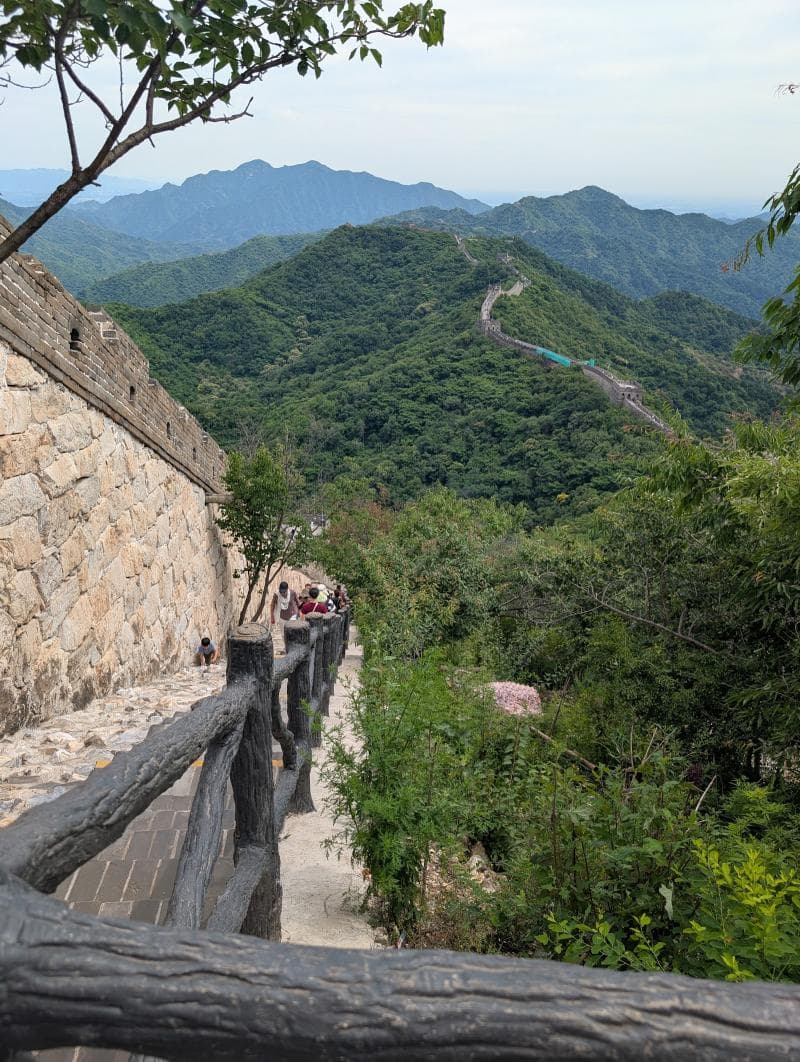
Explore Gubeikou, a wild and unrestored section of the Great Wall in Beijing, China. Discover its historic double-layered walls and ancient watchtowers.
Overview
Gubeikou, meaning 'Ancient Northern Pass,' is a remarkably preserved section of the Great Wall of China, nestled in the Miyun District of Beijing. Approximately 130 to 140 kilometers northeast of downtown Beijing, this segment of the Great Wall stands as a testament to history, largely untouched by extensive restoration. It offers a unique and authentic experience for travelers eager to witness the Wall in its raw, original state, far removed from the crowds often found at more heavily renovated sections. Stretching for about 40 kilometers, Gubeikou boasts an impressive array of watchtowers and beacon towers, meandering through rugged mountains and offering breathtaking vistas. Its strategic location, serving as a critical military pass between Beijing and the northern territories, has cemented its place in Chinese history as a site of numerous pivotal battles.
History & Cultural Background
The history of the Great Wall at Gubeikou dates back to the Northern Qi Dynasty (550-557 AD), marking some of its earliest constructions. However, much of what stands today was rebuilt and significantly reinforced during the Ming Dynasty (1368-1644). General Xuda initiated a major reconstruction around 1378, enhancing its defensive capabilities with more durable stone. Later, around 1567, General Qi Jiguang, a renowned military strategist, implemented a unique 'double-layered Great Wall' design here, adding a parallel wall to bolster defenses. The name 'Gubeikou' itself evolved; it was originally known as 'Beikou' or 'Northern Pass' during the Tang Dynasty, with the prefix 'Gu' (meaning ancient) added in later centuries. Throughout its long history, Gubeikou served as a vital military chokepoint, protecting the capital and witnessing over 100 battles. The most recent significant conflict occurred in 1933 during the Sino-Japanese War, where Chinese forces bravely defended the pass, leaving indelible marks of war still visible on the ancient stones.
What Makes It Special
Gubeikou's distinctiveness primarily lies in its largely unrestored condition, presenting an authentic and evocative experience of the Great Wall. Unlike manicured sections, Gubeikou's crumbling bricks and wild vegetation tell a story of centuries, offering a tangible connection to the past. A remarkable architectural feature is its 'double-layered Great Wall' construction, where a secondary wall was built alongside the existing one, a testament to its strategic importance and the ingenuity of its builders. The Gubeikou section is broadly divided into two main parts by the Chao River: the Wohushan (Crouching Tiger Mountain) section to the west and the Panlongshan (Coiling Dragon Mountain) section to the east. Each section holds unique treasures. Wohushan is famed for its 'Sister Towers,' two watchtowers of varying sizes standing close together, seemingly hand-in-hand as they overlook the river. On Panlongshan, the General Tower, a former command post, offers commanding views, while the impressive 24-window Tower stands out with its distinct three-story design and numerous observation windows.
Stories, Fun Facts & Local Details
The Gubeikou Great Wall is steeped in stories that bring its ancient stones to life. The 'Sister Towers' on the Wohushan section are a poetic example, their unusual proximity inspiring tales of two sisters gazing out over the landscape. More somber, yet equally compelling, are the narratives from the 1933 Battle of Gubeikou. This fierce engagement left its scars on the Wall, particularly on the General Tower and 24-window Tower, where visitors can still observe evidence of cannonball impacts and even faded Japanese inscriptions on the bricks. These physical reminders offer a poignant connection to the soldiers who fought there. Beyond the Wall, the nearby Gubeikou Town provides a charming glimpse into traditional rural Chinese life. Exploring its ancient streets, visitors can immerse themselves in local culture and sample regional delicacies, experiencing the rhythms of a community that has coexisted with the Great Wall for centuries. A fascinating architectural detail for keen observers is the variety in watchtower interiors; while their exteriors might appear similar, their ceilings range from flat and arched to intricately domed designs.
Visitor Perspective
For the intrepid traveler and history enthusiast, Gubeikou offers an unparalleled opportunity to hike a truly wild section of the Great Wall. It attracts those seeking an adventurous, uncrowded, and deeply reflective experience. The absence of modern tourist facilities like cable cars and souvenir shops on much of the wall means a more rugged and authentic journey, allowing for solitude and contemplation amidst the historical grandeur. While the Wohushan section presents a challenging climb with steep terrain, the Panlongshan section offers a relatively gentler, minimally restored path, making parts of Gubeikou accessible to a wider range of hikers. Visitors should come prepared with appropriate hiking gear, including sturdy shoes, water, and perhaps a map, as the trails can be demanding and less marked than other sections. The effort is richly rewarded with breathtaking panoramic views, a profound sense of connection to ancient history, and ample opportunities for stunning photography. Many hikers combine their Gubeikou experience with a trek to the adjoining Jinshanling section, extending their journey through this magnificent ancient marvel.
Coordinates: 117.15722, 40.69
View on Google Maps💬 How Travelers Describe This Place
Based on community votes
Photogenic
950Beautiful
929Interesting
858Must See
730Unique
275
Traveler Stories
Discover memorable experiences shared by travelers who have visited this place.
No traveler stories yet.
Be the first traveler to share what made this place memorable.

Tour
By
Spot
Discover amazing places around the world. Your journey starts here.
Explore
© 2026 TourBySpot. All rights reserved.