Jinshanling
Beijing, China
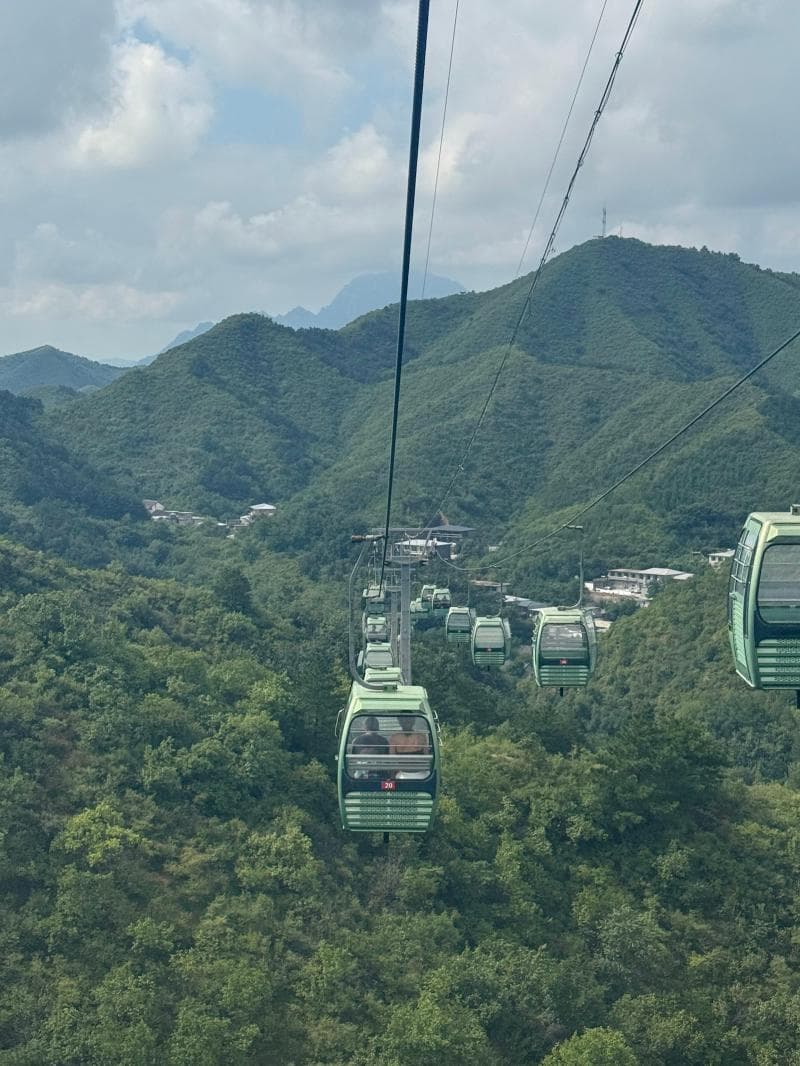
Explore Jinshanling Great Wall in Beijing, China. Discover its history, unique watchtowers, and breathtaking views for an unforgettable hiking experience.
Overview
Nestled amidst the rolling hills about 125 to 150 kilometers northeast of Beijing, the Jinshanling section of the Great Wall of China stands as a magnificent testament to ancient engineering and strategic brilliance. It is situated at the junction of Luanping County, Chengde, Hebei Province, and Miyun District, Beijing, connecting to the Simatai section in the east and the Gubeikou section in the west. Its name, 'Gold Mountain Ridge,' is derived from the Big and Small Jinshan mountains upon which it gracefully winds. Spanning approximately 10.5 to 11 kilometers, Jinshanling offers a less crowded and more authentic Great Wall experience, making it a favorite for hikers and photographers seeking breathtaking vistas and a profound connection with history.
History & Cultural Background
The history of the Jinshanling Great Wall is deeply rooted in the Ming Dynasty (1368-1644). Its initial construction took place between 1368 and 1389. However, it was through the extensive rebuilding and reinforcement efforts from 1567 to 1570, primarily under the supervision of the renowned General Qi Jiguang (1528-1588) and local governor Tan Lun, that Jinshanling gained many of its distinctive features. General Qi Jiguang was a military innovator whose designs for the watchtowers are particularly notable. This section of the Wall was a crucial component of the Ming Great Wall, a vast defensive system designed to protect the Chinese Empire from northern invasions. Its strategic importance is reflected in its robust construction and the intricate design of its defensive structures, built to withstand formidable challenges.
What Makes It Special
Jinshanling is celebrated for its remarkable preservation and architectural diversity, offering a unique blend of restored and original 'wild' sections. Unlike some heavily redeveloped sections, Jinshanling has retained much of its authentic character, allowing visitors to glimpse the Wall as it stood centuries ago. The sheer density of its watchtowers is unparalleled, with 67 main watchtowers, five passes, and three beacon towers spread along its length, often appearing every 50 to 150 meters. These towers vary significantly in shape and design, from single-tiered to rare three-story structures, reflecting the varied terrain and tactical needs. They served not just as lookout points, but also as garrisons for soldiers, storage for supplies, and platforms for combat, complete with arrow slits and ingenious drainage systems.
Beyond the watchtowers, Jinshanling boasts other unique architectural elements such as barrier walls, horse-obstructing walls, and even a decorative Kylin Screen Wall, showcasing the sophisticated craftsmanship of the Ming Dynasty. Its relatively remote location also means it experiences far fewer tourists than more popular sections like Badaling or Mutianyu, providing a more serene and immersive experience.
Stories, Fun Facts & Local Details
The Great Wall at Jinshanling is rich with stories and cultural nuances. For instance, several watchtowers bear names that commemorate historical figures. The 'General Tower' is said to honor Wu Guihua, a heroine who bravely resisted northern invaders during the Ming Dynasty. Similarly, the 'Black Tower' and 'Taochun Tower' are named after two girls, Heigu and Taochun, who contributed significantly to the Wall's construction. The 'Small Jinshan Watchtower' was reportedly built by soldiers from Zhejiang and Jiangsu Provinces under General Qi Jiguang, who named it after a pavilion in their distant hometown to remind themselves of home.
A fascinating architectural detail is the 'Kylin Screen Wall' found between the East Five-Window Tower and the Three-Window Tower. This exquisite screen wall features intricate relief sculptures of a mythical Kylin, a symbol of good fortune, standing on auspicious clouds. It's a hidden gem, often missed by those who stick to the main paths. Another fun fact about Jinshanling is its reputation as the 'paradise for photographers.' Its dramatic contours, dense watchtowers, and the interplay of light and shadow make it an ideal location for capturing stunning images, especially during sunrise or sunset, or when shrouded in a mystical cloud sea.
Visitor Perspective
For the curious traveler, Jinshanling offers an unforgettable journey through time and nature. Its terrain, while presenting medium difficulty, is suitable for most physically fit individuals, including families with older children, making it an excellent hiking destination. The path consists of both well-restored sections and more rugged, unrestored areas, allowing for diverse hiking experiences. Hikers can traverse stretches with uneven stone steps and steep ascents, challenging but incredibly rewarding. The panoramic views of the Wall snaking across mountain ridges, often with few other tourists in sight, create a profound sense of solitude and historical immersion.
The optimal times to visit for pleasant weather and clear photographic opportunities are spring and autumn, particularly May and June when the mountains are lush green. While camping directly on the Wall is generally not permitted, some local accommodations and campsites are available at the foot of the mountain for those wishing to experience the Wall's majesty at dawn or dusk. Jinshanling truly embodies the grandeur of the Great Wall, offering a deep dive into its strategic past and an inspiring natural landscape.
Coordinates: 117.24, 40.6725
View on Google Maps💬 How Travelers Describe This Place
Based on community votes
Interesting
950Must See
929Unique
858Photogenic
287Beautiful
275
Traveler Stories
Discover memorable experiences shared by travelers who have visited this place.
No traveler stories yet.
Be the first traveler to share what made this place memorable.

Tour
By
Spot
Discover amazing places around the world. Your journey starts here.
Explore
© 2026 TourBySpot. All rights reserved.