Juyongguan Pass
Beijing, China
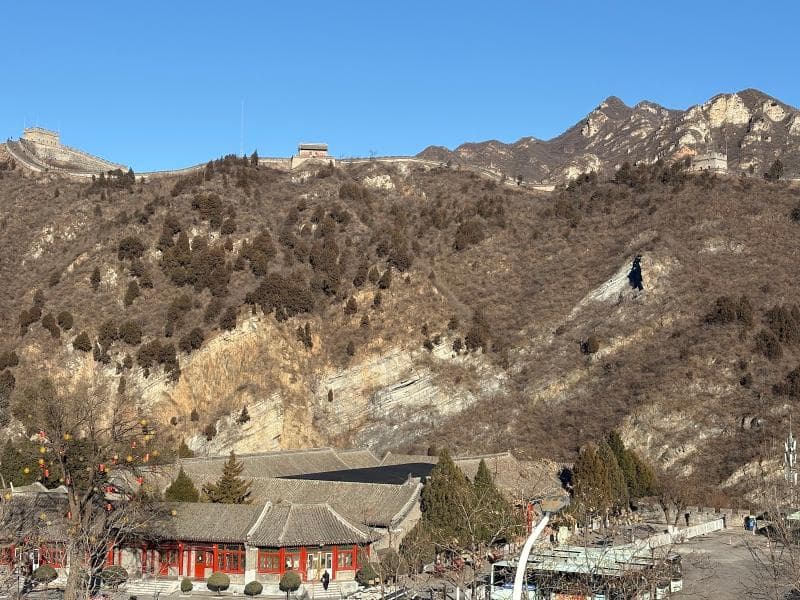
Explore Juyongguan Pass, a magnificent section of the Great Wall near Beijing, China. Discover its rich history, strategic fortress design, and the intricate Cloud Platform.
Overview
Nestled within a verdant valley in Beijing's Changping District, Juyongguan Pass stands as a magnificent and historically significant section of the Great Wall of China. Roughly 60 kilometers (37 miles) northwest of downtown Beijing, it is renowned as one of the three 'Great Mountain Passes' along the Great Wall, alongside Jiayuguan and Shanhaiguan. Unlike linear sections of the wall, Juyongguan forms a fortified, circular enclosure that cradles an ancient town, temples, and various military installations within its walls. Its strategic location in the Guangou Valley, surrounded by the Jundu and Taihang Mountains, made it an indispensable northern gateway to Beijing throughout various dynasties, earning it the moniker 'The First Pass under Heaven'.
History & Cultural Background
The history of Juyongguan Pass stretches back over two millennia, with initial fortifications dating to the Spring and Autumn (770-476 BC) and Warring States (476-221 BC) periods, built by the Yan State. This early stronghold was later integrated into the larger Great Wall system during the Southern and Northern Dynasties (386-589 AD). However, the most significant reconstruction and expansion occurred during the Ming Dynasty (1368-1644). Emperor Zhu Yuanzhang, the founder of the Ming Dynasty, ordered its rebuilding to protect against Mongol invasions, recognizing its critical role in safeguarding the capital. Many of the impressive structures visible today are products of this Ming-era effort, which saw subsequent renovations, notably in the 1990s. The pass has weathered numerous battles, serving as a pivotal defensive point for emperors and a witness to centuries of imperial power struggles.
What Makes It Special
What sets Juyongguan apart is its unique design as a self-contained fortress within a valley, rather than just a linear wall. This circular defensive system allowed for comprehensive protection of the passage through the mountains. A prominent feature is the Cloud Platform, or Yuntai, a magnificent white marble structure built during the Yuan Dynasty (1342-1345). Adorned with intricate carvings of Buddhist figures, animals, and sacred texts in six different languages including Sanskrit, Tibetan, and Chinese, the Cloud Platform is a testament to the Yuan Dynasty's artistic and cultural diversity. Its central arched portal was designed for passage by people, horses, and carriages. Additionally, the pass features strategically placed barbicans at its north and south gates, ingeniously designed to trap invading forces, making it exceptionally difficult for enemies to breach. The walls themselves exhibit a remarkable blend of natural topography and human engineering, wrapping around steep hills with iconic staircases.
Stories, Fun Facts & Local Details
The name 'Juyongguan' itself carries historical intrigue, with 'Ju' (居) meaning 'dwell' and 'Yong' (庸) meaning 'common'. Some accounts suggest it derived from the Qin Dynasty, when commoners were assigned to build this section, leading to the name 'Housing Commoners Pass'. However, some historical texts refer to it even earlier. Legend has it that the formidable terrain of Juyongguan led to the saying, 'one man could hold the pass against ten thousand enemies'. This section has also seen the passage of significant historical figures, including Genghis Khan and his armies. Furthermore, the captivating scenery of Juyongguan, characterized by lush greenery and flowing streams, has been celebrated for centuries. During the Jin Dynasty, its picturesque beauty was recognized as one of the 'eight sights of the capital', known as 'Juyong Diecui' or 'The Great Wall Surrounded by Lush Greenery at the Juyong Pass'. Visitors can still see ancient cannons displayed near the walls, offering a tangible link to its military past. In spring, the area is particularly scenic, with peach and apricot blossoms creating a 'flower sea' through which a railway occasionally passes, offering a magical sight.
Visitor Perspective
Juyongguan Pass offers a distinct Great Wall experience, often appreciated for its comprehensive fortress-like layout and historical structures beyond just the wall itself. The section is easily accessible from Beijing, making it a viable option for a half-day or full-day trip. Visitors can choose between two main routes for hiking: the eastern section, which is generally gentler, and the western section, known for its steeper and more challenging ascent. The wall forms a loop, allowing for a complete circuit. While some parts can be physically demanding with steep, uneven stairs, the effort is rewarded with panoramic views of the fortress and surrounding mountains. Unlike some more linear sections, the circular design means you can always return to your starting point. It's advisable to wear comfortable shoes and carry water. While often considered less crowded than Badaling, its proximity to Beijing means it can still draw significant visitors. Wheelchair access is available near the pass towers, offering views of the magnificent structures, though direct access to the wall itself is limited due to steps.
Coordinates: 116.068611, 40.288056
View on Google Maps💬 How Travelers Describe This Place
Based on community votes
Beautiful
836Unique
797Photogenic
396Interesting
286Must See
255
Traveler Stories
Discover memorable experiences shared by travelers who have visited this place.
No traveler stories yet.
Be the first traveler to share what made this place memorable.

Tour
By
Spot
Discover amazing places around the world. Your journey starts here.
Explore
© 2026 TourBySpot. All rights reserved.