Gothic Quarter
Barcelona, Spain
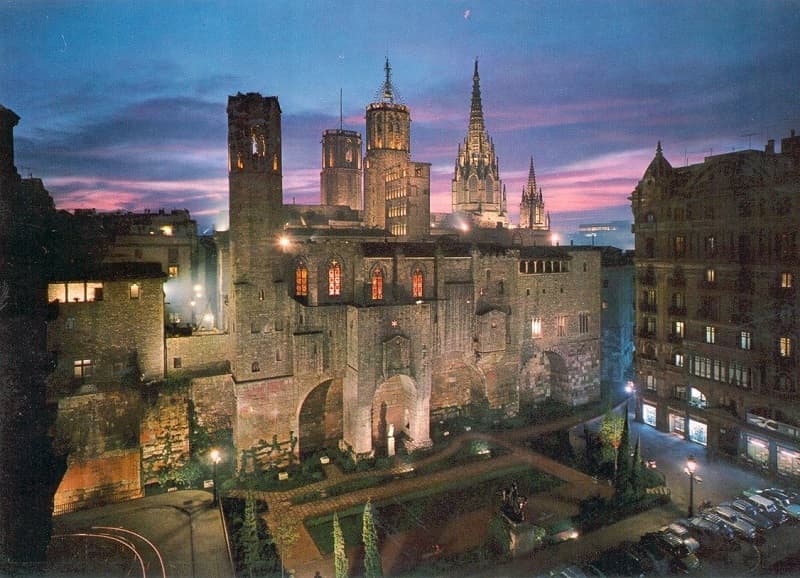
Explore Barcelona's Gothic Quarter, the city's historic heart. Discover Roman ruins, medieval architecture, and hidden squares in this captivating district.
Overview
The Gothic Quarter, known locally as Barri Gòtic, stands as the ancient heart of Barcelona, Spain, weaving together over two millennia of history within its intricate street plan. Nestled between La Rambla, Via Laietana, and the Mediterranean seafront, this captivating district is a labyrinth of narrow, winding cobblestone streets and charming squares that invite curious travelers to step back in time. It is renowned for its seamless blend of Roman foundations, medieval architecture, and lively modern atmosphere, making it a must-visit destination for those seeking to understand Barcelona's soul.
As part of the Ciutat Vella district, the Gothic Quarter is primarily pedestrian, encouraging leisurely exploration and the discovery of hidden gems around every corner. Its historic ambiance is palpable, with echoes of its past as the Roman city of Barcino and its flourishing medieval period resonating through its ancient walls and stately buildings.
History & Cultural Background
The origins of the Gothic Quarter date back to the late 1st century BC when the Romans established a colony called Barcino on this very site. Remains of the city's Roman walls and the Temple of Augustus still stand, testaments to its foundational era.
Following the Roman era, Barcelona thrived during the Middle Ages, particularly between the 13th and 15th centuries, when the Gothic Quarter developed into a significant economic and political center in the Western Mediterranean. This period saw the construction of many of the majestic Gothic palaces, residences, and churches that characterize the neighborhood today, such as the Barcelona Cathedral.
Interestingly, much of the 'Gothic' appearance visible today is also a result of extensive refurbishments and neo-Gothic additions made in the late 19th and early 20th centuries. These renovations were partly carried out to enhance the area's medieval aesthetic in anticipation of the 1929 International Exhibition, integrating new elements like the iconic Pont del Bisbe (Bishop's Bridge) with existing historical structures.
What Makes It Special
The Gothic Quarter's unique appeal lies in its remarkable layers of history, where Roman vestiges, medieval grandeur, and subsequent architectural interventions coexist. The Barcelona Cathedral, or the Cathedral of Santa Eulàlia, is a focal point, a stunning example of Gothic architecture with a façade completed more recently, between 1882 and 1913. Its cloister is famously home to 13 geese, representing the age of Saint Eulàlia, a virgin martyr.
Plaça del Rei is another standout, considered one of the best examples of a true medieval square, bordered by the Royal Palace and the History Museum of Barcelona (MUHBA), which offers a fascinating underground journey through Roman Barcino. Plaça Sant Jaume serves as the political heart of the city, housing both the City Hall and the Palau de la Generalitat de Catalunya.
The atmospheric Carrer del Bisbe, with the neo-Gothic Pont del Bisbe arching overhead, connects Plaça Sant Jaume to the Cathedral, creating one of the district's most photographed scenes.
Stories, Fun Facts & Local Details
One fascinating aspect of the Gothic Quarter is the blend of authentic and 'reimagined' history. While much of it is genuinely ancient, elements like the Pont del Bisbe, often mistaken for a medieval structure, were actually built in 1928, designed by Joan Rubió i Bellver, a disciple of Gaudí. This highlights how Barcelona actively shaped its historical narrative to present a romanticized image.
The area also encompasses El Call, Barcelona's medieval Jewish Quarter, a network of alleys that retain much of their original structure and some remains from the late medieval period, including an old synagogue. Plaça Reial, a beautiful 19th-century square adorned with palm trees and lampposts designed by a young Antoni Gaudí, offers a different architectural flavor and a lively atmosphere, especially in the evenings.
Another hidden gem is Plaça Sant Felip Neri, a serene square with a poignant history, its walls still bearing scars from bombing during the Spanish Civil War.
Visitor Perspective
For visitors, the Gothic Quarter offers an immersive experience, best explored on foot. The narrow, stone-paved streets, many closed to regular traffic, encourage getting wonderfully lost and stumbling upon unexpected courtyards, artisan shops, and traditional cafes. The atmosphere shifts throughout the day; early mornings, before 10 AM, offer a quieter, more reflective experience, perfect for appreciating the architecture without the bustling crowds.
As the day progresses, the quarter comes alive with activity, and its squares, like Plaça Reial and Plaça del Pi, become vibrant hubs. Expect a dense cluster of historic landmarks within a short walking distance, making it ideal for history enthusiasts and first-time visitors alike. Despite its popularity, quieter corners are never far away, providing peaceful retreats within the historic core of Barcelona.
Coordinates: 2.1728, 41.3763
View on Google Maps💬 How Travelers Describe This Place
Based on community votes
Unique
838Beautiful
685Must See
539Interesting
421Photogenic
194
Traveler Stories
Discover memorable experiences shared by travelers who have visited this place.
No traveler stories yet.
Be the first traveler to share what made this place memorable.
Things to see at Gothic Quarter



Tour
By
Spot
Discover amazing places around the world. Your journey starts here.
Explore
© 2026 TourBySpot. All rights reserved.