Carrer del Bisbe Bridge
Barcelona, Spain
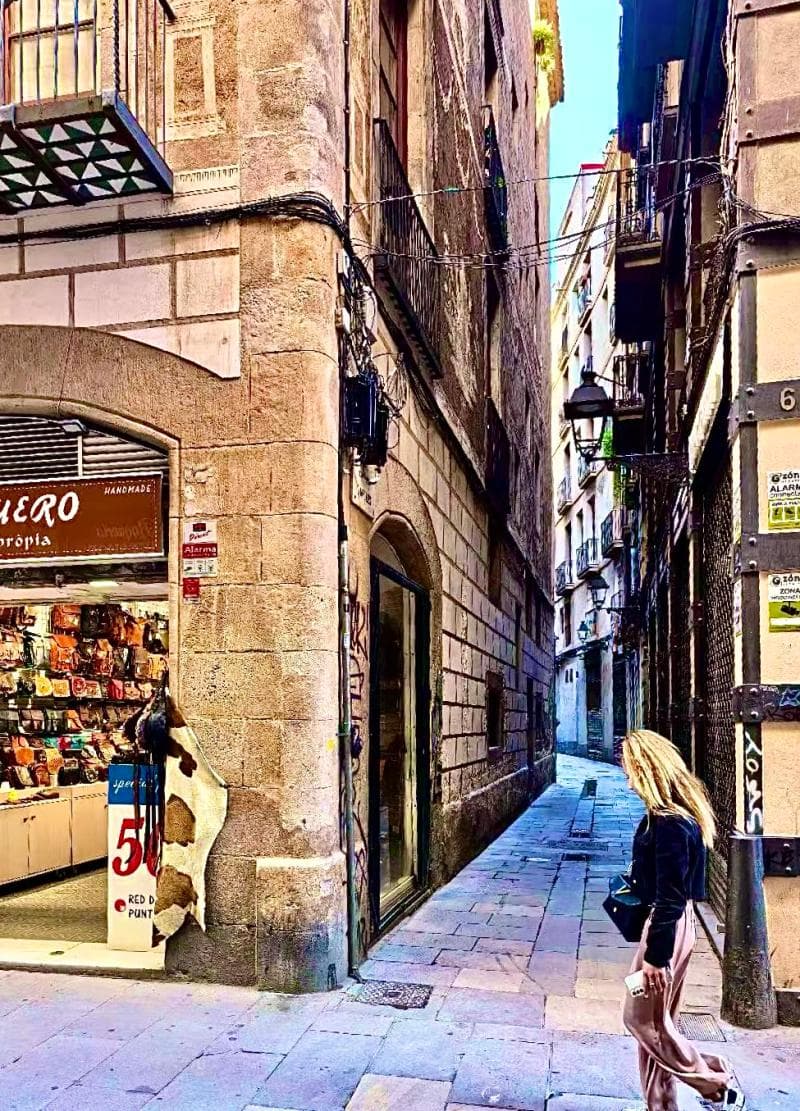
Discover the enchanting Carrer del Bisbe Bridge in Barcelona's Gothic Quarter. Explore its Neo-Gothic design, hidden skull and dagger, and ancient legends.
Overview
Tucked within the ancient labyrinth of Barcelona's Gothic Quarter, the Carrer del Bisbe Bridge, known locally as Pont del Bisbe or Bishop's Bridge, stands as an iconic and enchanting landmark. This elegant Neo-Gothic archway gracefully spans the narrow Carrer del Bisbe, connecting two historically significant buildings: the Palau de la Generalitat, the seat of the Catalan government, and the Casa dels Canonges, once the residence of the President. Its intricate design and seemingly aged stone often lead visitors to believe it's a relic from medieval times, yet its true history holds a more recent and intriguing tale. The bridge is one of the most photographed spots in the city, drawing countless eyes to its delicate stone tracery and the mysterious detail hidden beneath its arch.
History & Cultural Background
Despite its venerable appearance, the Carrer del Bisbe Bridge is a relatively modern addition to Barcelona's historic tapestry, constructed between 1928 and 1929. It was designed by the talented architect Joan Rubió i Bellver, a devoted disciple of the renowned Antoni Gaudí. The bridge emerged as part of a significant urban renovation project leading up to the 1929 Barcelona International Exposition, aiming to evoke a romanticized version of the city's medieval past. Rubió i Bellver harbored an ambitious vision to transform the entire Gothic Quarter by replacing newer structures with Neo-Gothic edifices, but his extensive plans were largely rejected by the city council. Consequently, only the Bishop's Bridge, designed to seamlessly blend with the quarter's ancient atmosphere, came to fruition. This context highlights Barcelona's broader Gothic Revival movement of the early 20th century, where efforts were made to enhance the perceived medieval character of the district, which itself traces its origins back to the Roman settlement of 'Barcino.'
What Makes It Special
The bridge's charm lies in its deceptive antiquity. Crafted from marble, its pointed arches, detailed tracery windows, and exquisite carved patterns emulate the flamboyant Gothic style, making it appear centuries older than its actual age. It functions not just as a passageway but as a visual link between civic power and historical tradition, spanning the street that forms a symbolic passage between Plaça de Sant Jaume and the Barcelona Cathedral. Beyond its architectural beauty, it's the hidden details and the enigmatic aura that truly set it apart. Observers can find subtle animal carvings, and even mysterious gargoyles, believed by some to represent sins, adorning its structure.
Stories, Fun Facts & Local Details
- The Skull and Dagger: Perhaps the most captivating feature of the bridge is the carved skull pierced by a dagger, found discreetly on its underside. Local lore suggests this motif was Rubió i Bellver's defiant response to the city council's rejection of his grander Gothic Quarter renovation plans. Enraged, he allegedly placed it there to subtly curse those who pass beneath it. Whispers even suggest the skull might not be mere stone but a genuine human relic, though this remains part of its mystique.
- A Wish Fulfilled: Countering the 'curse' legend, a popular tradition offers hope. It's said that if you walk backward under the bridge while looking intently at the skull and making a wish, your heart's desire will be granted. Another belief states this act can reverse any ill fortune.
- The Fate of Barcelona: An intriguing and dramatic legend warns that if the dagger were ever removed from the skull, the entire city of Barcelona would crumble or be destroyed. This tale adds a layer of protective reverence around the bridge's unsettling emblem.
- Venetian Inspiration: Some accounts suggest the bridge's design was inspired by Venice's famous Bridge of Sighs, contributing to its romantic yet mysterious appeal.
Visitor Perspective
Walking along Carrer del Bisbe and beneath its famous bridge is an experience that transports travelers back in time. The narrow, cobbled street, often bustling with curious onlookers, seems to hum with history. The architecture encourages a slow gaze upward, inviting discovery of its detailed carvings and the fabled skull and dagger. It's a place where the sounds of the modern city fade, replaced by the gentle rhythm of footsteps and the whispers of centuries-old stories. Visitors often pause to admire its beauty, take photographs, and perhaps, even try their luck with the wish-making tradition, embracing the unique blend of history, architecture, and folklore that makes the Carrer del Bisbe Bridge an unforgettable part of any visit to Barcelona's Gothic Quarter.
Coordinates: 2.176814, 41.38305
View on Google Maps💬 How Travelers Describe This Place
Based on community votes
Photogenic
826Unique
800Must See
589Interesting
387Beautiful
90
Traveler Stories
Discover memorable experiences shared by travelers who have visited this place.
No traveler stories yet.
Be the first traveler to share what made this place memorable.

Tour
By
Spot
Discover amazing places around the world. Your journey starts here.
Explore
© 2026 TourBySpot. All rights reserved.