Barcelona Cathedral
Barcelona, Spain
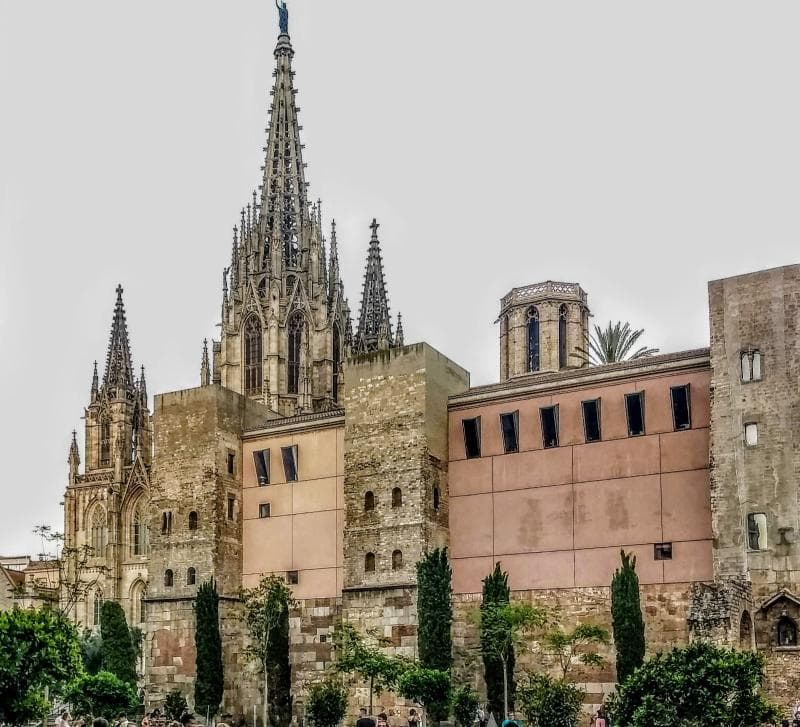
Explore the historic Barcelona Cathedral in Spain's Gothic Quarter. Discover its stunning Catalan Gothic architecture, the legend of Saint Eulalia, and the serene cloister with its 13 geese.
Overview
Nestled in the heart of Barcelona's historic Gothic Quarter stands the majestic Barcelona Cathedral, officially known as the Catedral de la Santa Creu i Santa Eulàlia, or the Cathedral of the Holy Cross and Saint Eulalia. This architectural marvel serves as the seat of the Archbishop of Barcelona and is a profound testament to centuries of faith, art, and Catalan history. While Barcelona is renowned for Antoni Gaudí's modernist masterpieces, the Barcelona Cathedral offers a journey back in time, showcasing exquisite Catalan Gothic architecture blended with later Neo-Gothic additions. Its towering spires and intricate facade dominate the Pla de la Seu, inviting curious travelers to explore its rich interiors and hidden stories.
History & Cultural Background
The site where the Barcelona Cathedral now proudly stands has been a place of worship for well over a millennium. Archaeological evidence suggests the presence of an early Christian basilica in the 4th century and a Visigothic church in the 6th century. Following its destruction by the Moors in 985, a Romanesque cathedral was constructed between 1046 and 1058. The foundation stone for the current Gothic cathedral was laid on May 1, 1298, during the reign of King James II the Just.
The construction of the main Gothic structure spanned approximately 150 years, with the cloister being completed by 1448. Interestingly, the magnificent Neo-Gothic facade and central tower that visitors admire today are much more recent additions, completed in 1913. This later work was inspired by original 15th-century designs and funded by the industrialist Manuel Girona i Agrafel. The cathedral's dedication to the Holy Cross and Saint Eulalia, Barcelona's co-patron saint, underscores its deep spiritual roots and connection to the city's identity.
What Makes It Special
The Barcelona Cathedral is a treasure trove of historical and artistic wonders, each element contributing to its unique charm. Beneath the high altar lies the crypt of Saint Eulalia, housing the sarcophagus of the young martyr whose story is woven into the city's fabric. Perhaps one of the most serene and captivating features is the Gothic cloister, completed in 1448. This peaceful courtyard is an oasis of greenery, featuring lush palm, orange, and magnolia trees, centered around a 15th-century fountain. A delightful and unexpected sight in the cloister is the presence of thirteen white geese, each representing one year of Saint Eulalia's life and the thirteen tortures she reportedly endured.
Another remarkable highlight is the Chapel of Lepanto, home to the revered Holy Christ of Lepanto. This crucifix is famous for its distinctive slanted shape, which legend attributes to it miraculously leaning to dodge a cannonball during the Battle of Lepanto in 1571. The cathedral's interior also boasts impressive 14th and 15th-century choir stalls, adorned with intricate carvings and the coats-of-arms of the Knights of the Order of the Golden Fleece. Overhead, some 200 gargoyles, featuring a whimsical array of animals and mythical creatures, watch over the exterior, serving a functional purpose while adding to the cathedral's distinctive character. For those seeking a wider perspective, an elevator ascends to the rooftop, offering breathtaking panoramic views of Barcelona's sprawling cityscape.
Stories, Fun Facts & Local Details
The Cathedral is steeped in stories, none more poignant than that of its co-patron, Saint Eulalia. Legend has it that Eulalia was a 13-year-old Christian virgin martyred by the Romans in Barcelona during the 4th century. She bravely refused to renounce her faith, enduring thirteen different forms of torture. One miraculous tale recounts a mid-spring snowfall covering her nakedness in the public square. The thirteen white geese in the cloister are a living tribute to her age and suffering.
Each year, during the Corpus Christi festival, the cloister's fountain becomes the stage for 'l'ou com balla' or 'the dancing egg,' a curious local tradition where a hollow egg is made to 'dance' on a jet of water. The cathedral is also home to twenty-one bells, some bearing women's names, including the largest, 'Tomasa,' and the 'rebel bell' 'Honorata,' which was recast after ringing out during an uprising against Philip V in 1714. While many associate Barcelona with the Sagrada Familia, the Barcelona Cathedral holds the distinction of being the city's most important ecclesiastical church, consecrated in 1339 and serving as the Archbishop's seat.
Visitor Perspective
Visiting the Barcelona Cathedral offers a profound experience for any traveler seeking to connect with the city's historical and spiritual essence. Conveniently located within the pedestrian-friendly Gothic Quarter, it is easily accessible on foot or via the Jaume I metro station. While the cathedral is open for cultural and tourist visits during specific hours, it also maintains periods reserved for worship, which are typically free to enter. It is advisable to check the official visiting hours beforehand, as they can vary. Most visitors find that forty-five to seventy-five minutes are sufficient to explore the main areas, with an additional fifteen to thirty minutes recommended if you wish to ascend to the rooftop for the views. When visiting this sacred space, it is customary and respectful to dress modestly. The Barcelona Cathedral provides a captivating journey through time, a place where every stone, every story, and every detail offers a glimpse into the enduring spirit of Barcelona.
Coordinates: 2.17639, 41.38389
View on Google Maps💬 How Travelers Describe This Place
Based on community votes
Unique
980Must See
963Interesting
389Photogenic
340Beautiful
201
Traveler Stories
Discover memorable experiences shared by travelers who have visited this place.
No traveler stories yet.
Be the first traveler to share what made this place memorable.

Tour
By
Spot
Discover amazing places around the world. Your journey starts here.
Explore
© 2026 TourBySpot. All rights reserved.