Plaça del Rei
Barcelona, Spain
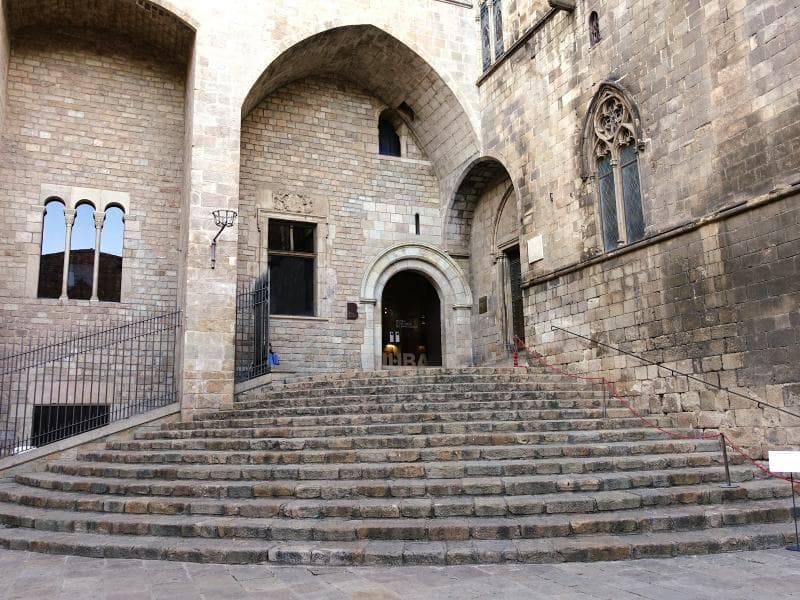
Discover Plaça del Rei, a historic square in Barcelona's Gothic Quarter, steeped in medieval history, royal intrigue, and ancient Roman ruins.
Overview
Tucked away within the labyrinthine streets of Barcelona's atmospheric Gothic Quarter lies Plaça del Rei, or 'King's Square', a profound testament to the city's rich and layered past. This seemingly unassuming square is in fact one of the most significant historical sites in the Catalan capital, offering a unique window into medieval Barcelona. Enclosed by a monumental architectural ensemble, Plaça del Rei exudes an air of solemnity and grandeur, inviting visitors to step back in time and explore centuries of history etched into its stone.
The square serves as the core of what was once the royal power of Barcelona, where the Counts of Barcelona and later the Kings of Aragon resided and governed. It is a place where ancient Roman foundations meet Visigothic traces and splendid Gothic edifices, providing an unparalleled archaeological and architectural journey.
History & Cultural Background
Plaça del Rei's history stretches back over a millennium, initially serving as a courtyard for the Palau Reial Major, the Great Royal Palace. This palace was the official residence of the Catalan counts from the 8th century and later the Kings of Aragon until the early 15th century.
Beneath the square and its surrounding buildings lie substantial archaeological remains of the ancient Roman city of Barcino, including streets, houses, and workshops. These vestiges highlight the continuous urban development that has shaped Barcelona. The Casa Clariana-Padellàs, a 15th-century Gothic mansion now housing the Barcelona History Museum (MUHBA), was notably moved stone by stone to its current location in the 1930s to help preserve the medieval character of the Gothic Quarter.
Significant renovations and additions occurred through the centuries. King Peter IV of Aragon commissioned the grand Saló del Tinell in the mid-14th century, a magnificent hall used for royal receptions. King Martin I further enlarged the square in the early 15th century to host tournaments, and also added the staircase leading to the palace.
What Makes It Special
What truly sets Plaça del Rei apart is its remarkably preserved medieval architectural complex. Dominating the square is the Palau Reial Major, comprising several key structures. The Saló del Tinell, with its impressive series of semicircular arches and wooden ceiling, is a prime example of Catalan Gothic architecture, now used for exhibitions.
Adjacent to the palace is the Capella Reial de Santa Àgata (Royal Chapel of St. Agatha), a 14th-century royal chapel built upon the Roman wall, featuring a distinctive octagonal bell tower and housing a precious altarpiece by Jaume Huguet. The Torre Mirador del Rei Martí, or King Martin's Watchtower, a 15th-century lookout tower, also forms part of this ensemble, offering panoramic views.
Across the square stands the Palau del Lloctinent (Lieutenant's Palace), dating from the 16th century, which features a valuable Renaissance patio and now houses the Archive of the Crown of Aragon. The presence of the Museu d'Història de Barcelona (MUHBA) in the Casa Clariana-Padellàs allows visitors to descend into the archaeological excavations and explore Barcelona's Roman origins firsthand.
Stories, Fun Facts & Local Details
One of the most enduring stories associated with Plaça del Rei is its alleged connection to Christopher Columbus. Local lore suggests that it was on the steps of the Palau Reial Major that King Ferdinand II and Queen Isabella I received Columbus in 1493 upon his return from his first voyage to the New World. While some historians debate the exact location, this tale is widely shared and adds to the square's romantic allure.
The square has also witnessed darker historical moments, such as an attempted assassination of King Ferdinand I in 1492. In medieval times, it was even a site for public executions, particularly for nobles sentenced to death.
Today, beyond its historical significance, Plaça del Rei continues to be a vibrant cultural space. It often hosts open-air concerts, cultural events, and medieval markets, bringing its ancient stones to life with music and festivities, particularly in the evenings.
Visitor Perspective
A visit to Plaça del Rei offers a serene escape from the bustling modern city, transporting you directly into Barcelona's medieval heart. The solemn atmosphere, surrounded by magnificent Gothic architecture, encourages quiet contemplation of the past. It's a place to linger, admire the intricate details of the buildings, and imagine the historical figures who once walked these very stones.
For a deeper dive into the city's origins, exploring the MUHBA is a must. The museum's underground section provides direct access to the Roman ruins of Barcino, allowing you to walk through ancient streets and discover archaeological treasures beneath the modern city. The combined experience of the square and the museum offers a comprehensive understanding of Barcelona's evolution from a Roman settlement to a medieval power.
Whether you're a history enthusiast, an architecture admirer, or simply a curious traveler, Plaça del Rei provides a profound and enriching experience, revealing the soul of Barcelona's ancient heritage.
Coordinates: 2.177222, 41.384167
View on Google Maps💬 How Travelers Describe This Place
Based on community votes
Beautiful
680Photogenic
653Unique
588Interesting
566Must See
432
Traveler Stories
Discover memorable experiences shared by travelers who have visited this place.
No traveler stories yet.
Be the first traveler to share what made this place memorable.

Tour
By
Spot
Discover amazing places around the world. Your journey starts here.
Explore
© 2026 TourBySpot. All rights reserved.