Plaça Reial
Barcelona, Spain
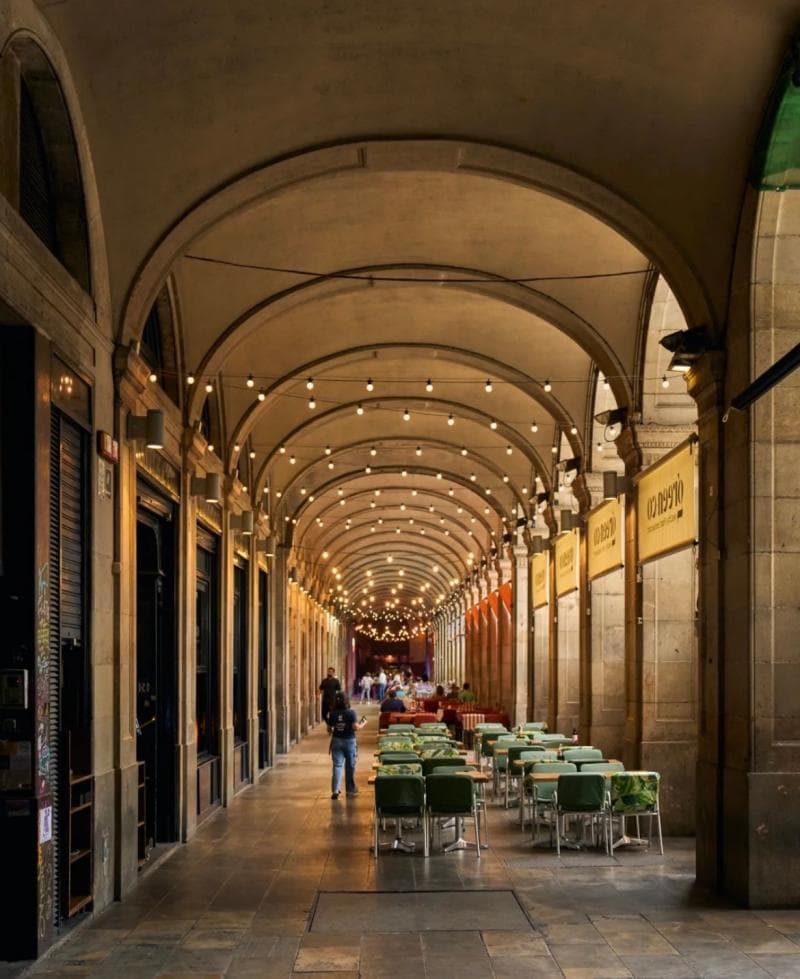
Discover Plaça Reial, a stunning neoclassical square in Barcelona's Gothic Quarter. Admire Gaudí's first public work—ornate lampposts—and soak in its vibrant history.
Overview
Nestled within the labyrinthine streets of Barcelona's historic Gothic Quarter, Plaça Reial emerges as a grand, elegant oasis just a stone's throw from the bustling La Rambla. This impressive 19th-century neoclassical square, characterized by its stately arcaded buildings, towering palm trees, and a central fountain, offers a serene yet vibrant atmosphere. It serves as a popular gathering spot, inviting locals and travelers alike to soak in its unique charm, enjoy a coffee, or experience the city's dynamic nightlife.
History & Cultural Background
Plaça Reial's history is deeply intertwined with Barcelona's urban development in the 19th century. The site where the square now stands was originally occupied by the Capuchin Convent of Santa Madrona, which was demolished following the ecclesiastical disentailment in 1835. The city council then envisioned a monumental public space, commissioning architect Francesc Daniel Molina i Casamajó to design the square. Construction took place between 1848 and 1859, resulting in a symmetrical square inspired by French neoclassical urban planning. Initially conceived as a leisure hub for Barcelona's bourgeoisie, it quickly became a significant symbol of the city's growing industrial prosperity. The name 'Plaça Reial' (Royal Square) was given, though it was once considered for a name honoring heroes of the War of Independence, ultimately settling on a more prudent choice under the monarchy.
What Makes It Special
Beyond its architectural harmony, Plaça Reial boasts several distinctive features that set it apart. The uniform neoclassical facades of the surrounding buildings, with their arcaded ground levels, create a sense of grandeur and offer sheltered walkways. Tall palm trees punctuate the square, lending a Mediterranean touch and providing welcome shade. At its heart lies the captivating Fountain of the Three Graces, an iron ensemble designed by Antoni Rovira i Trias and manufactured in the Durenne workshops in Paris. Flanking the fountain are two iconic six-armed lampposts, which represent the first public commission for a then-young and aspiring Antoni Gaudí in 1879. These ornate lampposts are decorated with symbols of commerce, including the caduceus (a messenger's wand with two snakes) and the winged helmet of Mercury, the Roman god of trade, reflecting Barcelona's economic vitality at the time.
Stories, Fun Facts & Local Details
- Antoni Gaudí, who would later become one of the most celebrated architects in the world, was a newly licensed architect when he received the commission for the Plaça Reial lampposts.
- During the 20th century, Plaça Reial shed its aristocratic image and became a bohemian haven, housing some of Barcelona's earliest jazz clubs and attracting artists and intellectuals.
- The square hosts a charming market for coin and stamp collectors every Sunday morning, offering a glimpse into a local tradition that continues to thrive.
- Despite its elegant appearance, the square has a vibrant nightlife, with several well-known bars and nightclubs operating beneath its arches.
Visitor Perspective
For the curious traveler, Plaça Reial offers a multi-faceted experience. By day, it's a perfect spot for quiet contemplation, observing the intricate architecture, or enjoying a leisurely meal at one of the many cafes and restaurants lining the arcades. The pedestrian-only square provides a peaceful retreat from the nearby bustling La Rambla. As evening descends, the square transforms into a lively social hub, with terraces filling up and the atmosphere becoming palpably vibrant. Visitors can appreciate the subtle details of Gaudí's early work on the lampposts and the classical beauty of the fountain. While generally safe, especially during the day, it's wise to remain aware of your surroundings, particularly late at night in crowded areas. Whether you're seeking historical insights, architectural beauty, or a taste of Barcelona's dynamic social scene, Plaça Reial promises a memorable stop within the heart of the Gothic Quarter.
Coordinates: 2.17527, 41.38009
View on Google Maps💬 How Travelers Describe This Place
Based on community votes
Photogenic
954Beautiful
946Must See
439Unique
92Interesting
66
Traveler Stories
Discover memorable experiences shared by travelers who have visited this place.
No traveler stories yet.
Be the first traveler to share what made this place memorable.

Tour
By
Spot
Discover amazing places around the world. Your journey starts here.
Explore
© 2026 TourBySpot. All rights reserved.