Jewish Quarter
Barcelona, Spain
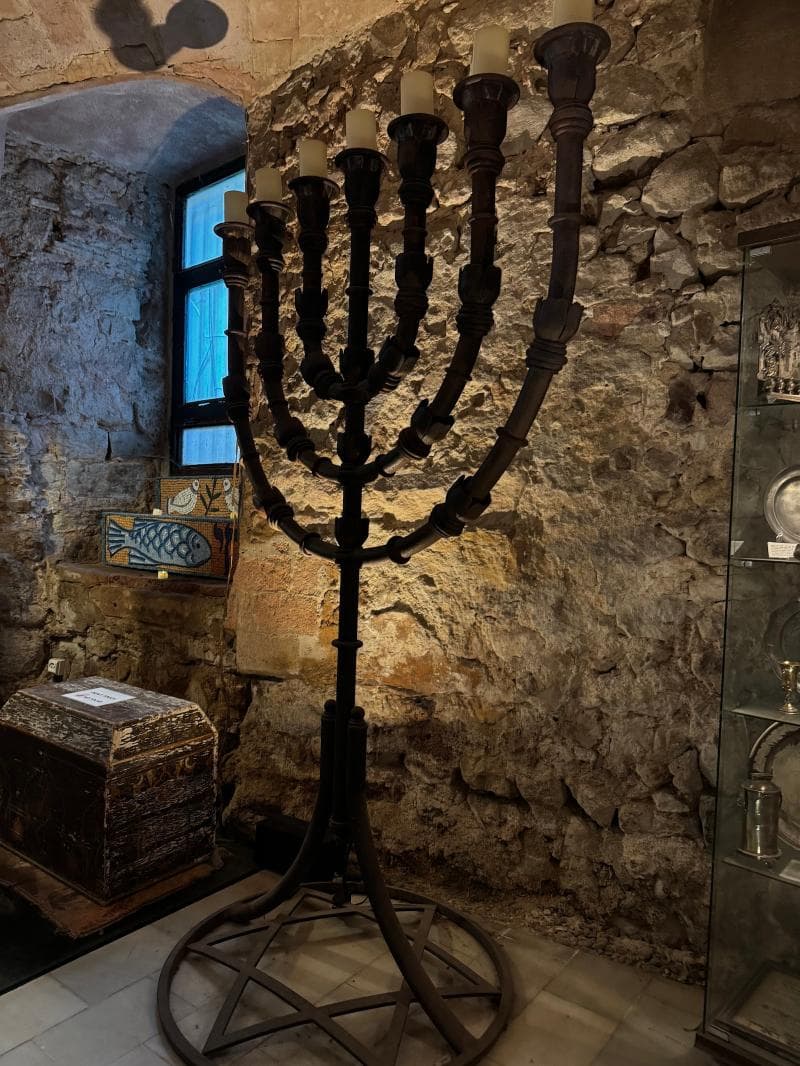
Uncover El Call, Barcelona's ancient Jewish Quarter in the Gothic Quarter. Explore its rich history, narrow streets, and the oldest synagogue in Europe.
Overview
Nestled within the vibrant, labyrinthine streets of Barcelona's Gothic Quarter lies El Call, the city's ancient Jewish Quarter. This historic sub-spot, whose name 'El Call' derives from the Catalan word for 'little street' or 'alley', offers a profound glimpse into a community that thrived here for centuries. It is a place where every narrow cobblestone path and hidden square whispers tales of a rich past, inviting curious travelers to step back in time and uncover a significant, often overlooked, chapter of Barcelona's history.
Far from the bustling main avenues, El Call is a tranquil enclave. It's an area defined by its medieval architecture and a unique atmosphere that sets it apart from the rest of the Gothic Quarter. While not as overtly monumental as some other historical sites, its charm lies in its subtlety and the tangible sense of history that permeates its ancient walls.
History & Cultural Background
The history of Jewish life in Barcelona dates back to the Roman era, with a more organized community forming by the 9th century. By the end of the 7th century, the Jewish population was primarily concentrated in El Call, an area around Carrer del Call, Carrer de Sant Domènec del Call, Carrer Marlet, and Arc de Sant Ramón del Call.
The 12th and 13th centuries marked a 'Golden Age' for Barcelona's Jewish community. During this period, El Call expanded, even necessitating the creation of a 'Call Menor' (Minor Call) alongside the 'Call Major' (Major Call). At its peak, approximately 15% of medieval Barcelona's population was Jewish, numbering around 4,000 residents. Barcelona earned the reputation as a 'city of sages' among Jews, with individuals working as doctors, scientists, merchants, and financiers for the Catalan aristocracy and the Crown. Their contributions were vital to the city's economic and intellectual life.
However, this prosperity was tragically cut short. The 14th century brought famines and the Black Death, leading to growing anti-Jewish sentiment. In 1391, devastating pogroms swept across Spain, severely impacting Barcelona's Jewish Quarter. Approximately 300 Jews were killed, and many survivors were forced to convert or flee. The Spanish Inquisition later further suppressed Jewish life, leading to the virtual disappearance of the community for centuries.
What Makes It Special
What makes El Call particularly special today is its enduring presence despite centuries of attempts to erase its Jewish past. The district retains its distinctive medieval street plan, a dense network of narrow, winding alleyways that are a stark contrast to the wider streets of later periods.
At its heart lies the Sinagoga Major (Ancient Synagogue), believed to be one of the oldest synagogues in Europe, with foundations potentially dating back to the 3rd or 4th century CE. Rediscovered in the 1980s and restored, it now serves as a museum and cultural site, offering a tangible connection to the past. Another key site is the MUHBA El Call, a branch of the Barcelona City History Museum, located in a 14th-century house that once belonged to a Jewish weaver. It displays artifacts and documents that illuminate Jewish life in medieval Barcelona.
Visitors can also find subtle architectural vestiges, such as faint marks on doorframes where mezuzahs (parchment scrolls) were once affixed, a poignant reminder of the Jewish homes that once lined these streets.
Stories, Fun Facts & Local Details
One fascinating detail is that El Call was once home to two main areas, the Call Major and the Call Menor, reflecting the community's growth and the influx of Jews expelled from France. The Jewish community's expertise in fields like medicine, science, and commerce made them indispensable to the ruling powers, cementing Barcelona's status as a 'city of sages'.
The Sinagoga Major, after the expulsion of Jews, underwent various transformations, even becoming a dye house and later having apartments built on top of it, before its true identity was uncovered during a research project. Its restoration and opening to the public in 2002 allowed its ancient Roman foundations to be seen once more, with two stone windows aligning towards Jerusalem, as tradition dictates.
Even the name of Montjuïc, Barcelona's famous mountain, is said to mean 'Jewish Mountain' in medieval Catalan, as it historically served as a Jewish cemetery, with many gravestones later repurposed into Barcelona's medieval walls.
Visitor Perspective
Exploring El Call is less about grand monuments and more about the immersive experience of its narrow, historic alleys. It encourages a slower pace, inviting visitors to observe the quiet details and feel the weight of centuries of history. Walking through the cobbled streets, one can almost hear the echoes of scholars debating, merchants trading, and families living their daily lives.
A visit to the Ancient Synagogue offers a moment of quiet reverence, connecting visitors directly to the spiritual heart of the medieval community. The MUHBA El Call provides essential context, bringing the stories of the residents to life through its exhibits. It's a place for reflection and understanding, where the resilience and cultural legacy of Barcelona's Jewish community can be profoundly felt. To best absorb its atmosphere, visiting in the early morning or late afternoon, when the light filters softly through the ancient buildings, is often recommended.
Coordinates: 2.15899, 41.38879
View on Google Maps💬 How Travelers Describe This Place
Based on community votes
Photogenic
980Unique
963Beautiful
663Must See
503Interesting
201
Traveler Stories
Discover memorable experiences shared by travelers who have visited this place.
No traveler stories yet.
Be the first traveler to share what made this place memorable.

Tour
By
Spot
Discover amazing places around the world. Your journey starts here.
Explore
© 2026 TourBySpot. All rights reserved.