Gandan Monastery
Ulaanbaatar, Mongolia
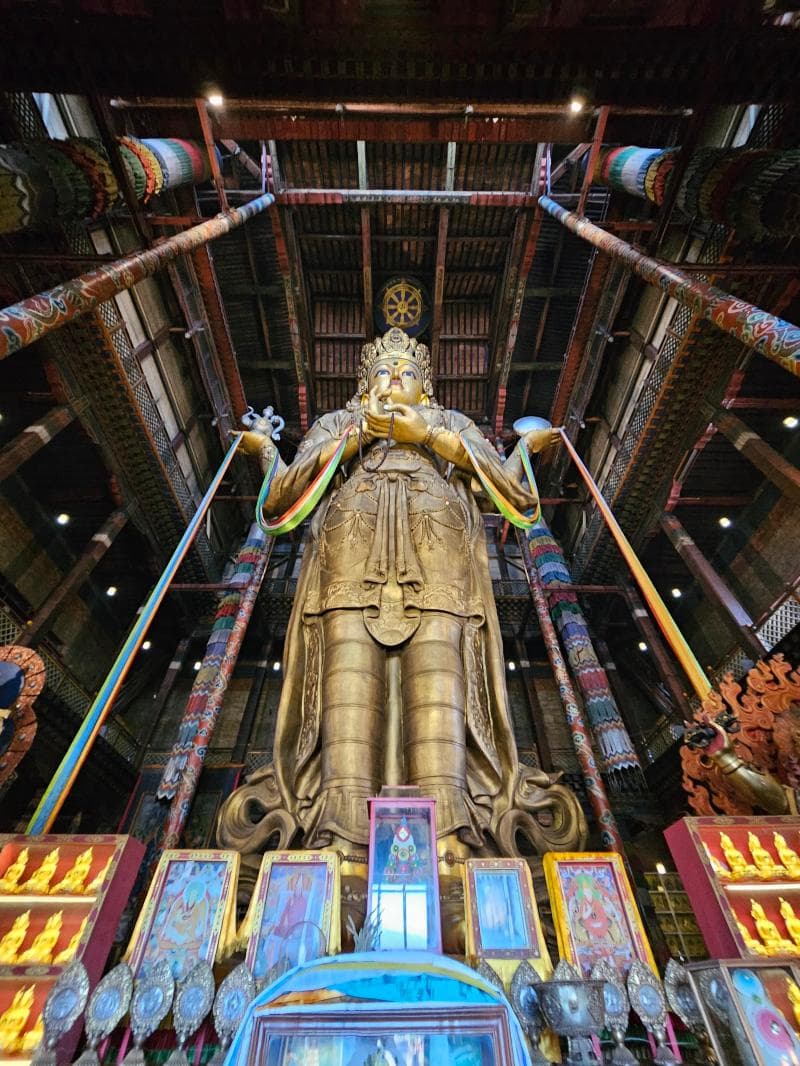
Explore Gandan Monastery in Ulaanbaatar, Mongolia's spiritual heart. Discover its rich history, the towering Megjid Janraisig Buddha, and vibrant monastic life.
Overview
Nestled in the heart of Ulaanbaatar, Mongolia, the Gandantegchinlen Monastery, affectionately known as Gandan Monastery, stands as a vibrant testament to the nation's enduring Buddhist heritage. Its full Tibetan name translates to 'The Great Place of Complete Joy,' a sentiment echoed in the spiritual solace it offers both devout practitioners and curious travelers. As the largest and most significant Buddhist monastery in Mongolia today, Gandan serves not only as a place of worship but also as a crucial center for Buddhist education and culture. Its iconic 26.5-meter-high statue of Megjid Janraisig (Avalokiteśvara) gazes upon a bustling complex that pulses with the daily rhythms of monastic life, drawing visitors into a world steeped in ancient traditions and profound spirituality.
History & Cultural Background
The origins of Gandan Monastery trace back to the early 19th century. While some sources suggest its founding in 1809, others point to 1835 or 1838 as the year the first major temple or the current main complex was established by the fifth Jebtsundamba Khutuktu, Mongolia's highest-ranked reincarnated lama. Over decades, it flourished into a preeminent hub for Buddhist learning, accumulating a vast library of scriptures and housing numerous colleges dedicated to Buddhist philosophy, medicine, and astrology. However, the monastery's journey was not without profound challenges. During the Stalinist purges of the 1930s, Mongolia's communist regime unleashed a wave of religious persecution, destroying hundreds of monasteries and executing thousands of lamas. Gandan was closed in 1939, its buildings repurposed, and its magnificent original Janraisig statue tragically melted down. Miraculously, Gandan was permitted to reopen in 1944, albeit under strict governmental control, becoming the country's only active monastery and a 'show monastery' for the outside world, a symbolic nod to Mongolia's cultural past. With Mongolia's democratic revolution in 1990, the monastery experienced a powerful revival, fully reclaiming its role as the spiritual heart of the nation and undergoing extensive restoration.
What Makes It Special
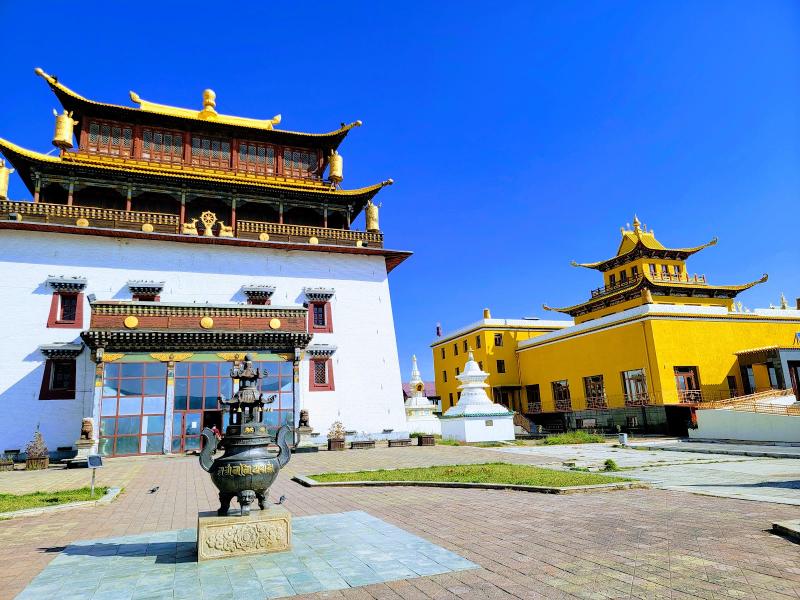
At the core of Gandan's unique appeal is the towering statue of Megjid Janraisig, the Bodhisattva of Compassion. Standing at an impressive 26.5 meters (approximately 87 feet), this gilded copper masterpiece is adorned with thousands of precious stones and intricate details. The current statue, reconstructed in 1996 through generous donations from the Mongolian people and international contributors, symbolizes not only the revival of Buddhism but also Mongolia's enduring spirit of independence and resilience. Inside its hollow form are said to be enshrined millions of mantras, tons of medicinal herbs, and even a complete ger (traditional dwelling), making it a profound reliquary. Beyond this central marvel, Gandan remains an active monastery, home to hundreds of monks and a thriving center for the study and practice of Tibetan Buddhism. The complex encompasses several temples, including the Ochidara Temple and Didan-Lavran Temple, as well as the Mongolian Buddhist University, fostering a vibrant intellectual and spiritual community.
Stories, Fun Facts & Local Details
The story of the Megjid Janraisig statue is particularly poignant. The original statue, erected in 1911-1913, was commissioned by the eighth Jebtsundamba Khutuktu, the Bogd Khan, with the hope of restoring his eyesight. Its subsequent destruction by Soviet troops, who reportedly melted it down for bullets during the Siege of Leningrad in World War II, is a stark reminder of the communist era's impact. The rebuilding of the statue decades later, funded by collective efforts, underscores the deep reverence Mongolians hold for their faith and cultural identity. Visitors to Gandan Monastery often arrive early in the morning to witness the monks' daily chanting ceremonies, a mesmerizing experience filled with resonant drums, cymbals, and ancient prayers. The air is often thick with the fragrance of juniper incense, and the sound of spinning prayer wheels provides a meditative backdrop to the spiritual activities. The monastery's library is also a treasure trove, housing a vast collection of Buddhist manuscripts, some inscribed on unique materials, showcasing centuries of scholarly tradition. Even today, monks' yurts can be seen within the vicinity, highlighting the blend of traditional Mongolian life with the monastic setting.
Visitor Perspective
Visiting Gandan Monastery offers a deeply immersive cultural experience. As you step onto its grounds, the tranquility and spiritual energy are palpable. The architecture, with its distinct Tibetan influence and vibrant colors, is a visual feast. Travelers are invited to walk the kora (pilgrim path), spin the prayer wheels, and observe the monks in their daily rituals, offering a unique glimpse into the living traditions of Mongolian Buddhism. While the main courtyards are free to explore, a small entrance fee is typically required to enter the central temple housing the Megjid Janraisig statue. It's important to dress respectfully, covering shoulders and knees, and to maintain a quiet demeanor, particularly within the prayer halls. Photography regulations may vary in certain areas, so it's always wise to check for signs or ask. Located just a short distance from Ulaanbaatar's city center, Gandan Monastery is easily accessible and provides a profound opportunity to connect with Mongolia's spiritual essence and witness the enduring resilience of its people.
Coordinates: 106.89475, 47.92202
View on Google Maps💬 How Travelers Describe This Place
Based on community votes
Unique
996Photogenic
673Beautiful
585Interesting
143Must See
69
Traveler Stories
Discover memorable experiences shared by travelers who have visited this place.
No traveler stories yet.
Be the first traveler to share what made this place memorable.
Things to see at Gandan Monastery




Tour
By
Spot
Discover amazing places around the world. Your journey starts here.
Explore
© 2026 TourBySpot. All rights reserved.