Buddhist Library
Ulaanbaatar, Mongolia
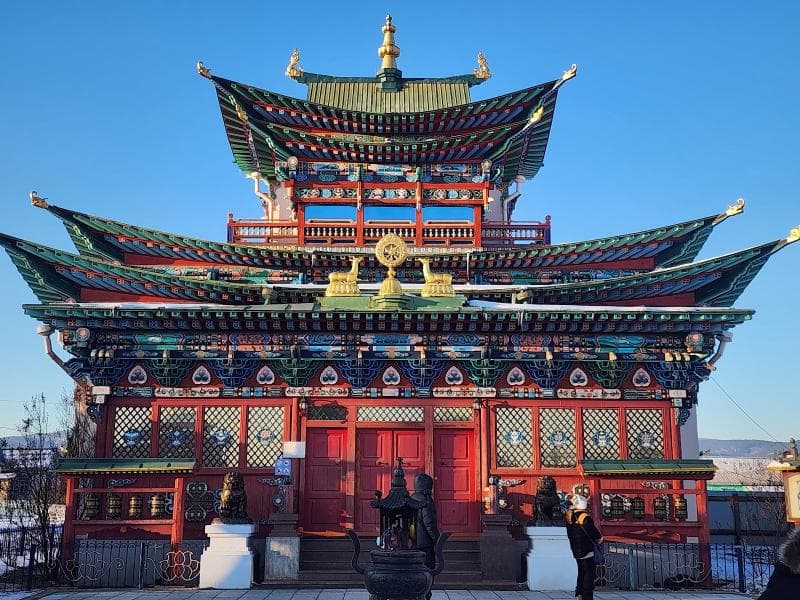
Explore the Buddhist Library at Gandan Monastery in Ulaanbaatar, Mongolia, housing rare sutras and centuries of spiritual knowledge.
Overview
Tucked within the serene grounds of Gandantegchinlen Monastery in Ulaanbaatar, Mongolia, lies a significant cultural treasure: its Buddhist Library. More than just a repository of books, this library serves as a living archive of Mongolia's rich spiritual and intellectual heritage. It houses an extensive collection of Buddhist sutras and shastras, which are paramount to the study and practice of Mahayana Buddhism in the country. Visitors to Gandan Monastery often focus on its impressive architecture and the daily rituals of its monks, but the library offers a quieter, profound glimpse into the scholarly traditions that have sustained Mongolian Buddhism for centuries.
The Gandan Library, as it is often referred to, is not a standalone building but integrated within the monastic complex, notably in the temple dedicated to preserving the remains of the Eighth Bogd Jevzundamba. It represents a crucial link to the past, safeguarding ancient texts and teachings that survived periods of intense religious persecution. Exploring its collections offers a unique insight into the intellectual endeavors and spiritual dedication of Mongolian Buddhist scholars and practitioners.
History & Cultural Background
Gandan Monastery, whose full name Gandantegchinlen translates to 'The Great Place of Complete Joy', was founded in 1809 and moved to its present location in 1838. Over the subsequent century, it flourished into a prominent center for Buddhist learning, eventually comprising nine institutes and housing approximately 5,000 monks. This vibrant academic environment naturally led to the development of a substantial library. The Buddhist Library itself was specifically founded in 1956, located within the relic temple of the Eighth Bogd Jevzundamba.
The 20th century brought immense challenges to Buddhism in Mongolia. During the Stalinist purges of the 1930s, around 900 monasteries were destroyed, and thousands of lamas were executed, jailed, or forced into the army. Gandan Monastery was closed in 1938, but remarkably, it reopened in 1944, operating as the sole active monastery in Mongolia under strict state supervision for nearly five decades. It served as a 'showcase monastery', preserving a token homage to traditional Mongolian culture and religion during the communist era. Despite these tumultuous times, the library's collections were largely preserved, ensuring the continuity of Buddhist knowledge. With the advent of democracy in 1990, Buddhism experienced a significant revival, and Gandan Monastery underwent full-scale renovation and revitalization, resuming its full role as a spiritual and educational hub.
What Makes It Special
What makes the Buddhist Library at Gandan truly special is its unparalleled collection of Buddhist sutras and shastras at a national level. These aren't just any religious texts; they include celebrated works by Mongolian Buddhist scholars and saints, alongside renowned compositions by Indian and Tibetan masters. The texts are often written in ancient scripts such as Lancha, Soyombo, Tibetan, and various old Mongolian scripts, making them invaluable linguistic and historical artifacts. The library thus acts as a sanctuary for these rare and delicate manuscripts, many of which contain profound philosophical, historical, and scientific knowledge.
Furthermore, the library is engaged in modern preservation efforts. Since 2007, it has been actively implementing a 'Digital Preservation and Dissemination' project with technical and financial assistance from UNESCO. This initiative ensures that these ancient texts are not only physically preserved but also made accessible to a wider audience, bridging the gap between historical tradition and contemporary technology. This commitment to both tangible and digital preservation highlights the library's role as a forward-thinking custodian of Buddhist heritage.
Stories, Fun Facts & Local Details
Imagine the dedication required to transcribe these sacred texts by hand, often in elaborate and beautiful scripts like Soyombo, a unique Mongolian script invented by the First Bogd Gegeen Zanabazar. The act of copying these sutras was itself considered a meditative and meritorious practice. While the library is generally not a publicly accessible reading room in the Western sense, its presence within the monastery underscores the profound emphasis on scholarship and textual study in Mongolian Buddhism.
A fascinating detail is how some of these invaluable texts survived the purges of the 1930s. Often, monks and devout laypeople risked their lives to hide and protect manuscripts, burying them or concealing them in remote locations, ensuring that these vital pieces of cultural memory would endure. The library's existence today is a testament to their bravery and devotion. The building it occupies, the relic temple of the Eighth Bogd Jevzundamba, links the library directly to a historical spiritual leader, adding another layer of historical significance to its treasures.
Visitor Perspective
For a curious traveler, the Buddhist Library offers a contemplative contrast to the more outwardly vibrant elements of Gandan Monastery, such as the chanting ceremonies or the towering Migjid Janraisig statue. While direct access to browse the ancient manuscripts might be limited to researchers or those with special permission, understanding its significance enriches the overall experience of visiting Gandan. The sheer presence of such a vast repository of wisdom within the monastery's walls evokes a sense of awe and respect for the intellectual traditions of Mongolian Buddhism. It encourages visitors to ponder the enduring power of knowledge and faith in shaping a culture. Observing monks in their daily routines, even from a distance, reinforces the library's role in their education and spiritual development, providing a deeper appreciation for this serene and scholarly corner of Ulaanbaatar.
Coordinates: 106.895, 47.92306
View on Google Maps💬 How Travelers Describe This Place
Based on community votes
Interesting
1.0kBeautiful
869Unique
309Photogenic
100Must See
33
Traveler Stories
Discover memorable experiences shared by travelers who have visited this place.
No traveler stories yet.
Be the first traveler to share what made this place memorable.

Tour
By
Spot
Discover amazing places around the world. Your journey starts here.
Explore
© 2026 TourBySpot. All rights reserved.