Migjid Janraisig Statue
Ulaanbaatar, Mongolia
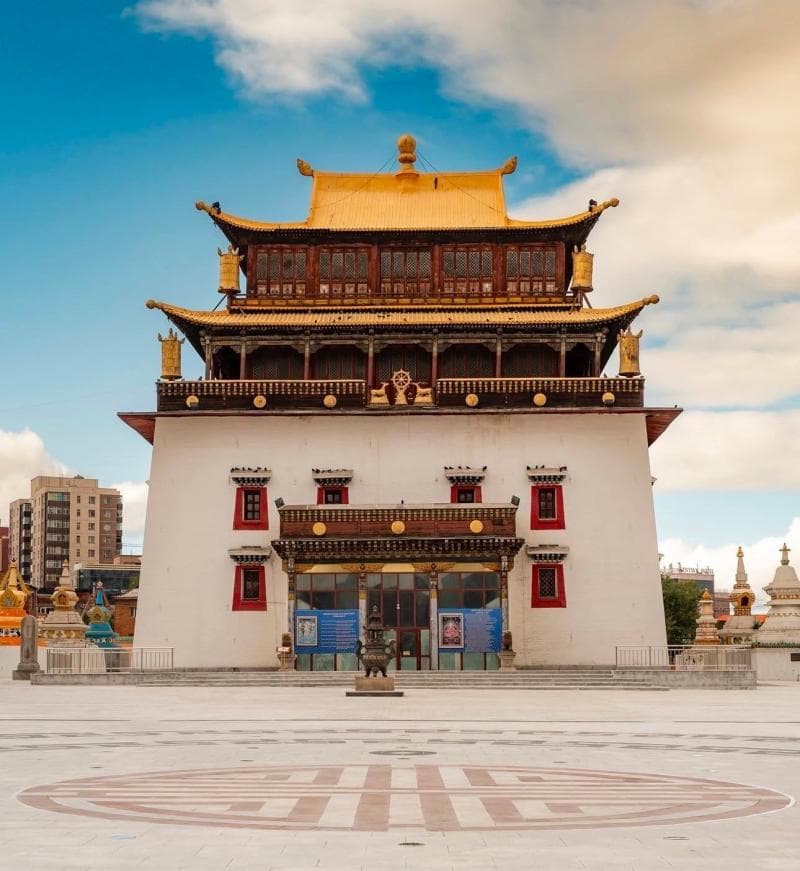
Discover the Migjid Janraisig Statue, a 26.5-meter golden Bodhisattva of Compassion, within Gandan Monastery in Ulaanbaatar, Mongolia.
Overview
Deep within the heart of Ulaanbaatar, Mongolia, lies the Gandan Monastery, a spiritual oasis whose name, 'Gandantegchinlen,' translates to 'The Great Place of Complete Joy.' This revered Buddhist complex is home to a magnificent and deeply symbolic treasure: the Migjid Janraisig Statue. This colossal golden figure of Avalokitesvara, the Bodhisattva of Compassion, stands as a testament to Mongolia's enduring Buddhist faith and its spirit of resilience. Measuring an impressive 26 to 26.5 meters (approximately 85 to 87 feet) in height, it is recognized as one of the tallest indoor Buddhist statues in Asia, drawing pilgrims and curious travelers alike to witness its majestic presence. The Migjid Janraisig Statue is not merely an artistic marvel; it is a powerful national symbol of religious freedom and independence for the Mongolian people.
History & Cultural Background
The story of the Migjid Janraisig Statue is one of hope, loss, and profound revival. The original statue was commissioned in 1911 or 1913 by the 8th Bogd Khan (Jebtsundamba Khutuktu), Mongolia's spiritual leader, in a heartfelt prayer for the restoration of his failing eyesight. Crafted from copper and adorned with gold and bronze, this initial masterpiece stood as a beacon of devotion. However, its existence was tragically cut short. In 1937 or 1938, during the height of the communist purges, Soviet troops dismantled the statue, melting down its precious metals to produce bullets for the war effort, reportedly for the Siege of Leningrad during World War II.
For decades, Mongolia's religious landscape suffered under suppression, with Gandan Monastery itself being one of the few to survive, albeit under strict control, and serving as the country's sole functioning monastery from 1944 to 1989. With the advent of democracy and renewed religious freedom in the 1990s, the Mongolian people embarked on an ambitious project to rebuild their sacred icon. Through national donations, along with significant contributions from Nepal and Japan, a new Migjid Janraisig Statue was constructed over five years. Consecrated by the 14th Dalai Lama in October 1996, the rebuilt statue symbolizes not only the revival of Buddhism in Mongolia but also the unwavering spirit of its people.
What Makes It Special
The rebuilt Migjid Janraisig Statue is a work of breathtaking artistry and profound spiritual significance. Standing tall at 26 to 26.5 meters, it commands attention with its gleaming presence. The statue is primarily fashioned from 20 tons of copper and is magnificently gilded with 8.6 kilograms of gold leaf. Further enhancing its splendor, it is intricately adorned with over 2,000 to 2,286 precious stones, including vibrant turquoise and deep lapis lazuli.
What truly sets this statue apart is its hidden spiritual core. The hollow interior of the colossal figure is filled with sacred objects: 27 tons of medicinal herbs, 334 Sutras (Buddhist scriptures), approximately two million bundles of mantras, and even a fully furnished ger (a traditional Mongolian nomadic dwelling). This internal richness imbues the statue with immense spiritual power, making it a focal point for blessings and prayers. The Migjid Janraisig is a representation of Avalokitesvara, the Bodhisattva of Compassion, constantly reminding devotees of the importance of kindness and empathy. The statue is flanked by hundreds of smaller images of Ayush, the Buddha of Longevity, casting a watchful gaze and adding to the temple's serene atmosphere.
Stories, Fun Facts & Local Details
The story of the Migjid Janraisig Statue is steeped in fascinating details. The belief that the original statue could restore the Bogd Khan's failing eyesight highlights the deep connection between faith and healing in Mongolian culture. The tragic destruction during the Stalinist purges, with the copper being repurposed for wartime bullets, is a poignant reminder of a difficult chapter in Mongolia's history and the sacrifices made for survival. Yet, from this destruction rose a renewed symbol of national identity and religious freedom.
Gandan Monastery itself, where the statue resides, is a vibrant center for Buddhist learning. It houses institutions like the Zanabazar Buddhist University and several Buddhist colleges, fostering a rich intellectual tradition. Mongolian Buddhism is unique, having historically integrated elements of indigenous shamanistic traditions, creating a distinct spiritual tapestry. Visitors often witness captivating morning prayer ceremonies, filled with the rhythmic sounds of drumming, chanting, and cymbals, offering a profound glimpse into local religious practices. It's common to see local Mongolians, some dressed in traditional attire, visiting the monastery to make donations and offer prayers, reflecting its role as a living spiritual hub. For those seeking a touch of local folklore, fortune-tellers can sometimes be found near the eastern gate of the monastery, using traditional sheep-ankle bones for divination.
Visitor Perspective
Visiting the Migjid Janraisig Statue offers a deeply immersive cultural and spiritual experience. Situated within the tranquil grounds of Gandan Monastery, it provides a peaceful escape from the bustling energy of Ulaanbaatar, truly serving as an 'island of tranquility.' Travelers can witness the spell-binding ceremonies performed by the resident monks, which are both historically rich and spiritually moving. While the monastery welcomes visitors, it's essential to remember it is an active place of worship. A small entrance fee is usually required, which directly contributes to the maintenance and restoration of this important site. Photography is generally permitted around the monastery grounds and within the Migjid Janraisig Süm, though a separate fee might apply for cameras, and it's respectfully prohibited inside other temples. Given its active religious nature, visitors are encouraged to be mindful and respectful of devotees engaged in prayer. While popular, the site retains an authentic feel; for a deeper understanding, engaging with a local guide can significantly enhance the experience. The monastery is conveniently located and can be reached within a 16 to 20-minute journey from Ulaanbaatar's city center, making it an accessible and essential stop for any traveler exploring Mongolia.
Coordinates: 106.895, 47.92306
View on Google Maps💬 How Travelers Describe This Place
Based on community votes
Must See
673Photogenic
336Interesting
219Unique
186Beautiful
80
Traveler Stories
Discover memorable experiences shared by travelers who have visited this place.
No traveler stories yet.
Be the first traveler to share what made this place memorable.

Tour
By
Spot
Discover amazing places around the world. Your journey starts here.
Explore
© 2026 TourBySpot. All rights reserved.