Monastic Courtyards
Ulaanbaatar, Mongolia
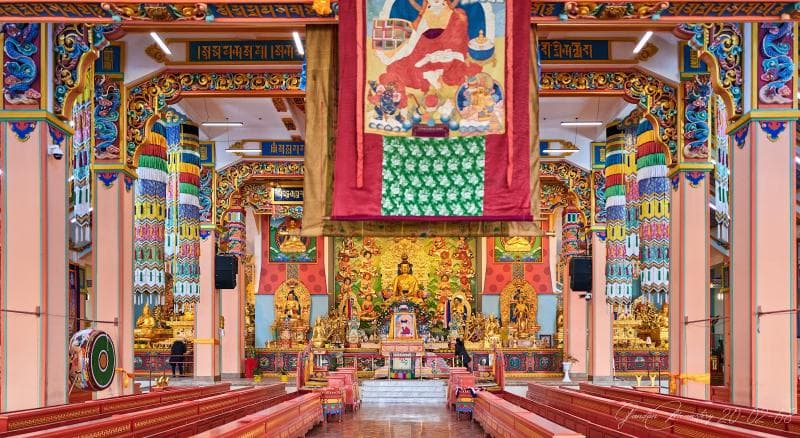
Explore the serene Monastic Courtyards of Gandan Monastery in Ulaanbaatar, Mongolia, a spiritual hub rich in history, culture, and daily Buddhist life.
Overview
The Monastic Courtyards of Gandan Monastery in Ulaanbaatar, Mongolia, are not merely open spaces but the very arteries through which the spiritual life of this revered Buddhist center flows. These courtyards serve as tranquil interludes between the grand temples and academic halls, offering a serene environment for contemplation and pilgrimage. They are the stage for the daily routines of hundreds of monks and the devout practices of countless visitors, providing a unique glimpse into Mongolia's rich Buddhist heritage.
As you step into the Gandan Monastery complex, the sprawling courtyards immediately envelop you in an atmosphere distinct from the bustling city outside. Here, the sounds of Ulaanbaatar fade, replaced by the rhythmic chanting of monks and the gentle rustle of prayer flags. These expansive areas connect the various datsans (colleges) and temples, including the majestic Migjid Janraisig Sum, the Ochidara Temple, and the Didan-Lavran Temple.
History & Cultural Background
Gandan Monastery, or Gandantegchinlen Khiid, meaning 'Great Place of Complete Joy,' was founded in 1809 and moved to its present location in 1838. Over the decades, its courtyards evolved as the monastery expanded, incorporating numerous colleges for Buddhist philosophy, astrology, and medicine, along with various temples.
These courtyards bear silent witness to Mongolia's tumultuous history. During the communist purges of the 1930s, when countless monasteries were destroyed, Gandan was one of the very few that survived, though it was closed and many of its buildings were razed. It reopened in 1944, and after the collapse of communism in 1990, it underwent significant restoration and revitalization. The courtyards became central to this revival, once again bustling with spiritual activity and serving as a symbol of the resilience of Mongolian Buddhism.
What Makes It Special
What makes the Monastic Courtyards truly special is their dynamic blend of spiritual purpose and communal life. They are living spaces where ancient traditions meet contemporary devotion. Along the kora, or pilgrimage path, that winds through the courtyards, you'll find hundreds of prayer wheels, constantly spun by devotees seeking spiritual merit.
The courtyards are framed by buildings showcasing a unique fusion of Mongolian, Tibetan, and Chinese architectural styles, featuring intricate designs, white and red walls, and distinctive golden roofs. They provide vantage points to admire the grandeur of the main temples and the smaller shrines nestled within the complex. These open spaces are also where visitors can observe the daily rituals, the coming and going of monks in their maroon robes, and the faithful engaging in their prayers.
Stories, Fun Facts & Local Details
One endearing local detail of the courtyards involves the pigeons. While their numbers are now managed for health reasons, historically, and still to some extent today, people would sell birdseed outside the monastery gates for visitors to feed the pigeons. This act is believed to carry prayers up to heaven.
Stepping into these courtyards often brings a faint, yet pervasive, scent of juniper incense, a traditional offering that purifies the air and enhances the meditative atmosphere. It's a sensory detail that instantly connects visitors to the spiritual practices ongoing within the monastery. The courtyards are also where you might spot young monks, some as young as six, beginning their lifelong education in Buddhist philosophy, quietly moving between classes or participating in rituals.
Visitor Perspective
For the curious traveler, the Monastic Courtyards offer an unparalleled experience. They are not merely transit areas but destinations in themselves. Visitors are free to wander, observing the ebb and flow of monastic life, the architectural details, and the genuine devotion of the practitioners. It's a place to slow down, to breathe, and to immerse oneself in the spiritual heart of Ulaanbaatar.
To truly appreciate the courtyards, it's recommended to visit in the morning when the daily chanting ceremonies are held, filling the air with profound sounds and offering a deeply moving cultural experience. These courtyards provide a peaceful retreat from the urban environment, a sanctuary where one can reflect and gain a deeper understanding of Mongolia's enduring Buddhist culture.
Coordinates: 106.8903, 47.9205
View on Google Maps💬 How Travelers Describe This Place
Based on community votes
Beautiful
673Photogenic
219Interesting
186Must See
143Unique
80
Traveler Stories
Discover memorable experiences shared by travelers who have visited this place.
No traveler stories yet.
Be the first traveler to share what made this place memorable.

Tour
By
Spot
Discover amazing places around the world. Your journey starts here.
Explore
© 2026 TourBySpot. All rights reserved.