Religious Art Displays
Ulaanbaatar, Mongolia
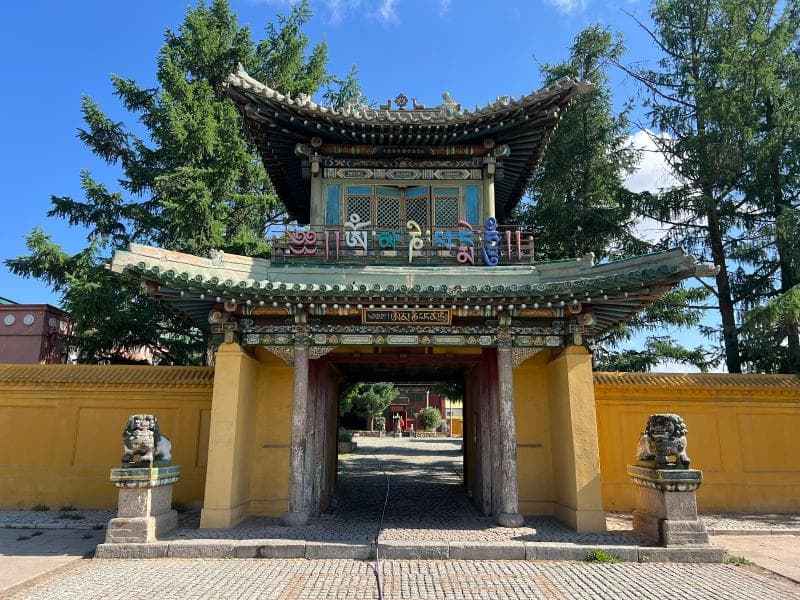
Explore the exquisite Religious Art Displays at Gandan Monastery in Ulaanbaatar, Mongolia. Discover ancient Buddhist art, the colossal Migjid Janraisig statue, and rich cultural heritage.
Overview
Nestled in the heart of Ulaanbaatar, Mongolia, Gandan Monastery, formally known as Gandantegchinlen Khiid, stands as the spiritual epicenter of Mongolian Buddhism. More than just a collection of temples, it is a living museum of profound religious art, offering a serene escape from the bustling capital. Visitors are greeted by a vibrant tapestry of Buddhist artwork, including intricate murals, delicate thangkas, and magnificent sculptures that narrate centuries of spiritual devotion and cultural fusion. The monastery's resilience is particularly noteworthy, having endured the harsh communist purges of the 1930s to re-emerge as a beacon of faith and national identity. Its 'Religious Art Displays' are not mere decorations; they are sacred objects, each imbued with deep meaning and an essential part of the worship and daily life within this active monastic community.
History & Cultural Background
The history of Gandan Monastery is deeply intertwined with the story of Buddhism in Mongolia. The monastery's origins trace back to the early 19th century, with its establishment around 1809 or 1838. It quickly flourished, becoming a prominent center for Buddhist learning, attracting thousands of monks who studied various disciplines, including philosophy, medicine, and astrology. Mongolian Buddhism, a unique blend of Tibetan Buddhism and indigenous shamanistic traditions, found its most significant expression within Gandan's walls. However, this vibrant spiritual life faced a severe test during the 1930s when, under Soviet influence, the communist regime launched brutal anti-religious persecutions. While hundreds of monasteries across Mongolia were destroyed and many monks perished, Gandan was one of the very few that survived, albeit partially damaged. It operated as the country's sole active monastery for nearly 50 years. With the advent of democracy in 1990, coinciding with the reinstatement of religious freedom, Gandan underwent a significant revival. Monks returned, ceremonies resumed, and extensive renovations began, restoring the monastery to its former glory and reaffirming its role as the spiritual heart of Mongolia.
What Makes It Special
The 'Religious Art Displays' at Gandan Monastery are distinguished by their spiritual depth and artistic grandeur. The undisputed centerpiece is the colossal Migjid Janraisig statue, a breathtaking 26.5-meter (85-foot) tall depiction of Avalokiteśvara, the Bodhisattva of Compassion. This gilded bronze statue, adorned with thousands of precious stones, is one of the tallest indoor Buddha statues in the world. Beyond this monumental figure, the monastery's temples are filled with an array of artistic treasures. Intricate murals cover the walls, depicting Buddhist deities, mandalas, and narratives from Buddhist cosmology. Vibrant thangka paintings, delicate scroll paintings often rich in symbolic detail, hang in various halls. Exquisite wood carvings adorn architectural elements, showcasing the meticulous craftsmanship of Mongolian artisans. The monastery also houses a significant library, which not only contains ancient Buddhist texts in Tibetan and Classical Mongolian but also a rare set of 108 volumes of the Ganjur, a sacred Buddhist canon written in gold ink on black paper. A unique collection of 13 paintings depicting the 84 Mahasiddhas, hidden away during the purges and brought to the monastery for display, further enriches its artistic heritage.
Stories, Fun Facts & Local Details
The art within Gandan tells stories that resonate deeply with Mongolian spiritual beliefs. The Migjid Janraisig statue itself holds a poignant tale: the original, built in 1911 to commemorate Mongolian independence, was commissioned by the 8th Jebtsundamba Khutuktu in hopes of restoring his eyesight. Tragically, this original statue was dismantled and melted down for ammunition by Russian forces during World War II. Its reconstruction in 1996, funded by heartfelt donations from Mongolians and Buddhists worldwide, became a powerful symbol of national healing and the resurgence of faith. Visitors might also encounter fortune-tellers near the eastern gate, engaging in traditional divination using sheep-ankle bones, offering a glimpse into the local spiritual practices that blend with Buddhism. Just outside the south gate, traditional ger tents and buildings host galleries where visitors can find and purchase Buddhist artworks. Observing local pilgrims is a fascinating experience; they often walk clockwise around the temples and spin the hundreds of prayer wheels lining the paths, believing each rotation releases prayers and accumulates merit. The monastery is also known for its pigeons, which gather outside the complex, with locals selling birdseed to visitors who believe feeding them will carry their prayers to heaven.
Visitor Perspective
For any curious traveler, a visit to the 'Religious Art Displays' at Gandan Monastery is an immersive cultural and spiritual experience. It is crucial to remember that Gandan remains an active place of worship, and visitors are encouraged to observe respectful behavior and modest dress. The early morning hours offer a particularly profound experience, as monks gather for daily prayer ceremonies (puja). The air fills with the deep, rhythmic chants, echoing horns, and the clang of cymbals, creating a meditative soundscape that connects you to centuries of devotion. Wandering through the various temples and halls, one can marvel at the intricate details of the art, from the vibrant frescoes to the serene Buddha figures. While photography is generally permitted, some areas may require a special permit or have restrictions, so it's wise to be observant of posted signs. Gandan offers a peaceful retreat from the urban bustle of Ulaanbaatar, providing a unique opportunity to witness the living traditions of Mongolian Buddhism and appreciate the profound beauty of its religious art, fostering a deeper connection with Mongolia's soul.
Coordinates: 106.894984, 47.923114
View on Google Maps💬 How Travelers Describe This Place
Based on community votes
Photogenic
1.0kUnique
869Must See
416Interesting
309Beautiful
33
Traveler Stories
Discover memorable experiences shared by travelers who have visited this place.
No traveler stories yet.
Be the first traveler to share what made this place memorable.

Tour
By
Spot
Discover amazing places around the world. Your journey starts here.
Explore
© 2026 TourBySpot. All rights reserved.