Fantoft Stave Church
Bergen, Norway
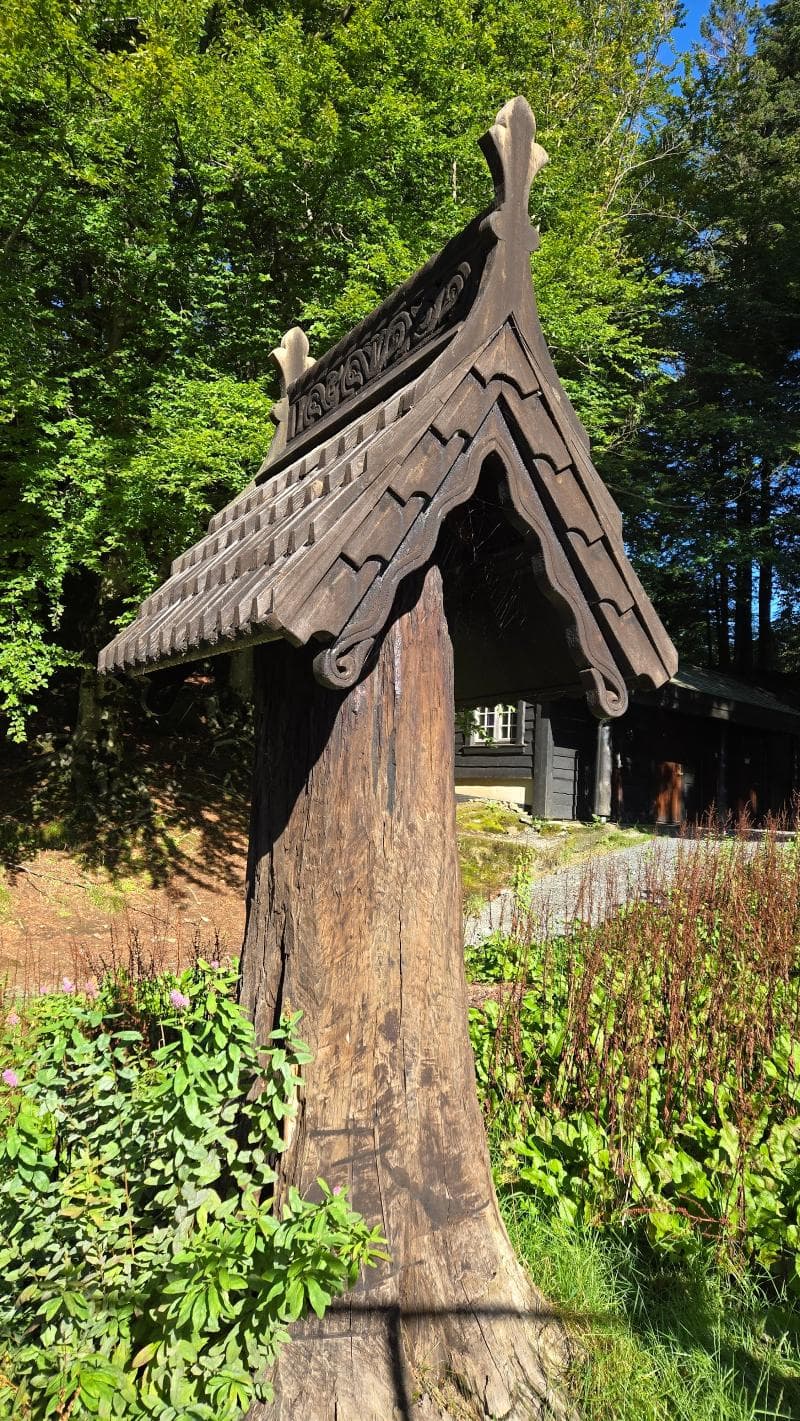
Explore Fantoft Stave Church in Bergen, Norway, a stunning reconstructed medieval wooden church with a rich history and unique architecture.
Overview
The Fantoft Stave Church, nestled amidst the scenic landscapes of Bergen, Norway, stands as a profound testament to medieval Norwegian architecture and human resilience. Originally erected around the year 1150 in Fortun, a village deep within the Sogn region, this remarkable wooden church was moved to its current location in Fantoft in 1883 to safeguard it from demolition. Though it faced a tragic destruction by arson in 1992, the Fantoft Stave Church was meticulously reconstructed, completing its rebirth in 1997. Today, it presents a faithful recreation of a traditional stave church, characterized by its distinctive dark, tar-treated timber, intricate wood carvings, and soaring tiered roofs. More than just a structure, it is a symbol of enduring cultural heritage, inviting visitors to step into a bygone era.
This unique edifice, known for its intricate woodwork and unique design elements, offers a captivating glimpse into Norway's past. While it is primarily open for interior visits during the summer season, its striking exterior can be admired year-round, offering a compelling sight against the Bergen backdrop. Easily accessible from Bergen city center via the Light Rail, Fantoft Stave Church represents a crucial piece of Norwegian history and a captivating destination for those seeking a deeper understanding of the region's rich cultural tapestry.
History & Cultural Background
The story of Fantoft Stave Church is deeply interwoven with Norway's medieval past and its struggle to preserve architectural treasures. Stave churches, characterized by their all-wooden construction using vertical posts or 'staves,' were once widespread across Scandinavia during the 12th and 13th centuries, embodying a unique blend of Christian and Norse pagan influences. The original Fantoft Stave Church was built around 1150 in Fortun, where it served its community for centuries. However, by the late 19th century, many of these ancient wooden churches were either in disrepair or being replaced by newer structures, leading to widespread demolition threats.
Its salvation came in 1883 when Consul Fredrik Georg Gade purchased the church and had it painstakingly disassembled and transported piece by piece to his estate in Fantoft, near Bergen, where it was faithfully reconstructed. This relocation ensured its survival for another century. A dark chapter unfolded on June 6, 1992, when the church was tragically destroyed by arson, an act that shocked the nation and became linked to a series of church burnings associated with the early Norwegian black metal scene. Immediately, a decision was made to rebuild. The ensuing six-year reconstruction effort was a monumental task, relying on traditional techniques and materials, including 350-400 year old pine timber. Completed in 1997, the rebuilt church stands as a powerful testament to the nation's resolve to reclaim and protect its heritage.
What Makes It Special
Fantoft Stave Church's exceptional allure lies in its intricate craftsmanship and the powerful narrative of its survival and rebirth. As a prime example of medieval Norwegian architecture, it showcases the sophisticated wooden construction techniques of its era, often using interlocking joints and wooden pegs rather than nails. The church's exterior is particularly striking, featuring dark, tar-treated wood that protects it from the elements, and stylized dragon heads adorning the gables. These dragon heads are not merely decorative; they are echoes of Viking symbolism, believed to ward off evil spirits, reflecting the fascinating cultural synthesis between pagan beliefs and nascent Christianity that characterized medieval Norway.
Its journey from a remote village church, through relocation, tragic destruction, and meticulous reconstruction, makes it a powerful symbol of resilience. The faithful recreation involved master craftsmen employing traditional methods and using centuries-old timber, ensuring an authentic experience for visitors. While it is a reconstruction, its dedication to historical accuracy allows it to serve as one of the most accessible and representative examples of Norway's approximately 28 remaining stave churches, offering a tangible link to a unique architectural and cultural heritage.
Stories, Fun Facts & Local Details
The Fantoft Stave Church is steeped in compelling stories that add layers to its historical significance. For instance, the original church, prior to its first relocation, faced such neglect that some villagers reportedly repurposed its baptismal font as a trough for livestock, highlighting the challenging economic conditions of the time. The 1992 arson attack is undoubtedly the most dramatic event in its modern history. This act of vandalism brought the church into the global spotlight, especially due to its connection with the controversial Norwegian black metal scene; a photograph of the burnt church even appeared on a black metal album cover.
Interestingly, the 1883 reconstruction at Fantoft was not an exact replica of the original Fortun church. Instead, elements and inspiration from the well-preserved Borgund Stave Church were incorporated, resulting in a 'hybrid design' that reflects the architectural ideals of the time. The arduous task of rebuilding after the 1992 fire saw craftsmen meticulously working with 350-400 year old pine, joining timbers with wooden pegs, a testament to their dedication to historical authenticity. Today, among the 'new' timbers, two original artifacts remain: a wish stone embedded in a wall and the cross at the altar, silent witnesses to its long and tumultuous history.
Visitor Perspective
Visiting Fantoft Stave Church offers a memorable journey into Norway's past, providing a unique architectural and cultural experience. The church is typically open to the public during the warmer summer months, usually from early May to mid-September, allowing visitors to explore its interior and appreciate its intricate details. For those traveling outside this period, the church's impressive exterior can still be viewed from a perimeter fence, with a dedicated viewing platform providing good vantage points. There is an entrance fee for interior visits, and tickets are usually available at the entrance.
Getting to Fantoft Stave Church is straightforward, making it an accessible attraction for many. From Bergen city center, the most convenient way is to take the Bybanen (Bergen Light Rail) to the 'Fantoft' stop. From there, a short, pleasant walk through the local surroundings leads directly to the church. Visitors consistently describe the experience as 'stepping back in time,' offering a profound connection to Norway's medieval heritage and a vivid illustration of its architectural mastery. It's a highly recommended stop for history enthusiasts and anyone captivated by unique cultural landmarks.
Coordinates: 5.35328, 60.3393
View on Google Maps💬 How Travelers Describe This Place
Based on community votes
Photogenic
996Must See
953Beautiful
658Interesting
585Unique
69
Traveler Stories
Discover memorable experiences shared by travelers who have visited this place.
No traveler stories yet.
Be the first traveler to share what made this place memorable.
Things to see at Fantoft Stave Church



Tour
By
Spot
Discover amazing places around the world. Your journey starts here.
Explore
© 2026 TourBySpot. All rights reserved.