Wooden Church Exterior
Bergen, Norway
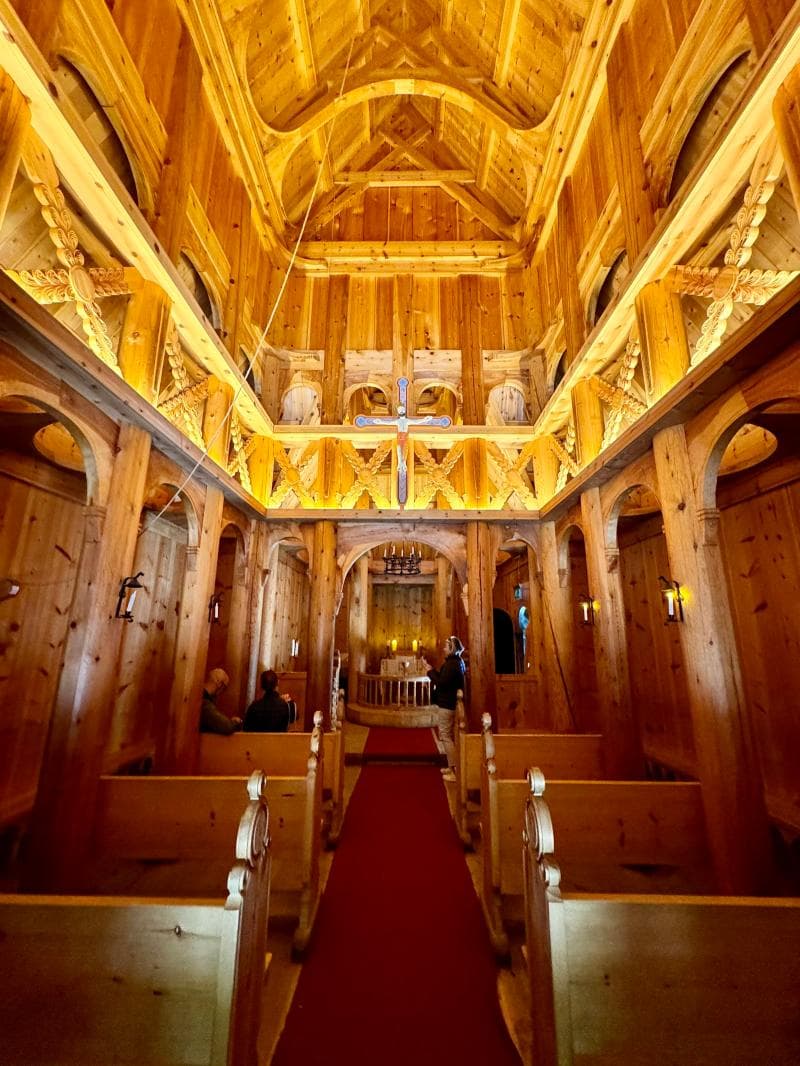
Explore the unique Wooden Church Exterior of Fantoft Stave Church in Bergen, Norway. Discover its medieval architecture, dragon carvings, and remarkable history of reconstruction after a devastating fire.
Overview
Nestled amidst the tranquil, verdant landscape of Bergen, Norway, the Fantoft Stave Church stands as a remarkable testament to medieval Norwegian wooden architecture. This iconic structure, particularly its striking exterior, captivates visitors with its dark, tar-treated timber, tiered roofs, and intricate carvings. While what stands today is a meticulously reconstructed church, it faithfully represents a style of building that dates back almost a millennium, offering a tangible connection to Norway's rich cultural and architectural heritage.
The Wooden Church Exterior of Fantoft Stave Church is a visual spectacle, instantly recognizable by its characteristic ‘staves’ – large, load-bearing corner posts that define its unique structural system. The dark, often almost black, wooden planks are treated with pine tar, a traditional method that not only preserves the timber from the harsh Nordic elements but also lends the church its distinctive, somber hue. This preservation technique is a direct link to ancient building practices, ensuring the longevity and aesthetic integrity of the wood. Viewing the exterior, one can appreciate the tiered silhouette, with multiple roofs stepping upwards, creating a pagoda-like effect that is truly unique to stave churches.
History & Cultural Background
The original Fantoft Stave Church was first constructed around 1150 in Fortun, a small village located deep within the Sogn region of Norway. This was a period when stave churches were prevalent across Scandinavia, showcasing a remarkable blend of advanced carpentry techniques and emerging Christian faith. By the late 19th century, many of these ancient wooden churches faced demolition due to disrepair or the construction of newer, larger parish churches. To save it from this fate, a Bergen businessman named Fredrik Georg Gade purchased the Fortun church in 1883 and had it meticulously dismantled, transported, and reassembled on his property in Fantoft, near Bergen.
Tragically, on June 6, 1992, the Fantoft Stave Church was destroyed by arson, an event that deeply shocked Norway and the international community. The incident was linked to a string of church burnings associated with the Norwegian black metal scene, making national and international headlines. Following the devastating fire, a decision was made to rebuild the church, aiming for an exact replica of its appearance prior to the fire. The reconstruction project was an immense undertaking, requiring immense dedication and traditional craftsmanship. Using photographs, drawings, and surviving fragments, artisans worked tirelessly for six years, utilizing 350-400-year-old pine trees and traditional techniques, including wooden pegs instead of nails. The rebuilt church was consecrated in 1997, standing once again as a symbol of resilience and cultural preservation.
What Makes It Special
The Fantoft Stave Church's exterior is special not just for its beauty but for its representation of a unique architectural style that is Norway's significant contribution to world architecture. The use of entirely wooden construction, with its characteristic stave framework, sets it apart from stone churches common elsewhere in medieval Europe. The church's layered roofing, often adorned with intricately carved dragon heads, is a direct nod to Norway's Viking past. These dragon heads, similar to those found on Viking longships, were believed to ward off evil spirits, showcasing a fascinating overlap between pre-Christian pagan beliefs and the newly adopted Christian faith.
Furthermore, the faithful reconstruction after the 1992 fire highlights a profound commitment to preserving cultural heritage. Craftsmen went to extraordinary lengths to ensure the new structure was as authentic as possible, even sourcing timber of comparable age and species to the original. This dedication means that while the church itself is relatively new, its exterior offers an almost identical visual experience to what visitors would have witnessed for centuries.
Stories, Fun Facts & Local Details
One of the most intriguing aspects of stave churches, including Fantoft, is the way their construction reflects a deep understanding of wood as a building material. The horizontal support beams and vertical staves are often dovetailed or pegged together, demonstrating a sophisticated, nail-free construction technique that allowed these structures to stand for centuries. The dark pine tar treatment, which gives the church its dramatic appearance, also gives off a distinct, earthy scent, particularly on warmer days, adding another sensory layer to the visitor's experience.
While the exterior carvings of dragon heads are prominent, many stave churches also feature other symbolic carvings of intertwining vines, animals, and serpents. These elements are thought to represent the transition from Norse mythology to Christianity, with pagan symbols often reinterpreted or integrated into the new religious context. The Fantoft Stave Church, despite its reconstruction, continues to tell this complex cultural story through its carefully recreated external details.
Visitor Perspective
Approaching the Fantoft Stave Church, visitors are immediately struck by its imposing yet elegant presence, rising dramatically from its forested surroundings. The darkened timber and steep, shingled roofs create a silhouette that feels ancient and mystical, often described as something out of a fairy tale. The serene setting on a forested hill south of Bergen provides a peaceful ambiance, making the exterior particularly photogenic against the backdrop of Bergen's verdant landscape.
Even when the interior is not accessible, the exterior itself offers a profound experience, inviting contemplation of its long history, its destruction, and its triumphant rebirth. Visitors can walk around the perimeter, admiring the intricate details of the wood carvings and the masterful construction. The Fantoft Stave Church stands not just as a building, but as a resilient monument, faithfully recreated to showcase the unique artistry and engineering of Norway's medieval past, making it a compelling destination for anyone interested in history, architecture, and cultural heritage.
Coordinates: 5.35329, 60.33928
View on Google Maps💬 How Travelers Describe This Place
Based on community votes
Must See
996Unique
673Photogenic
186Beautiful
143Interesting
80
Traveler Stories
Discover memorable experiences shared by travelers who have visited this place.
No traveler stories yet.
Be the first traveler to share what made this place memorable.

Tour
By
Spot
Discover amazing places around the world. Your journey starts here.
Explore
© 2026 TourBySpot. All rights reserved.