Photo Viewpoints
Bergen, Norway
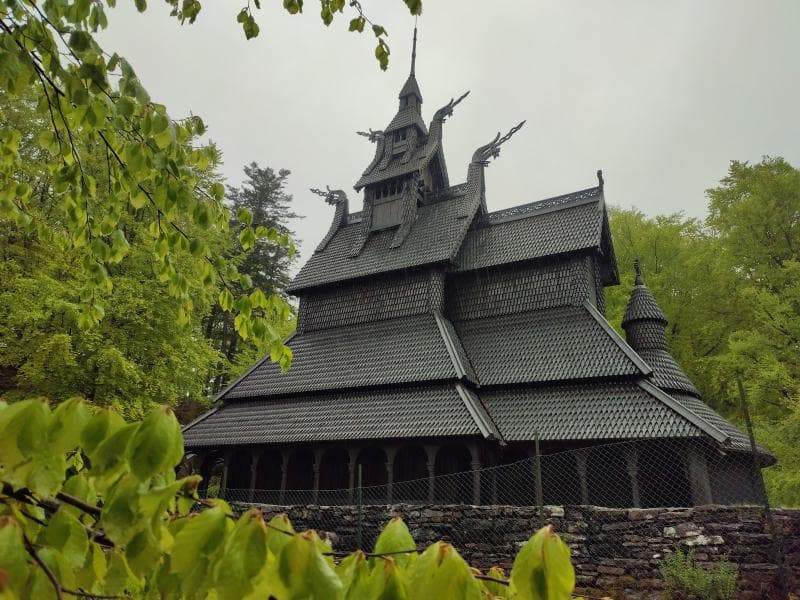
Explore Fantoft Stave Church in Bergen, Norway, a reconstructed medieval wooden church with a dramatic history and stunning architecture.
Overview
Nestled amidst the serene, lush landscapes of Bergen, Norway, the Fantoft Stave Church stands as a remarkable testament to Norway's rich medieval architectural heritage. While appearing ancient, this entirely wooden church is a meticulous reconstruction, embodying centuries of history, craftsmanship, and resilience. Its distinctive dark timber, intricate carvings, and striking silhouette against the verdant backdrop make it a compelling destination for anyone seeking a glimpse into Norway's past. The church is situated in the Fana borough of Bergen, offering a peaceful retreat just a short journey from the city center, and has become one of Bergen's most popular photo motifs on Instagram.
History & Cultural Background
The original Fantoft Stave Church was first constructed around the year 1150 in Fortun, a small village near the inner Sognefjord, utilizing the unique stave building tradition. This construction method, featuring towering timber posts (staves) rooted in the ground, allowed for entirely wooden structures assembled without nails or glue, showcasing the ingenious craftsmanship of the era. By the late 19th century, many stave churches faced demolition. To preserve this significant piece of Norwegian heritage, a Bergen businessman named Fredrik Georg Gade purchased the church in 1883 and had it dismantled, transported, and meticulously re-erected on his property in Fantoft. This relocation saved the church, allowing it to stand as a historical landmark for over a century. However, its story took a dramatic turn on June 6, 1992, when it was tragically destroyed by arson, an event linked to the early Norwegian black metal scene. The decision to rebuild was immediate, and a painstaking reconstruction process began, using traditional techniques and original plans. Completed in 1997, the church that stands today is a faithful replica, with some original elements like the medieval crucifix and a 'wish stone' having survived the fire and incorporated into the new structure.
What Makes It Special
The Fantoft Stave Church is exceptional not only for its dramatic history but also for its architectural details and tranquil setting. Its dark, tar-treated timber exterior, adorned with stylized dragonheads on the gables, offers a striking visual that evokes both Christian and pre-Christian Norse influences, believed to ward off evil spirits. The multi-tiered roofs and the narrow nave characteristic of stave churches provide a unique aesthetic, making it an instantly recognizable symbol of medieval Norway. The church's design reflects the transition period when Norway was embracing Christianity while still holding onto its Viking heritage. Its peaceful woodland location, slightly elevated and surrounded by trees, contributes significantly to its special allure, making visitors feel as if they are discovering a secret, fairytale-like location hidden in the forest.
Stories, Fun Facts & Local Details
The church's destruction and reconstruction story is perhaps its most compelling 'fun fact,' connecting it to a significant, albeit controversial, chapter in modern Norwegian cultural history. The image of the burnt church shell even appeared on an album cover by a prominent black metal artist, further intertwining its narrative with this subculture. Despite the trauma, the rebuilding effort demonstrated Norway's deep commitment to preserving its architectural legacy, with craftsmen painstakingly recreating the structure using materials like 350-400 year old pine trees. Inside, the presence of the original crucifix and the 'wish stone' offers a tangible link to the centuries-old history, providing a profound sense of continuity despite the fire. Outside the main church, visitors can also find an original stone cross from Tjora, which was relocated here, further enhancing the historical ambiance of the site.
Visitor Perspective
Visiting Fantoft Stave Church offers a tranquil and reflective experience. Its accessibility via the Bergen Light Rail makes it an easy day trip from the city center, followed by a short, scenic walk through green surroundings. While the interior is typically open during the summer season (May to September), allowing visitors to appreciate the intricate timber construction and craftsmanship up close, the exterior and grounds are accessible year-round. Many find the quiet setting among the trees surprisingly far removed from city life, creating a perfect atmosphere for contemplation and photography. There are numerous walking paths around the church, and some offer elevated viewpoints overlooking the entire structure, ideal for capturing its distinctive architecture and harmonious integration with nature. Even when the church is closed, a viewing platform provides a good vantage point. The serene environment makes it an ideal spot for those seeking to immerse themselves in Norway's unique heritage and capture memorable images of this iconic wooden wonder.
Coordinates: 5.3532899984798314, 60.339276535509505
View on Google Maps💬 How Travelers Describe This Place
Based on community votes
Unique
872Beautiful
846Interesting
684Photogenic
363Must See
87
Traveler Stories
Discover memorable experiences shared by travelers who have visited this place.
No traveler stories yet.
Be the first traveler to share what made this place memorable.

Tour
By
Spot
Discover amazing places around the world. Your journey starts here.
Explore
© 2026 TourBySpot. All rights reserved.