Interior Displays
Bergen, Norway
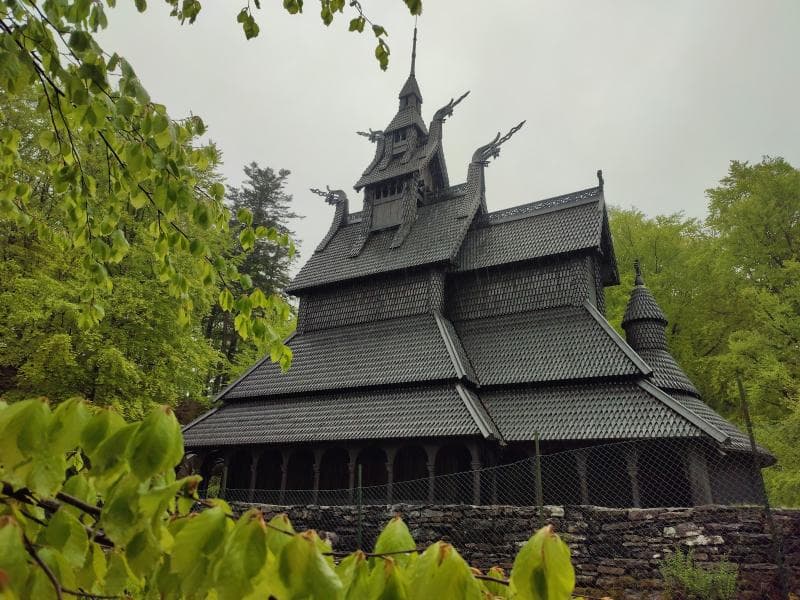
Explore the unique interior displays of Fantoft Stave Church in Bergen, Norway, and discover its rich history and medieval wooden architecture.
Overview
Stepping inside Fantoft Stave Church in Bergen, Norway, offers a profound journey into medieval Scandinavian craftsmanship and spiritual heritage. More than just an architectural marvel, the interior displays a tangible link to a storied past, inviting visitors to experience the unique atmosphere of a structure built almost entirely of wood. The church, originally constructed around 1150 in Fortun, Sogn, and later moved to Fantoft in 1883, was tragically destroyed by arson in 1992. However, its meticulous reconstruction completed in 1997 stands as a testament to Norwegian resilience and dedication to preserving its cultural legacy.
As you cross the threshold, the world outside fades, replaced by the hushed stillness and dim lighting characteristic of these ancient wooden sanctuaries. The interior, though a faithful reconstruction, retains elements from the original church that survived the fire, such as a medieval stone altar cross and a 'wish stone', adding unexpected layers of authenticity.
History & Cultural Background
The Fantoft Stave Church embodies a rich historical tapestry, reflecting the transition from Norse paganism to Christianity in Scandinavia. Stave churches, named after their distinctive vertical wooden posts or 'staves', were prevalent across Norway during the 12th and 13th centuries.
Before its fateful destruction, the original church had already endured centuries of change. It was dismantled and relocated to Bergen in 1883 by Consul Fredrik Georg Gade, a significant act of preservation to save it from demolition. The church that stands today was rebuilt using traditional methods and materials, including 350-400 year old pine, ensuring its historical integrity. This dedication recreates the unique timber engineering where structures were assembled without nails, relying instead on wooden pegs and intricate dovetailing, a skill passed down from Viking shipbuilding traditions.
What Makes It Special
What truly sets the interior of Fantoft Stave Church apart is its authentic adherence to medieval design and the quiet power of its surviving artifacts. Unlike many European stone cathedrals, stave church interiors are often minimalist, focusing on the intricate beauty of their wooden construction. The Fantoft church is no exception, showcasing stunning wooden carvings that are nearly the sole ornamentation.
The central nave is framed by stout wooden pillars, the very 'staves' that give the church type its name. These structural elements contribute to the church's unique, almost organic feel. Looking upwards, the ceiling can evoke the inverted hull of a Viking ship, a subtle nod to Norway's seafaring heritage and the ingenuity of its early builders.
Beyond the architectural elements, the presence of the original medieval stone altar cross and the 'wish stone' are particularly moving. These objects, having miraculously survived the devastating fire, serve as direct links to the centuries of worship and human experience that define the church's long history.
Stories, Fun Facts & Local Details
The story of Fantoft Stave Church is dramatic, marked by both preservation and destruction. Its burning in 1992, an act of arson that shocked the nation, became a prominent, albeit dark, chapter in Norwegian history. The subsequent decision to rebuild it exactly as it was before the fire highlighted a deep cultural commitment to heritage.
Visitors often notice the distinctive smell within stave churches – a blend of warm wood and the pine tar used for preservation, which also gives the exterior its dark, brooding appearance. You might also observe the absence of windows on the north wall; a medieval belief held that evil entered from the cold north, so avoiding openings there was customary. Historically, women would sit on the north side, and men on the right, and the narrow entry doors were thought to prevent the devil from entering alongside worshippers. These details offer glimpses into the spiritual and social customs of medieval Norway.
Visitor Perspective
A visit to the interior of Fantoft Stave Church is an intimate and atmospheric experience. The dim lighting, filtering through small openings, creates a contemplative mood, allowing the eye to adjust to the intricate wooden details. The narrow nave and the impressive height of the stave pillars draw attention skyward, creating a sense of awe.
For many, the interior is understated yet profoundly moving, a silent narrative of faith, craftsmanship, and resilience. While the experience inside can be brief, the wealth of historical context and the sheer beauty of the wooden construction leave a lasting impression. It offers a tangible connection to Norway's medieval past, making it a compelling stop for anyone interested in history, architecture, or simply seeking a tranquil moment of reflection amidst a truly unique cultural landmark.
Coordinates: 5.3532899984798314, 60.339276535509505
View on Google Maps💬 How Travelers Describe This Place
Based on community votes
Photogenic
996Must See
953Beautiful
658Interesting
585Unique
69
Traveler Stories
Discover memorable experiences shared by travelers who have visited this place.
No traveler stories yet.
Be the first traveler to share what made this place memorable.

Tour
By
Spot
Discover amazing places around the world. Your journey starts here.
Explore
© 2026 TourBySpot. All rights reserved.