Forest Surroundings
Bergen, Norway
Explore the serene Forest Surroundings of Fantoft Stave Church in Bergen, Norway. Discover its unique history, masterful reconstruction, and peaceful natural setting.
Overview
Nestled within a verdant, peaceful setting in the Fana borough of Bergen, Norway, the Forest Surroundings of Fantoft Stave Church offer a tranquil escape from urban life. This exquisite reconstructed medieval church, a testament to ancient Norwegian craftsmanship and resilience, is beautifully framed by its lush natural environment. The church, originally built around 1150 in Fortun, Sogn, was moved to Fantoft in 1883 to save it from demolition. Tragically, it was destroyed by arson in 1992 but meticulously rebuilt by 1997, standing today as a faithful replica. The serene forest acts as a vital backdrop, enhancing the historical and architectural grandeur of the stave church, making the journey to this cultural gem as captivating as the destination itself.
The 'Forest Surroundings' are not merely a backdrop but an integral part of the visitor's experience, providing a sense of seclusion and stepping back in time. Accessible by public transport from central Bergen, the journey culminates in a pleasant walk through these green surroundings, setting a contemplative mood before one even reaches the church's distinctive dark timber walls and dragon-head carvings.
History & Cultural Background
The story of Fantoft Stave Church is deeply intertwined with Norway's cultural heritage. Stave churches, characterized by their unique post-and-lintel construction (staves), are among the most significant examples of medieval wooden architecture in Europe. Originally, Fantoft Stave Church was erected in Fortun, Sogn, around 1150, reflecting a period when Christianity was taking root across Norway.
By the late 19th century, many stave churches faced demolition. To preserve this historical artifact, Consul Fredrik Georg Gade purchased the church in 1883 and had it dismantled, transported, and reassembled on his property in Fantoft, near Bergen. This act of preservation, though involving some modifications inspired by Borgund Stave Church, ensured its survival for another century. However, a devastating arson attack in 1992 destroyed the church. The subsequent decision to rebuild it immediately was a powerful statement of cultural dedication. Craftsmen painstakingly reconstructed the church using traditional techniques, relying on photographs, drawings, and surviving fragments, completing the work in 1997. This meticulous rebuild ensured that visitors today can witness an authentic representation of a medieval Norwegian stave church, embodying centuries of history and a remarkable story of resilience.
What Makes It Special
What truly distinguishes Fantoft Stave Church and its Forest Surroundings is the profound sense of harmony between human artistry and nature. The church itself is a marvel, with its tar-treated timber, intricate carvings, and stylized dragon heads adorning the gables, believed to ward off evil spirits and reflecting a blend of pagan and Christian influences. This architectural distinctiveness is amplified by its setting.
The 'Forest Surroundings' create an almost sacrosanct atmosphere, elevating the church from a mere historical relic to a place of profound contemplation. The dark wood of the church contrasts beautifully with the lush greenery, creating a visually striking tableau that feels ancient and mystical. Unlike many other surviving stave churches located in more remote, inaccessible regions, Fantoft's location within a leafy suburb of Bergen, yet still ensconced in its wooded area, makes it uniquely accessible while retaining an air of secluded grandeur. The quietude of the forest allows visitors to immerse themselves fully in the historical narrative and architectural details without modern distractions, fostering a deeper connection to Norway's past.
Stories, Fun Facts & Local Details
The Forest Surroundings of Fantoft Stave Church hold many unspoken stories. Imagine the effort involved in dismantling the original 12th-century structure from Fortun and transporting it piece by piece across land and sea to its new home in Fantoft in 1883. The decision to place it within a wooded area was intentional, perhaps to replicate the secluded settings of many original stave churches, enhancing its historical authenticity. After the 1992 fire, the reconstruction itself was an immense undertaking, requiring immense skill and dedication. The timber used for rebuilding came from 350-400 year old pine trees, specially sourced to match the original materials.
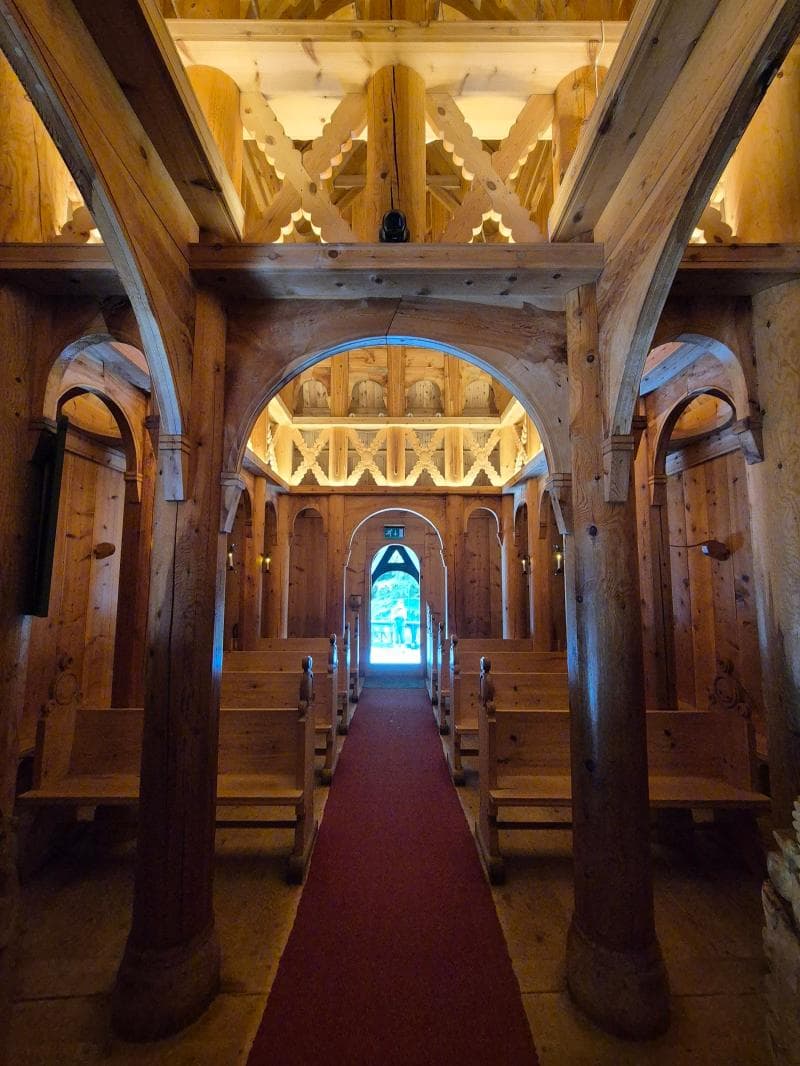
Within the rebuilt church, only a few original items remained after the fire: a 'wish stone' embedded in one wall and the cross at the altar. These small, tangible links to the church's ancient past add to the emotional weight of the visit, especially when experienced within the hushed forest. The walk to the church from the light rail station is often described as a journey through picturesque surroundings, offering glimpses of local flora and perhaps the sounds of the forest – a natural prelude to the historical wonder awaiting. This blend of meticulous reconstruction and natural integration makes Fantoft Stave Church a powerful symbol of cultural memory and Norwegian identity.
Visitor Perspective
For visitors, the Forest Surroundings contribute significantly to the overall experience of Fantoft Stave Church. Many describe the approach as a pleasant, scenic walk, sometimes a gentle climb, through green and peaceful landscapes. This transition from the urban environment to the tranquil wooded area helps prepare one for the profound historical encounter. Upon arrival, the church emerges from the trees, its dark silhouette striking against the natural backdrop, often evoking feelings of awe and wonder.
The quietude of the surroundings allows for a contemplative visit, whether admiring the exterior's intricate details or, when open, stepping inside the dim, ancient-feeling interior. The ambiance created by the forest's embrace enhances the sense of stepping back in time, making the reconstructed church feel genuinely historic despite its modern rebirth. Visitors often highlight the photographic opportunities, as the natural light filtering through the trees beautifully illuminates the church's unique architecture. The 'Forest Surroundings' ensure that a visit to Fantoft Stave Church is not just a sightseeing stop, but an immersive cultural and historical journey, deeply rooted in the Norwegian landscape.
Coordinates: 5.35329, 60.33928
View on Google Maps💬 How Travelers Describe This Place
Based on community votes
Unique
445Interesting
416Must See
289Beautiful
141Photogenic
33
Traveler Stories
Discover memorable experiences shared by travelers who have visited this place.
No traveler stories yet.
Be the first traveler to share what made this place memorable.

Tour
By
Spot
Discover amazing places around the world. Your journey starts here.
Explore
© 2026 TourBySpot. All rights reserved.