Dominican Cathedral
Lviv, Ukraine
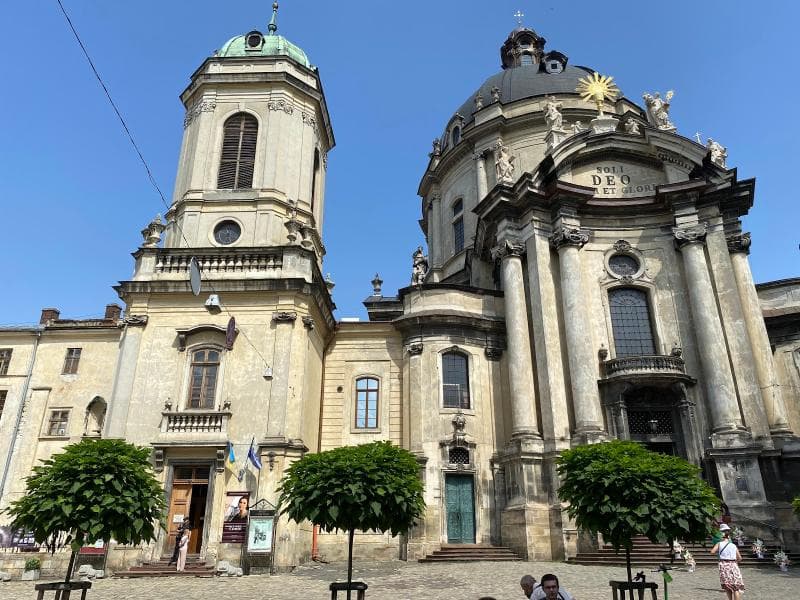
Explore Lviv's iconic Dominican Cathedral, a magnificent Baroque masterpiece in Ukraine. Discover its rich history, stunning architecture, and spiritual significance in the heart of the city.
Overview
In the heart of Lviv, Ukraine, stands the magnificent Dominican Cathedral, officially known today as the Church of the Holy Eucharist. This iconic landmark, with its striking Baroque architecture and towering dome, is a testament to centuries of spiritual devotion and cultural shifts. Nestled within Lviv's UNESCO-listed historic center, it serves not only as an active place of worship for the Ukrainian Greek Catholic Church but also as a profound architectural and historical jewel for curious travelers. Its grand presence and intricate details make it an unmissable stop for anyone exploring the city's rich past and vibrant present.
History & Cultural Background
The Dominican presence in Lviv dates back to the 13th century, when Princess Constance, wife of Prince Lev, invited the Dominican order to the city. The site where the current cathedral stands has been a continuous place of worship, evolving through several architectural iterations. The first structures included a wooden monastery and later a Gothic church, which stood from the 15th century until the mid-18th century. However, due to its deteriorating condition, the Gothic church was dismantled in 1748. The present Baroque masterpiece was constructed between 1749 and 1764, largely funded by Hetman Jozef Potocki. It was designed by the military engineer and architect Jan de Witte, creating a structure that strongly resembles Vienna's Karlskirche. Throughout its history, the church has mirrored Lviv's complex political landscape. Originally a Roman Catholic sanctuary, it was repurposed during the Soviet era. From being used as a warehouse for cement, it was later converted into the Museum of Religion and Atheism, a stark reflection of the Soviet regime's ideology. Following Ukraine's independence, the building was restored to its religious purpose, becoming the Ukrainian Greek Catholic Church of the Holy Eucharist, a role it continues to fulfill today with regular liturgies.
What Makes It Special
The Dominican Cathedral is widely regarded as one of Ukraine's finest examples of late Baroque architecture. Its most striking feature is its grand elliptical shape, crowned by a monumental dome that commands the Lviv skyline. The dramatic facade, adorned with columns and intricate sculptural details by Sebastian Fesinger, introduces visitors to an interior of breathtaking spaciousness and balanced proportions. Inside, the high altar, created by Matviy Polejovsky, and the vibrant frescoes by Stanisław Stroiński narrate biblical stories, while gilded accents create an atmosphere of profound contemplation. The church's design also contributes to its exceptional acoustics, making it a favored venue for classical and organ concerts. Furthermore, within its walls lies a remarkable connection to its past: a preserved alabaster gravestone dating back to the 16th century, a tangible remnant of the Gothic church that once stood on this very site.
Stories, Fun Facts & Local Details
The Dominican Monastery and its church are steeped in captivating tales. One of the most famous dates back to 1559, often referred to as the 'War for the Bride.' This dramatic episode involved Halshka Ostrozka, one of the wealthiest heiresses of Rzeczpospolita, who sought refuge within the monastery during a bitter marriage dispute. A subsequent siege, complete with artillery and the cutting off of the monastery's water supply, ensued until Halshka was eventually surrendered. Another notable detail is the Latin motto inscribed beneath the dome: 'Soli Deo honor et gloria,' meaning 'To God alone be honor and glory,' a direct expression of the building's spiritual purpose. Beyond its religious functions, the Dominican monastery historically played a significant role in Lviv's community, housing a school, archive, hospital, library, and even a prison for monks. It's also credited with hosting some of the earliest theatrical performances in the city. Today, the adjacent monastery buildings continue to house the Lviv Museum of the History of Religion, offering deeper insights into faith and history.
Visitor Perspective
Visiting the Dominican Cathedral offers a unique opportunity to immerse oneself in Lviv's historical and cultural tapestry. Its central location makes it an ideal starting point for exploring the city's old town, including nearby Rynok Square. As an active place of worship, entry to the church itself is free, allowing visitors to respectfully observe services or simply soak in the serene atmosphere. While no formal entrance fee is required for the church, visitors are encouraged to dress modestly, covering shoulders and knees, out of respect for its sacred function. Beyond its stunning architecture, guests can experience the church's famed acoustics during various cultural events, including organ concerts, which provide a truly unforgettable musical experience within its historic walls.
Coordinates: 24.0321, 49.8433
View on Google Maps💬 How Travelers Describe This Place
Based on community votes
Must See
981Interesting
946Unique
439Photogenic
92Beautiful
66
Traveler Stories
Discover memorable experiences shared by travelers who have visited this place.
No traveler stories yet.
Be the first traveler to share what made this place memorable.
Things to see at Dominican Cathedral



Tour
By
Spot
Discover amazing places around the world. Your journey starts here.
Explore
© 2026 TourBySpot. All rights reserved.