Underground Chambers
Lviv, Ukraine
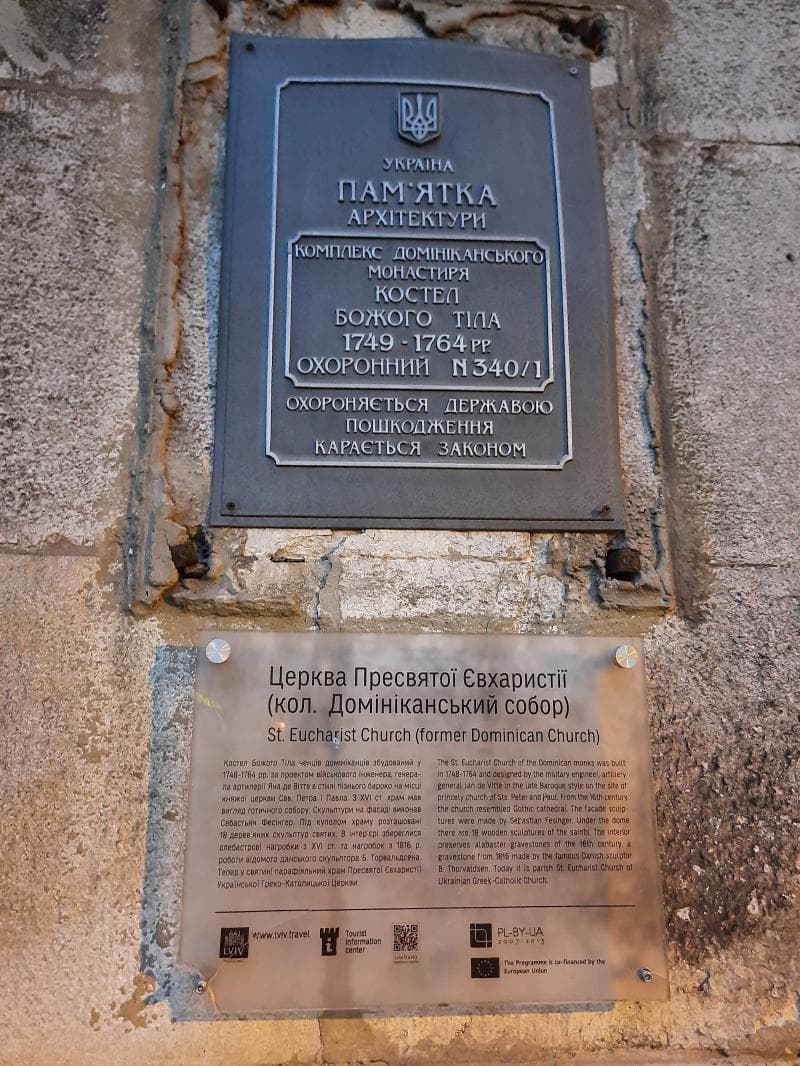
Explore the ancient Underground Chambers beneath Lviv's Dominican Cathedral in Ukraine, rumored to be Prince Lev's 13th-century castle remnants. Discover monk cells, historic frescoes, and local legends in this captivating historical site.
Overview
Beneath the grand Baroque facade of the Dominican Cathedral in Lviv, Ukraine, lies a captivating labyrinth of ‘Underground Chambers’. These ancient dungeons offer a unique journey into the city's hidden past, a tangible link to Lviv's earliest days. While the majestic cathedral above, officially known as the Church of the Holy Eucharist, draws the eye with its imposing dome and rich ornamentation, the chambers below tell a different, perhaps even more profound, story of medieval life, faith, and survival.
Visitors to these underground passages can explore remnants believed to be part of Prince Lev's 13th-century castle, making them among the oldest preserved subterranean structures in Lviv. The experience provides a stark contrast to the opulent church, revealing the austere conditions and forgotten tales etched into the very foundations of this historic city.
History & Cultural Background
The history of the Dominican Cathedral complex stretches back to the 13th century, with the arrival of the Dominican Order in Lviv. The first wooden church was established around 1234, reportedly at the behest of Princess Constance, wife of Prince Lev Danylovych. This initial structure, and subsequent Gothic churches, endured fires and reconstructions over centuries, mirroring the tumultuous history of Lviv itself. The current Baroque masterpiece, designed by military engineer Jan de Witte, was constructed between 1749 and 1764, replacing a Gothic church that had developed structural cracks.
However, the ‘Underground Chambers’ predate even the earliest church, with some scholars suggesting they are the surviving foundations of Prince Lev's original castle. This deep connection to Lviv's princely era imbues the chambers with immense historical significance. Over time, these subterranean spaces served various purposes: monastic cells for the Dominicans, storage for merchants, and even as a refuge for townspeople during sieges and conflicts. Their walls have silently witnessed centuries of Lviv's evolution, from a medieval stronghold to a vibrant cultural hub.
What Makes It Special
What truly sets the Dominican Cathedral's Underground Chambers apart is their remarkable antiquity and the palpable sense of history they evoke. They offer a rare opportunity to step directly into Lviv's foundational layers, exploring structures believed to date back to the city's very origins in the 13th century. Unlike many restored historical sites, these chambers retain a raw, authentic atmosphere, allowing for a deep immersion into the past.
The preserved elements within the dungeons, such as partially visible 17th-century frescoes and floors paved with bricks using ancient techniques (12th-15th centuries), provide unique insights into medieval construction and artistic practices. Moreover, the multi-faceted history of their use—from defensive structures and monastic living to storage and sanctuary—highlights the adaptive nature of urban life beneath the bustling city streets. It's a tangible connection to the lives of those who walked Lviv's cobbled streets centuries ago.
Stories, Fun Facts & Local Details
The Underground Chambers are steeped in intriguing stories and local lore. It is said that within these depths lie the remains of the 13th-century Prince Lev Castle, linking the very fabric of the Dominican complex to Lviv's royal beginnings. Visitors can explore what are described as monk cells and even a 'torture hall', hinting at the austere and sometimes harsh realities of monastic life and historical justice.
Among the most fascinating discoveries is an 18th-century alabaster sarcophagus, believed to belong to Archbishop N. Vyzhytskyi. Legend whispers that the lid of this sarcophagus has been known to move from the inside, adding a touch of eerie mystery to the chambers. There are also tales of a hidden tunnel stretching the length of the building, fueling imagination about secret passages and forgotten escapes. These stories transform the stone walls from mere architectural features into silent witnesses of Lviv's dramatic past, inviting contemplation on the lives and secrets they hold.
Visitor Perspective
Visiting the Underground Chambers beneath the Dominican Cathedral is an evocative experience, often described as a journey into the 'real medieval spirit' of Lviv. As you descend into the cool, dimly lit passages, the sounds of the modern city fade, replaced by a profound silence that allows for reflection on the layers of history beneath your feet. It's a chance to connect with the city's deep roots, to walk where princes, monks, and ordinary citizens once sought shelter or solace.
The guided tours often highlight the architectural and historical details, bringing the past to life with compelling narratives and legends. This direct encounter with Lviv's subterranean world provides a humbling perspective, revealing the challenges and ingenuity of earlier generations. It's an essential stop for any curious traveler seeking to understand the full depth of Lviv's historical and cultural tapestry, offering a memorable contrast to the city's more visible Baroque splendor.
Coordinates: 24.03417, 49.84278
View on Google Maps💬 How Travelers Describe This Place
Based on community votes
Photogenic
795Interesting
753Must See
302Unique
172Beautiful
79
Traveler Stories
Discover memorable experiences shared by travelers who have visited this place.
No traveler stories yet.
Be the first traveler to share what made this place memorable.

Tour
By
Spot
Discover amazing places around the world. Your journey starts here.
Explore
© 2026 TourBySpot. All rights reserved.