Prayer Hall
Lviv, Ukraine
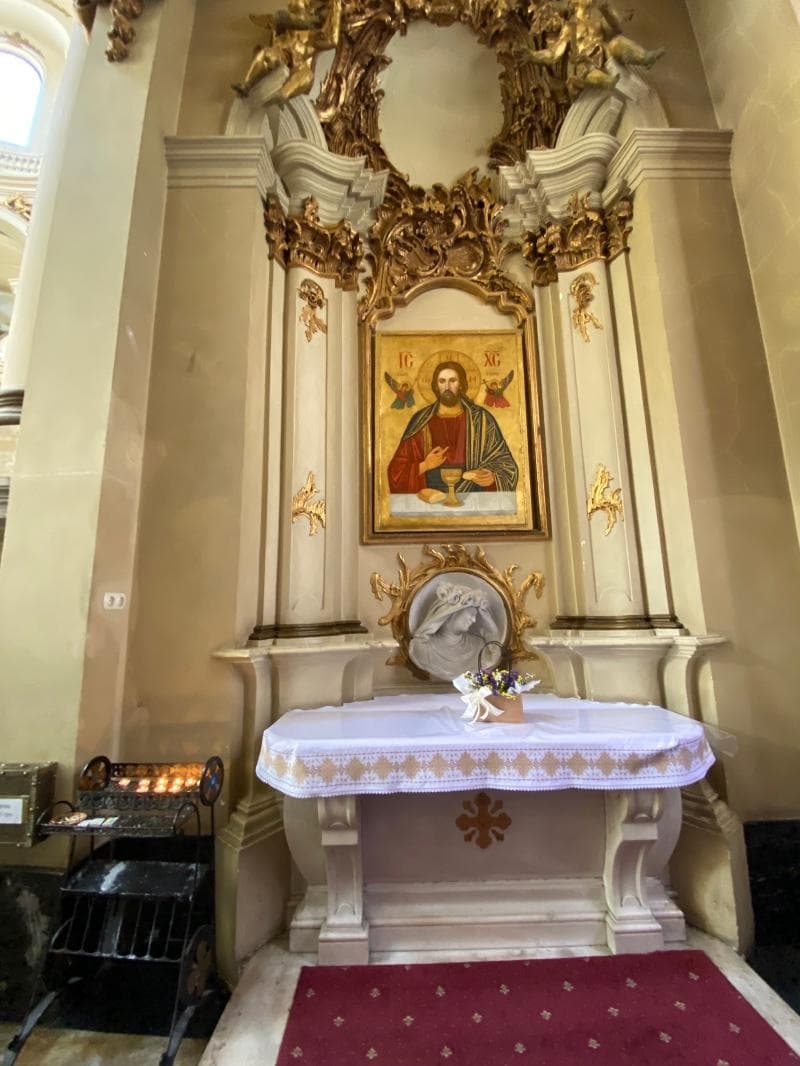
Discover the Prayer Hall inside Lviv's Dominican Cathedral, a stunning Baroque masterpiece with centuries of history and spiritual significance in Ukraine.
Overview
Nestled in the heart of Lviv's historic Old Town, a UNESCO World Heritage site, the Dominican Cathedral stands as a magnificent testament to Baroque architecture and centuries of faith. Within its grand walls, what is colloquially known as the Prayer Hall offers a profound spiritual and architectural experience. Originally consecrated as the Roman Catholic Church of Corpus Christi, it now serves as the Ukrainian Greek Catholic Church of the Holy Eucharist. This central worship space, characterized by its impressive elliptical form and soaring dome, invites visitors into a realm of serene contemplation and historical depth. The Prayer Hall is not merely a static monument; it is a living space where the echoes of centuries of prayers and the vibrant present-day spiritual life of Lviv converge.
History & Cultural Background
The story of the Dominican presence in Lviv dates back to the 13th century, with the first wooden Dominican church reportedly established in 1234. Over time, several structures rose and fell on this significant site, often succumbing to fires and conflicts. The present-day Baroque masterpiece, housing the distinguished Prayer Hall, was constructed between 1749 and 1764. Grand Crown Hetman Józef Potocki generously funded its creation, and the design is primarily attributed to the esteemed military engineer and architect Jan de Witte. This late Baroque edifice replaced an earlier Gothic church, carrying forward the spiritual legacy of the Dominican Order. Its architectural style, with sweeping curves and a monumental dome, reflects the influence of Central European Baroque, making it a prominent feature of Lviv's skyline. The church's journey through history mirrors Lviv's own complex past; after serving as a Roman Catholic sanctuary, it was repurposed as the Museum of Religion and Atheism during the Soviet era. Following Ukraine's independence, it returned to its sacred function, becoming the Greek Catholic Church of the Holy Eucharist, a symbol of resilient faith and cultural continuity.
What Makes It Special
The Prayer Hall's most striking feature is its remarkable elliptical layout, culminating in a majestic, seemingly weightless dome that draws the eye upward. This unique architectural approach creates a sense of immense spaciousness and a surprisingly intimate atmosphere for such a grand structure. The interior is adorned with sculptural details, including impressive wooden sculptures beneath the cupola from the mid-18th century, and altar plastics crafted by M. Polejowski in 1777. The restrained yet elegant Baroque design, characterized by pale walls and subtle gilded accents, allows light to play dramatically within the space, enhancing its contemplative feel. Furthermore, the Prayer Hall preserves older treasures, such as stone and alabaster tombstones from the 16th and 17th centuries, salvaged from the Gothic church that predated the current structure. The Latin inscription 'Soli Deo Honor et Gloria' – 'To God alone be honor and glory' – prominently displayed on the facade, encapsulates the profound spiritual purpose of this magnificent space.
Stories, Fun Facts & Local Details
The Dominican Cathedral, and by extension its Prayer Hall, is steeped in captivating stories. One such tale recounts the dramatic refuge sought by the wealthy noblewoman Halszka Ostrogska within the monastery walls during a bitter marriage dispute in the 16th century. Though the details are debated, the 'siege' of the monastery became part of Lviv's folklore, highlighting the sanctuary's historical significance. Another intriguing aspect is the building's transformation during the Soviet era. Its conversion into the Museum of Religion and Atheism inadvertently served to preserve many sacral art pieces that might otherwise have been lost or destroyed. Today, the adjacent monastery buildings still house the Lviv Museum of the History of Religion, a direct legacy of that period, offering a unique perspective on faith and its suppression. The elliptical shape and high dome of the Prayer Hall contribute to its exceptional acoustics, a feature that has made it a favored venue for concerts and cultural events over the years. This blend of spiritual observance and artistic expression adds another layer to its rich character.
Visitor Perspective
As you step into the Prayer Hall, the sheer scale and elegant proportions immediately command attention. The light filtering through the windows illuminates the intricate details of the Baroque interior, from the grand columns to the artistic sculptures. Despite its size, there's a tangible sense of peace, inviting moments of quiet reflection. It's a place where history feels alive, not just in the ancient tombstones or the centuries-old artwork, but in the ongoing religious services that fill the space with hymns and prayers. Visitors often describe a feeling of wonder looking up at the vast dome, a design element intended to lift the spirit. Whether you come for its architectural grandeur, its deep historical roots, or its spiritual solace, the Prayer Hall of the Dominican Cathedral offers a memorable and moving experience, connecting you to the enduring heart of Lviv. It's a space that encourages you to slow down, absorb the atmosphere, and appreciate the resilience of human artistry and faith.
Coordinates: 24.03417, 49.84278
View on Google Maps💬 How Travelers Describe This Place
Based on community votes
Photogenic
954Beautiful
946Must See
439Unique
92Interesting
66
Traveler Stories
Discover memorable experiences shared by travelers who have visited this place.
No traveler stories yet.
Be the first traveler to share what made this place memorable.

Tour
By
Spot
Discover amazing places around the world. Your journey starts here.
Explore
© 2026 TourBySpot. All rights reserved.