Dohány Street Synagogue
Budapest, Hungary
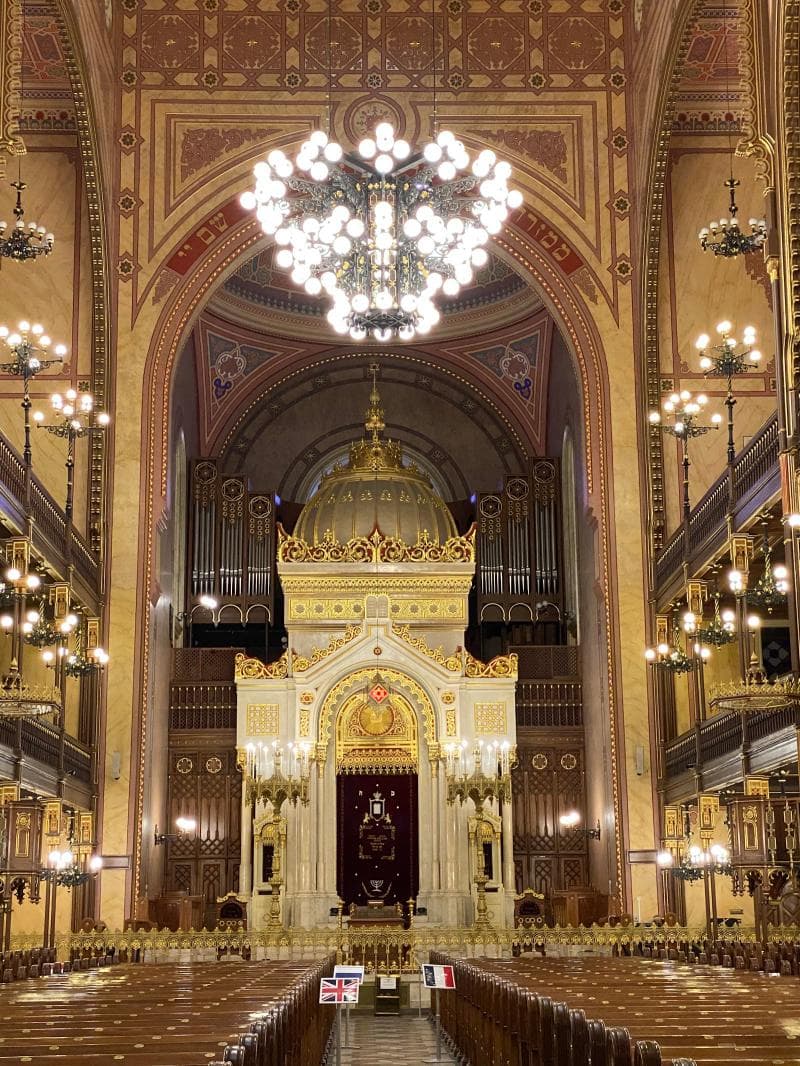
Explore Budapest's Dohány Street Synagogue, Europe's largest, a stunning Moorish Revival landmark with deep historical and cultural significance in Hungary.
Overview
Nestled in the heart of Budapest, Hungary, the Dohány Street Synagogue stands as a magnificent testament to Jewish heritage and resilience. As the largest synagogue in Europe and among the largest in the world, its imposing Moorish Revival architecture and rich history draw visitors from across the globe. Completed in 1859, this architectural marvel is not merely a place of worship for the Neolog Jewish community; it is a sprawling complex encompassing the Great Synagogue, the Hungarian Jewish Museum, the Heroes' Temple, a poignant cemetery, and the moving Raoul Wallenberg Holocaust Memorial Park. A visit here offers a profound journey through centuries of Jewish life in Hungary, blending architectural splendor with deep historical significance and cultural insight.
History & Cultural Background
The construction of the Dohány Street Synagogue between 1854 and 1859 marked a significant moment for the Jewish community in Pest, serving as their first purpose-built synagogue and a grand statement of their presence in the city. Designed primarily by Viennese architect Ludwig Förster, with interior contributions by Frigyes Feszl, the synagogue's design embraced the then-popular Moorish Revival style. Förster, believing there was no distinctively Jewish architectural style, drew inspiration from Islamic architecture found in North Africa and medieval Spain, particularly the Alhambra. This choice imbued the synagogue with its unique and captivating aesthetic, featuring twin octagonal towers crowned with onion domes, elaborate brickwork, and delicate horseshoe arches.
However, the synagogue's history is also deeply intertwined with tragedy. During World War II, Dohány Street itself became the border of the infamous Budapest Ghetto. The synagogue suffered damage from bombing by the pro-Nazi Arrow Cross Party in 1939 and was later used by German forces as a radio base and even as a stable for animals, incurring further destruction. The complex's garden became a mass grave for nearly 2,600 Jewish people who perished in the ghetto during the Holocaust. Following decades of neglect under the Communist regime, a comprehensive restoration effort, largely funded by the Hungarian state and private donations, took place from 1991 to 1998, returning the synagogue to its former glory and cementing its role as a beacon of remembrance and hope.
What Makes It Special
Beyond its impressive size and striking Moorish Revival architecture, several elements contribute to the Dohány Street Synagogue's profound uniqueness. It stands as a powerful symbol of the Neolog Jewish community in Hungary, a distinct branch of Judaism that emerged in the 19th century. The sheer scale of the building, with its seating capacity of nearly 3,000 worshippers, reflects the thriving and economically significant Jewish population of Budapest in the mid-19th century.
The complex is a holistic cultural and historical center. The Hungarian Jewish Museum, built in 1931 adjacent to the main synagogue and designed to complement its architectural style, houses a vast collection of religious and historical artifacts, chronicling Jewish life in Hungary. The Heroes' Temple, also added in 1931, commemorates Hungarian Jewish soldiers who died in World War I. Perhaps most moving is the Raoul Wallenberg Holocaust Memorial Park, located in the synagogue's courtyard, featuring the 'Weeping Willow' sculpture. Each metallic leaf on this weeping willow bears the name of a Holocaust victim, creating a deeply poignant tribute to the hundreds of thousands of Hungarian Jews who perished.
Stories, Fun Facts & Local Details
A fascinating local detail is that the Jewish Museum stands on the very site where Theodor Herzl, the visionary founder of modern Zionism, was born. A memorial plaque now marks his birthplace, underscoring the synagogue's connection to significant figures in Jewish history. The street name itself, Dohány, translates to 'tobacco' in Hungarian, harking back to its historical identity as 'Tabakgasse' or 'Tobacco Maker Street' in German.
The synagogue's interior is as breathtaking as its exterior, with a majestic Torah ark, vibrant stained-glass windows, and intricate frescoes. It houses an historic organ, built by the renowned Friedrich Ladegast in 1859, which continues to be used during special concerts and events, filling the grand space with resonant tones. This blend of grand architecture, sacred function, and community hub makes it a truly living monument.
Visitor Perspective
Visiting the Dohány Street Synagogue offers a multifaceted experience that is both architecturally impressive and emotionally resonant. Guided tours are typically included with admission and are highly recommended, as expert guides provide invaluable context about Jewish traditions, the synagogue's history, and the profound impact of the Holocaust on the community.
Visitors should be mindful of the dress code, which requires shoulders and knees to be covered, reflecting respect for this active house of worship. The complex is closed on Saturdays (Shabbat) and Jewish holidays, so it's advisable to check opening hours before planning a visit. Exploring the various components of the complex—the main sanctuary, the museum's exhibits, the quiet solemnity of the cemetery, and the reflective atmosphere of the memorial park—can easily take several hours. The Dohány Street Synagogue is more than just a historical building; it is a vibrant center for culture and community, offering a powerful narrative of survival, remembrance, and the enduring spirit of Hungarian Jewry.
Coordinates: 19.06083, 47.49583
View on Google Maps💬 How Travelers Describe This Place
Based on community votes
Interesting
618Unique
449Must See
335Photogenic
308Beautiful
22
Traveler Stories
Discover memorable experiences shared by travelers who have visited this place.
No traveler stories yet.
Be the first traveler to share what made this place memorable.
Things to see at Dohány Street Synagogue



Tour
By
Spot
Discover amazing places around the world. Your journey starts here.
Explore
© 2026 TourBySpot. All rights reserved.