Main Synagogue Hall
Budapest, Hungary
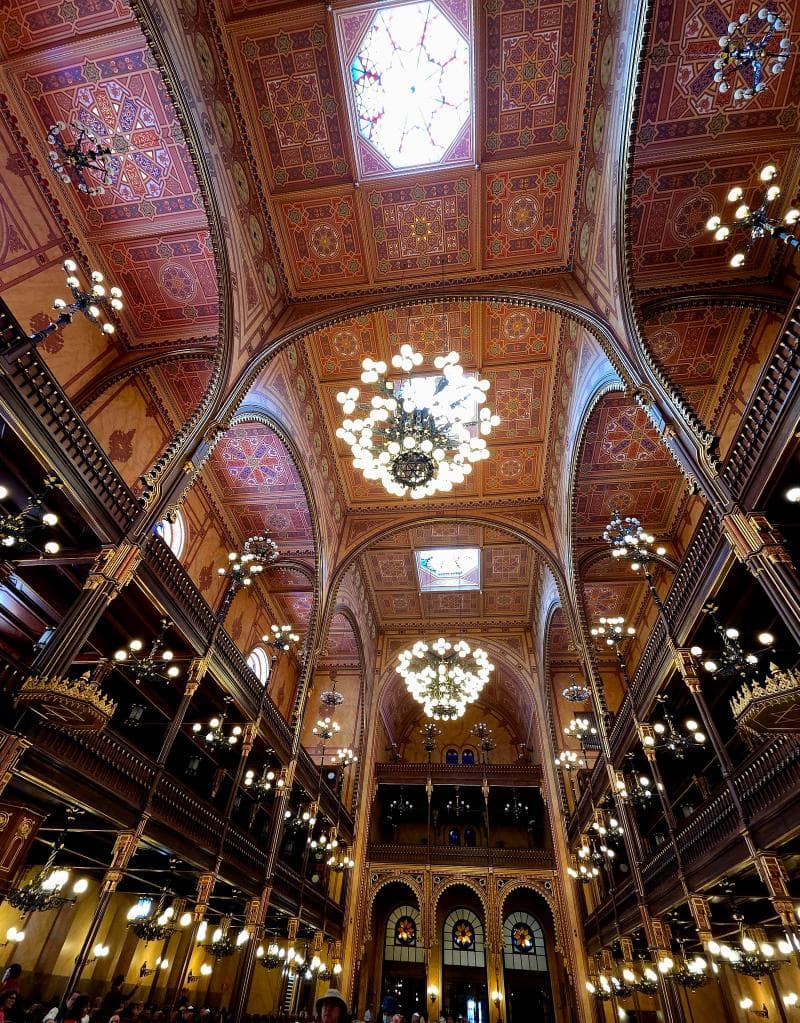
Explore the Main Synagogue Hall of Dohány Street Synagogue, Budapest, Hungary. Europe's largest synagogue features stunning Moorish Revival architecture and rich Jewish heritage.
Overview
Stepping into the Main Synagogue Hall of the Dohány Street Synagogue in Budapest, Hungary, is to enter a space of immense scale and profound beauty. This architectural marvel is not merely a place of worship; it is the largest synagogue in Europe and the second largest in the world, capable of seating nearly 3,000 people. Its grand presence in the heart of Budapest's historic Jewish Quarter makes it a pivotal destination for anyone seeking to understand the city's rich cultural and religious tapestry. The hall itself is a breathtaking example of Moorish Revival and Romantic Historicist architecture, characterized by its vast dimensions, twin balconies, and ornate detailing.
History & Cultural Background
The Dohány Street Synagogue, often referred to as the Great Synagogue, was constructed between 1854 and 1859, designed primarily by the Viennese architect Ludwig Förster. Förster believed that a distinctively Jewish architectural style was not identifiable, and thus drew inspiration from oriental ethnic groups related to the Israelite people, particularly Moorish elements seen in places like the Alhambra. The interior design was partly shaped by Frigyes Feszl. Consecrated on September 6, 1859, its construction marked a significant manifestation of Jewish presence in Pest and became a central hub for the Neolog Jewish community, a modernizing movement within Hungarian Judaism.
The synagogue's history also bears the scars of the 20th century. During World War II, the Dohány Street area formed part of the Budapest Ghetto, and the synagogue complex provided shelter for thousands. It suffered significant damage, having been bombed by the pro-Nazi Arrow Cross Party in 1939 and later used as a German radio base and even a stable. Following the war and the communist era, extensive restoration efforts, partly funded by the Hungarian state and private donations, brought the synagogue back to its original splendor by 1998, ensuring its continued role as a vibrant religious and cultural center.
What Makes It Special
The Main Synagogue Hall's distinguishing features are numerous. Its unique blend of Moorish Revival and Romantic Historicist styles is immediately apparent in the vibrant colors, geometric patterns, and the twin octagonal towers crowned with onion-shaped domes that soar 43 meters high. Inside, the basilica-like layout, unusual for a synagogue, and the presence of a grand organ highlight the Neolog movement's adaptations, which sought to integrate traditional Jewish liturgy with elements of Hungarian civilization. The hall features two expansive balconies, originally designed to accommodate women, providing 1,472 seats in addition to the 1,497 seats on the main floor for men, totaling nearly 3,000 worshipers. The ark within the synagogue holds 25 Torah scrolls, some rescued from other synagogues destroyed during the Holocaust.
Stories, Fun Facts & Local Details
A fascinating detail from its early days is that people could pre-order seats in the Main Hall, a practice that ensured their reserved spot and could even be sold later. The interior's stunning rose window, featuring the Star of David motif, is a central focal point, while windows on either side are said to resemble the two tablets on which Moses wrote the Ten Commandments. The synagogue's monumental size and elaborate design were intended to reflect the thriving Jewish community of Pest in the mid-19th century. Today, beyond religious services, the Main Hall is renowned for its excellent acoustics, making it a popular venue for cultural programs and concerts, including liturgical and Klezmer music.
Visitor Perspective
For visitors, the Main Synagogue Hall offers an immersive experience into Jewish heritage and architectural grandeur. The interior is vast and ornate, a kaleidoscope of coral reds and gold leaf that is truly a feast for the eyes. Guided tours are available, providing deeper insights into the synagogue's history, architecture, and its profound significance to the Jewish community in Budapest and beyond. When planning a visit, it is essential to remember that the synagogue is a holy place and adheres to traditional customs; visitors are required to dress modestly, covering shoulders and knees. Men are also expected to cover their heads upon entry, with kippahs often provided. The synagogue is closed on Saturdays (for Shabbat) and during Jewish holidays, so checking opening hours in advance is highly recommended.
Coordinates: 19.06083, 47.49583
View on Google Maps💬 How Travelers Describe This Place
Based on community votes
Beautiful
898Unique
667Must See
308Photogenic
190Interesting
32
Traveler Stories
Discover memorable experiences shared by travelers who have visited this place.
No traveler stories yet.
Be the first traveler to share what made this place memorable.

Tour
By
Spot
Discover amazing places around the world. Your journey starts here.
Explore
© 2026 TourBySpot. All rights reserved.