Holocaust Memorial Tree
Budapest, Hungary
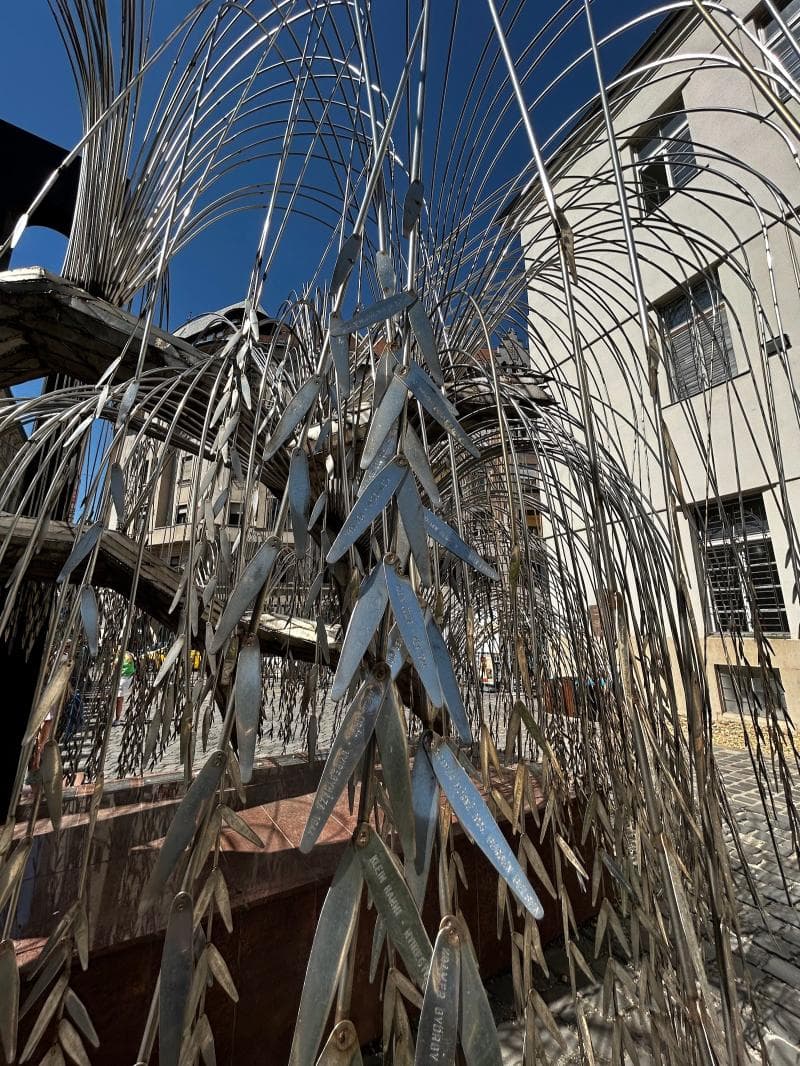
Explore the solemn Holocaust Memorial Tree within Budapest's Dohány Street Synagogue, a powerful tribute to Hungarian Jewish victims. Discover its history and profound symbolism.
Overview
Nestled within the serene Raoul Wallenberg Memorial Park, at the rear of the majestic Dohány Street Synagogue in Budapest, Hungary, stands a profound and moving tribute: the Holocaust Memorial Tree. Also known as the Tree of Life or the Emanuel Tree, this striking metallic sculpture takes the form of a weeping willow, its thousands of delicate leaves shimmering as a poignant symbol of remembrance. It serves as a permanent memorial to the more than 400,000 Hungarian Jews who perished during the Holocaust.
The memorial invites visitors to a space of quiet contemplation, transforming a site once marked by unimaginable suffering into one that fosters enduring memory and honor. Each metallic leaf represents a life lost, many of them inscribed with the names of victims from the Budapest Ghetto and beyond.
History & Cultural Background
The creation of the Holocaust Memorial Tree is deeply rooted in the tragic history of World War II and the Hungarian Holocaust. During the brutal winter of 1944-1945, the courtyard of the Dohány Street Synagogue became an impromptu mass grave for thousands of Jews who succumbed to starvation and violence within the confines of the Budapest Ghetto.
Commissioned in 1989 and unveiled in 1991, the memorial was designed by Hungarian sculptor Imre Varga. Its placement in the Raoul Wallenberg Memorial Park is highly significant, as the park itself honors Raoul Wallenberg, the Swedish diplomat, and other 'Righteous Among the Nations' who courageously risked their lives to save Hungarian Jews from persecution. A notable contribution to the memorial's funding came from the acclaimed American actor Tony Curtis, whose Hungarian-Jewish parents had fled Budapest, making his support a deeply personal gesture of remembrance for his heritage.
What Makes It Special
The Holocaust Memorial Tree is distinctive not only for its somber purpose but also for its powerful artistic expression. The choice of a weeping willow, a tree traditionally associated with sorrow and mourning, is intentionally impactful, remade in metal to ensure its eternal presence. Each of the thousands of metallic leaves is designed to bear the name of a victim, personalizing the immense tragedy and ensuring that individual lives are not forgotten amidst the staggering statistics.
Beyond its primary symbolism, some interpret the tree's form as an upturned menorah, adding another layer of Jewish cultural significance to the memorial. Adjacent to the tree stands a tall, black pillar with two cut-out spaces, resembling the Tablets of the Covenant. This element is sometimes understood to symbolize the suspension of the Ten Commandments and moral order during the Holocaust. The meticulous engraving of names on the leaves allows for a deeply personal connection, enabling visitors to literally 'touch' the memory of those who were lost.
Stories, Fun Facts & Local Details
The connection of Hollywood legend Tony Curtis to the memorial is a compelling detail; his financial support helped bring Imre Varga's vision to life, cementing a personal link between Hungarian-Jewish diaspora and the homeland's painful history. The memorial's integration into the Raoul Wallenberg Memorial Park also highlights the stories of incredible bravery and self-sacrifice during a dark period. Plaques within the park commemorate Wallenberg and other diplomats and individuals who provided protective documents and refuge to Jews.
A poignant tradition observed by visitors is the leaving of small pebbles at the base of the sculpture. This act, common in Jewish mourning customs, signifies remembrance and respect for the deceased, creating a silent dialogue between past and present. The fact that relatives can still contribute to the maintenance of the Dohány Synagogue complex by purchasing a name tag for a leaf underscores the memorial's ongoing and living role in commemoration.
Visitor Perspective
Visiting the Holocaust Memorial Tree is an experience that often evokes profound emotion and quiet reflection. The atmosphere in the Raoul Wallenberg Memorial Park is one of solemnity and peace. Travelers are encouraged to approach the memorial with reverence, taking time to absorb the stillness and the weight of its meaning.
Many visitors choose to walk around the sculpture, tracing the engraved names on the leaves, allowing for an intimate and personal connection to the individual lives represented. The memorial is not merely a historical marker; it is a powerful reminder of humanity's capacity for both cruelty and resilience. Access to the Holocaust Memorial Tree is typically included with an entry ticket to the Dohány Street Synagogue complex, which also grants access to the Jewish Museum and the synagogue itself. It stands as an essential stop for anyone seeking to understand and honor the Jewish history and heritage of Budapest.
Coordinates: 19.061022, 47.496422
View on Google Maps💬 How Travelers Describe This Place
Based on community votes
Must See
886Beautiful
564Unique
201Interesting
121Photogenic
87
Traveler Stories
Discover memorable experiences shared by travelers who have visited this place.
No traveler stories yet.
Be the first traveler to share what made this place memorable.

Tour
By
Spot
Discover amazing places around the world. Your journey starts here.
Explore
© 2026 TourBySpot. All rights reserved.