Raoul Wallenberg Memorial Park
Budapest, Hungary
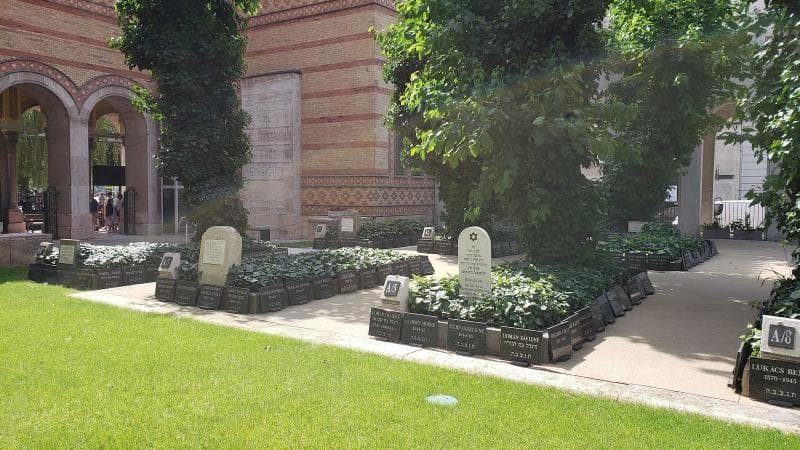
Explore the Raoul Wallenberg Memorial Park in Budapest, Hungary. This solemn site within Dohány Street Synagogue honors Holocaust victims and the hero who saved thousands. A must-visit for historical insight.
Overview
Tucked away within the magnificent Dohány Street Synagogue complex in Budapest, Hungary, the Raoul Wallenberg Memorial Park stands as a profound testament to courage, sacrifice, and remembrance. This solemn outdoor space is dedicated to Raoul Wallenberg, the heroic Swedish diplomat who saved countless Jewish lives during the Holocaust, and to the hundreds of thousands of Hungarian Jewish victims who perished. It is a place of quiet reflection, centered around the poignant 'Tree of Life' memorial, inviting visitors to connect with a crucial chapter of human history.
History & Cultural Background
The history of the Raoul Wallenberg Memorial Park is inextricably linked to the darkest days of World War II and the extraordinary bravery of one individual. In July 1944, Raoul Wallenberg arrived in Budapest as a secretary to the Swedish Legation, tasked with a seemingly impossible mission: to save as many Jews as possible from Nazi persecution. He quickly established an organization, issuing thousands of protective passports, known as 'Schutzpass,' which granted temporary Swedish citizenship to Hungarian Jews, thereby shielding them from deportation to extermination camps. Wallenberg also set up safe houses across Budapest, declared as Swedish territory, where Jews could find refuge.
His audacious efforts, which included confronting armed Nazis and negotiating directly with figures like Adolf Eichmann, are credited with saving tens of thousands, possibly up to 100,000, Hungarian Jews. However, his story took a tragic turn in January 1945 when Soviet forces entered Budapest. Wallenberg was arrested on suspicion of espionage and subsequently disappeared, his fate remaining a mystery to this day.
The park itself, established in 1991, is located in the rear courtyard of the Dohány Street Synagogue, a site with its own profound history. During 1944-1945, the synagogue complex became part of the Budapest Ghetto, where thousands of Jews were confined. The adjacent cemetery, an unusual feature for a synagogue as Jewish tradition typically dictates burials outside city limits, holds the graves of approximately 2,000 individuals who died from hunger and cold within the ghetto.
What Makes It Special
The heart of the Raoul Wallenberg Memorial Park is undoubtedly the 'Tree of Life' memorial, a striking metallic sculpture crafted by Hungarian artist Imre Varga. Resembling a weeping willow, its thousands of delicate leaves are inscribed with the names of Hungarian Jewish Holocaust victims, serving as a powerful and deeply personal remembrance of those lost. The monument is a poignant symbol representing the approximately 400,000 to 600,000 Hungarian Jews murdered during the Holocaust.
Beyond the 'Tree of Life,' the park also features a memorial dedicated to other 'Righteous Among the Nations' – non-Jewish individuals who risked their lives to save Jews during the Holocaust. This section acknowledges the humanitarian deeds of figures such as Swiss Vice-consul Carl Lutz, Spanish Ambassador Ángel Sanz Briz, Italian diplomat Giorgio Perlasca, and Apostolic Nuncio Angelo Rotta, who collectively offered protection to thousands.
A touching detail is that the creation of this memorial park and the renovation of the synagogue complex were significantly supported by actor Tony Curtis, whose parents were Hungarian Jewish immigrants. He felt a deep connection to his heritage and contributed to ensuring this history was preserved.
Stories, Fun Facts & Local Details
Raoul Wallenberg's methods were as unconventional as they were effective. He often used bluff and sheer force of personality to intimidate Nazi and Arrow Cross officials, rescuing people from trains bound for concentration camps or from death marches. His 'Schutzpass' documents, while technically not official, were often accepted due to his diplomatic authority and the sheer audacity of his operation.
The 'Tree of Life' with its countless inscribed leaves offers a unique, tangible connection to the victims. Visitors often find themselves touching the metal leaves, each representing a life cut short, making the enormity of the tragedy feel intensely personal. The design of the tree is sometimes noted for its resemblance to an inverted menorah, adding another layer of symbolic meaning.
The existence of the cemetery within the synagogue courtyard is a stark reminder of the desperate conditions of the Budapest Ghetto. It was created out of necessity, a direct consequence of the wartime atrocities, offering a final resting place for those who perished without proper burials elsewhere. This unusual arrangement underscores the profound impact of the Holocaust on the Jewish community of Budapest.
Visitor Perspective
Visiting the Raoul Wallenberg Memorial Park is an intensely moving experience. It is a space designed for reflection and quiet contemplation, offering a powerful narrative of both immense suffering and extraordinary human kindness. Travelers often describe a profound sense of gravity and reverence upon entering the park, particularly when standing before the 'Tree of Life' and contemplating the sheer number of names etched onto its leaves. It is a place that educates and reminds visitors of the importance of human dignity and the dangers of hatred. As part of the larger Dohány Street Synagogue complex, it serves as a vital component of understanding Budapest's rich Jewish heritage and the indelible marks left by history. The park ensures that the memory of Raoul Wallenberg and the victims of the Holocaust in Hungary endures, serving as a powerful lesson for future generations.
Coordinates: 19.06083, 47.49583
View on Google Maps💬 How Travelers Describe This Place
Based on community votes
Interesting
886Photogenic
564Beautiful
443Must See
310Unique
233
Traveler Stories
Discover memorable experiences shared by travelers who have visited this place.
No traveler stories yet.
Be the first traveler to share what made this place memorable.

Tour
By
Spot
Discover amazing places around the world. Your journey starts here.
Explore
© 2026 TourBySpot. All rights reserved.