Cemetery
Budapest, Hungary
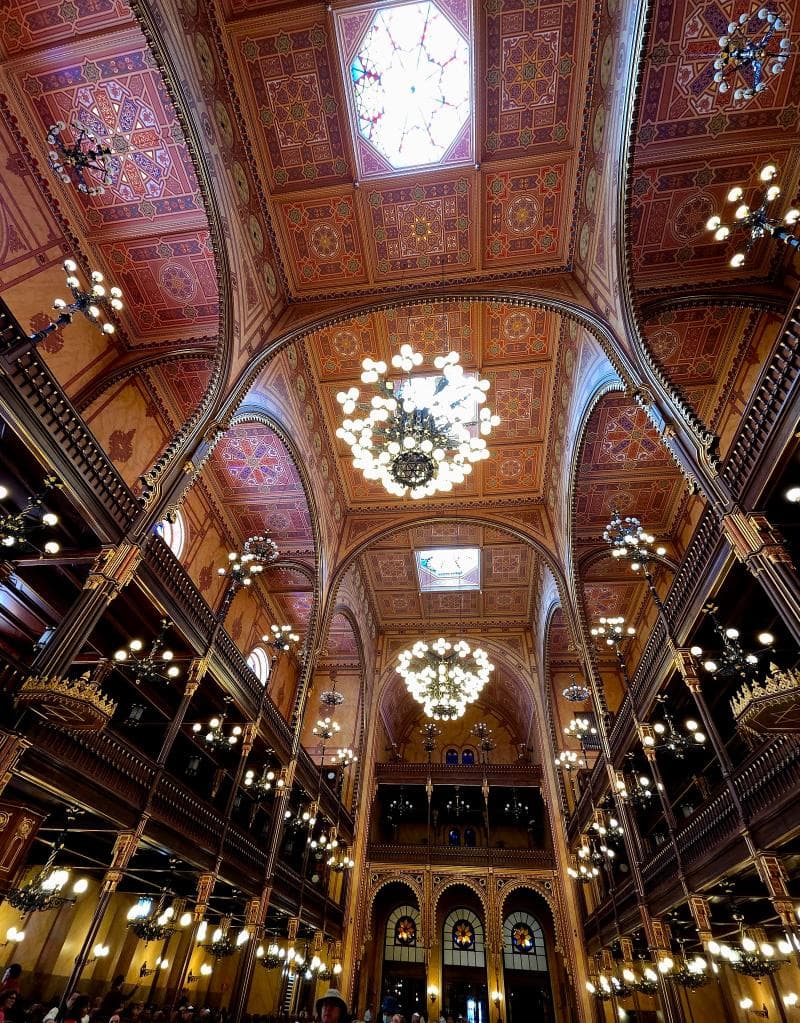
Explore the solemn Jewish Cemetery within the Dohány Street Synagogue complex in Budapest, Hungary, a poignant memorial to Holocaust victims.
Overview
Within the expansive complex of the Dohány Street Synagogue in Budapest, Hungary, lies a poignant and historically significant Jewish Cemetery. Unlike traditional Jewish burial customs that typically place cemeteries outside city limits, this burial ground was established out of dire necessity during one of history's darkest periods. It serves as a solemn memorial to the thousands who perished during the Holocaust, particularly within the confines of the Budapest Ghetto in 1944-1945. The cemetery is an integral part of the synagogue complex, which also includes the Great Synagogue, the Hungarian Jewish Museum, and the Raoul Wallenberg Holocaust Memorial Park.
Today, the cemetery, alongside the adjacent memorial park, offers visitors a profound space for reflection and remembrance, bearing witness to the immense suffering endured by the Jewish community of Budapest. It stands as a powerful testament to resilience and memory, carefully preserved within the heart of the city's historic Jewish Quarter.
History & Cultural Background
The genesis of the Cemetery at the Dohány Street Synagogue is rooted in the tragic events of World War II. During late 1944 and early 1945, as the Budapest Ghetto was established and besieged, thousands of Jewish people succumbed to starvation, cold, and disease. With the city under siege and traditional burial impossible, the synagogue's courtyard, originally intended as a garden, became an improvised burial site.
When the ghetto was liberated on January 18, 1945, the scale of the tragedy became starkly clear. Thousands of unburied bodies lay in the streets, and a significant number were interred in the synagogue's courtyard. Historical records indicate that approximately 2,000 to 2,600 victims, including both identified and unidentified individuals, were buried in 24 common graves within this space. This act of burying the dead within the synagogue's grounds was a direct deviation from Jewish halakhic law, underscoring the extreme and desperate circumstances faced by the community during the Holocaust.
What Makes It Special
What truly distinguishes the Cemetery within the Dohány Street Synagogue complex is its very existence in such an unusual location. Jewish tradition mandates that cemeteries should be situated outside a city's residential areas, making this urban burial ground an exception born of horrific necessity. This fact alone imbues the site with a unique and powerful significance, highlighting the profound disruption and devastation of the Holocaust on Jewish life and customs in Budapest.
Furthermore, the cemetery is intimately connected with the Raoul Wallenberg Holocaust Memorial Park, situated just behind the synagogue. The park's central feature is the striking 'Tree of Life' (Emanuel Tree), a metallic weeping willow sculpture created by Imre Varga. Each delicate leaf of the weeping willow is inscribed with the names of Hungarian Jewish victims who perished during the Holocaust. The memorial also honors 'Righteous Among the Nations' – non-Jewish individuals who risked their lives to save Jews during the war.
Stories, Fun Facts & Local Details
The 'Tree of Life' at the Raoul Wallenberg Memorial Park is a deeply symbolic and emotionally resonant piece. Its 6,000 leaves are said to represent the approximately 600,000 Hungarian Jews who were victims of the Holocaust. Visitors often find themselves drawn to touch the engraved names, a tangible connection to the individuals whose lives were tragically cut short.
A touching detail associated with the memorial is the involvement of American actor Tony Curtis. Born Bernard Schwartz to Hungarian Jewish parents who had emigrated before World War II, Curtis was a significant patron. He returned to his birth country in the 1990s and helped fund the renovation of the Dohány Street Synagogue and the establishment of this monument, connecting his family's heritage to this powerful remembrance.
Another fascinating historical note is that the Jewish Museum, also part of the complex, stands on the site where Theodor Herzl, the visionary founder of modern Zionism, was born in 1860. While his original house was demolished, the museum's location subtly connects the birthplace of a pivotal figure in Jewish history with a site of profound Jewish memory.
Visitor Perspective
Visiting the Cemetery at the Dohány Street Synagogue is an experience that resonates deeply with many. It is not merely a historical site but a place that evokes profound emotion and encourages contemplation. The peaceful garden setting, interspersed with the solemn headstones and the glistening leaves of the 'Tree of Life', creates an atmosphere of respectful remembrance.
As part of a tour through the larger synagogue complex, the cemetery provides a stark contrast to the grandeur of the synagogue itself, grounding the visit in the harsh realities of Jewish history in Budapest. It offers a crucial context to the synagogue's story, reminding visitors that even in a place of worship and community, the shadows of the past remain an indelible part of its identity. Travelers are encouraged to approach this sacred ground with reverence, reflecting on the lives lost and the enduring strength of the community.
Coordinates: 19.06083, 47.49583
View on Google Maps💬 How Travelers Describe This Place
Based on community votes
Interesting
826Beautiful
800Unique
387Photogenic
242Must See
90
Traveler Stories
Discover memorable experiences shared by travelers who have visited this place.
No traveler stories yet.
Be the first traveler to share what made this place memorable.

Tour
By
Spot
Discover amazing places around the world. Your journey starts here.
Explore
© 2026 TourBySpot. All rights reserved.