Heroes’ Temple
Budapest, Hungary
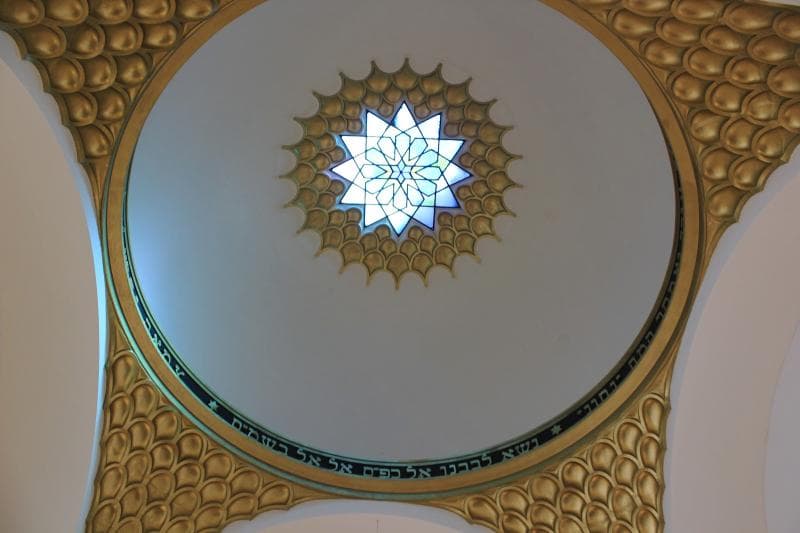
Explore the Heroes’ Temple, a moving memorial and active synagogue honoring WWI Jewish soldiers, located within the Dohány Street Synagogue in Budapest, Hungary.
Overview
Nestled within the expansive complex of the Dohány Street Synagogue in Budapest, Hungary, the Heroes’ Temple stands as a profound testament to remembrance and enduring faith. It is not merely an auxiliary building but a distinct place of worship and a solemn memorial, commemorating the Hungarian Jewish soldiers who made the ultimate sacrifice during World War I. Designed to be both functional and deeply symbolic, this smaller synagogue offers a more intimate setting for services, particularly during the colder months, contrasting with the grandeur of the main Dohány Street Synagogue.
As part of one of Europe's largest synagogue complexes, the Heroes’ Temple invites visitors to reflect on a significant chapter of Hungarian Jewish history. It is a space where historical memory and contemporary spiritual life intertwine, providing a poignant experience for all who enter.
History & Cultural Background
The Heroes’ Temple was constructed between 1929 and 1931, during a period of expansion for the Dohány Street Synagogue complex. It was designed by architects László Vágó and Ferenc Faragó. Its primary purpose was to honor the approximately 10,000 Hungarian Jewish soldiers who fell on the battlefields of World War I.
This memorial served a crucial cultural and political role for the Jewish community in post-WWI Hungary. In the aftermath of the war, as Hungary faced territorial losses and internal turmoil, certain political factions sought to blame national minorities, including Jews, for the country's misfortunes. By establishing the Heroes’ Temple and creating the Hungarian Jewish Military Archives, the community aimed to underscore their unwavering loyalty and patriotism towards Hungary.
The temple's establishment occurred decades before the horrors of World War II, during which the Dohány Street area became a part of the Budapest Ghetto. The complex itself tragically transformed into an internment camp and, later, the courtyard served as a mass burial site for thousands of Holocaust victims.
What Makes It Special
The Heroes’ Temple possesses a unique charm and significance that sets it apart within the Dohány Street Synagogue complex. Architecturally, it blends modernistic and Eastern elements, occasionally described as having traits of ancient Babylonian style, yet radiating a sense of modernity with its clean lines and white walls. This distinctive design creates an atmosphere of quiet reverence, a stark yet harmonious contrast to the opulent Moorish Revival style of the main synagogue.
Its dual function as both a working synagogue and a memorial is particularly compelling. It continues to host religious services, notably in winter, when the larger main synagogue, lacking heating, is often too cold. This continuous use keeps the spirit of remembrance alive, ensuring that the sacrifices of the past are honored not just through static monument, but through ongoing communal life. The temple's capacity of 186 people fosters a more intimate prayer environment.
Stories, Fun Facts & Local Details
A compelling aspect of the Heroes’ Temple's story is its genesis from the Hungarian Jewish community's efforts to record and honor their fallen soldiers. They established the Hungarian Jewish Military Archives to meticulously collect information on those who perished in World War I. The resulting 'Hungarian Jewish Military Almanach' not only served as a memorial but still aids in genealogical research today. The temple itself stands as a tangible outcome of this powerful collective act of memory.
The temple's strategic use for winter services highlights a practical and touching local detail. While the main Dohány Street Synagogue is grand, its sheer size makes it challenging to heat. The smaller, more easily maintained Heroes’ Temple becomes the spiritual heart of the community during colder months, connecting daily worship directly to the legacy of the 'heroes' it commemorates.
Furthermore, the temple, alongside the adjacent Jewish Museum and memorial garden, symbolizes the complex history of Jewish-non-Jewish coexistence in Hungary, particularly given the historical context of its construction and its location within the former Budapest Ghetto.
Visitor Perspective
Visiting the Heroes’ Temple offers a profoundly moving and reflective experience. As you step inside, you are immediately enveloped in an atmosphere of solemn respect and historical depth. The architectural style, though distinct from the main synagogue, contributes to a sense of continuity within the complex, demonstrating the evolving expressions of Jewish faith and identity over time.
It provides a quiet contemplative space, inviting visitors to pause and consider the immense sacrifices it represents. The temple’s ongoing use for services serves as a powerful reminder of the resilience and enduring spirit of the Jewish community in Budapest. Located conveniently within the Dohány Street Synagogue complex, it is an integral part of any visit, offering a deeper understanding of the community's rich history and its poignant memorials.
Coordinates: 19.06083, 47.49583
View on Google Maps💬 How Travelers Describe This Place
Based on community votes
Must See
826Photogenic
494Beautiful
242Interesting
125Unique
82
Traveler Stories
Discover memorable experiences shared by travelers who have visited this place.
No traveler stories yet.
Be the first traveler to share what made this place memorable.

Tour
By
Spot
Discover amazing places around the world. Your journey starts here.
Explore
© 2026 TourBySpot. All rights reserved.