Jewish Museum
Budapest, Hungary
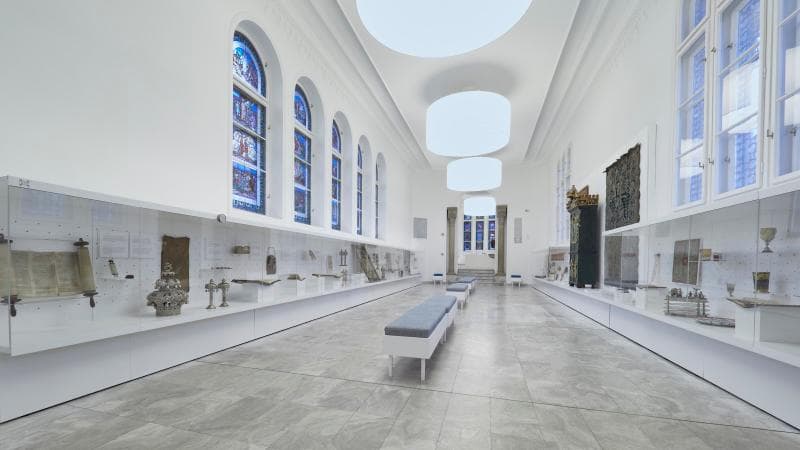
Explore the Jewish Museum in Budapest, Hungary, located within the Dohány Street Synagogue complex, and discover centuries of Hungarian Jewish history, culture, and resilience.
Overview
Nestled within the grand complex of the Dohány Street Synagogue in Budapest, Hungary, the Jewish Museum, often referred to as the Hungarian Jewish Museum and Archives, offers a profound journey into the rich tapestry of Hungarian Jewish life. It stands as a vital institution dedicated to collecting, preserving, and exhibiting the cultural heritage, religious traditions, and historical narrative of Hungarian Jewry. The museum's architecture harmoniously blends with the adjacent synagogue, Europe's largest, creating a seamless experience for visitors.
A visit here provides a comprehensive insight into Jewish customs, art, and history, from ancient times to the present day, emphasizing both the vibrant contributions and the tragic events that have shaped the community.
History & Cultural Background
The idea for an independent Jewish museum in Hungary first emerged during the 1896 millennial celebrations, a period when Judaism was officially recognized as one of Hungary's historic religions. However, the Jewish Museum found its permanent home in 1932, specifically constructed on the plot where Theodor Herzl, the visionary founder of Zionism, was born. This unique placement imbues the museum with an additional layer of historical significance, linking it directly to a pivotal figure in modern Jewish history. The museum building itself was designed to match the architectural style of the Dohány Street Synagogue, creating a visually unified complex.
Throughout its history, particularly during the tumultuous 20th century, the museum played a crucial role. In the increasingly threatening political climate of the 1930s, it showcased the active involvement of Hungarian Jews in the nation's history and provided a platform for Jewish artists excluded from national exhibitions. During World War II, when the entire synagogue complex became part of the Budapest Ghetto, the museum's collections faced immense danger. Brave employees of the Hungarian National Museum courageously hid valuable artifacts in a cellar in 1942, ensuring that this rich cultural legacy survived the Holocaust.
What Makes It Special
The Jewish Museum distinguishes itself through its remarkably rich and diverse collection of Judaica, considered one of the finest in Europe. Visitors can explore an extensive array of religious relics, ritual objects associated with Shabbat and High Holidays, and historical documents that chronicle centuries of Jewish life in Hungary. Beyond its permanent displays, the museum often hosts temporary exhibitions that delve into various aspects of Jewish art, film, and architecture, reflecting the community's ongoing cultural dynamism.
Among its extraordinary treasures are a pair of 1602 copper Rimonim, characterized by Ottoman-Turkish coppersmith work, believed to have originated from Sephardic Jews. Another unique piece is a gravestone dating back to the Roman Empire, which stands as the oldest tangible memory of the Hungarian Jewish community. The museum's direct physical connection to the Dohány Street Synagogue, the largest synagogue in Europe, further enhances its significance, making it an integral part of a comprehensive historical and spiritual site.
Stories, Fun Facts & Local Details
The museum's location on the very site of Theodor Herzl's birth offers a powerful, tangible link to the origins of Zionism, reminding visitors of the intellectual and cultural ferment within the Hungarian Jewish community. The foresight of those who hid the museum's collections during the Holocaust is a testament to the community's determination to preserve its heritage, even in the face of unimaginable persecution. This act of bravery ensured that future generations would have access to these invaluable artifacts, which serve as a silent witness to history.
Furthermore, the museum's role during the Holocaust was inextricably linked to the synagogue complex itself, which provided refuge for thousands of Jews within the Budapest Ghetto. The historical context of its immediate surroundings amplifies the emotional impact of its exhibits, especially the Holocaust room, offering a poignant reflection on suffering, resilience, and remembrance.
Visitor Perspective
For the curious traveler, a visit to the Jewish Museum is an immersive experience. The permanent exhibition thoughtfully guides visitors through the daily lives, customs, and holidays of the Jewish people, illuminated by authentic artifacts and detailed explanations. The Holocaust room provides a solemn space for reflection, recounting the harrowing period for Hungarian Jewry. An audio guide, available in multiple languages, enriches the visit by offering in-depth commentary on the exhibits and their historical context.
Entry to the Jewish Museum is typically included with the admission ticket to the Dohány Street Synagogue complex, allowing for a seamless exploration of both the spiritual and historical dimensions of the site. Visitors should be mindful of the dress code, ensuring shoulders and knees are covered, out of respect for the sacred nature of the site. The museum, like the synagogue, is closed on Saturdays and during Jewish holidays, so planning ahead is advisable for an uninterrupted and meaningful experience.
Coordinates: 19.06083, 47.49583
View on Google Maps💬 How Travelers Describe This Place
Based on community votes
Unique
853Photogenic
639Beautiful
190Interesting
93Must See
32
Traveler Stories
Discover memorable experiences shared by travelers who have visited this place.
No traveler stories yet.
Be the first traveler to share what made this place memorable.

Tour
By
Spot
Discover amazing places around the world. Your journey starts here.
Explore
© 2026 TourBySpot. All rights reserved.